





Cotton, Woolens Portfolio
RATING 2
Cotton, Woolens Portfolio is More than abandoned factories. These structures preserve the legacy of the people and communities who helped weave the fabric of America’s industrial age. Within their massive brick walls, generations of workers devoted their lives to transforming raw cotton and wool into products that clothed and furnished a growing nation. The rhythmic movement of machinery once filled these buildings, while the labor of men and women sustained families, built neighborhoods, and shaped the character of entire towns. The mills were not simply places of production; they were the heart of communities whose daily lives revolved around the rhythms of industry. Today, these buildings feel like more than remnants of a vanished era. They feel inhabited, carrying a presence that lives beyond architecture and history, as though the lives and labors of those who passed through them have never entirely departed.
Their influence extended far beyond the factory floor. The wealth and employment generated by textile manufacturing helped build homes, schools, churches, businesses, and transportation networks, connecting Maine’s river towns to a rapidly expanding national economy. Waves of immigrants and workers from distant places brought their skills, traditions, and aspirations, creating diverse communities bound together by the shared experience of industrial life. Their stories reflect both the promise of opportunity and the personal sacrifices that accompanied America’s transformation from an agricultural society into an industrial power. For me, this history is inseparable from my own family. I think of my French Canadian grandfather, sipping a Ballantine Ale and smoking Pall Malls at the dining room table while counting the piecework pay he earned for every shoe he made. I think, too, of my Irish grandmother from County Mayo, who crossed the Atlantic alone at twelve years old and spent her teenage years laboring in the woolen mills of Boston and Worcester. Their lives bring this industrial history close to home, connecting the vast scale of American manufacturing to the intimate realities of work, sacrifice, and survival.
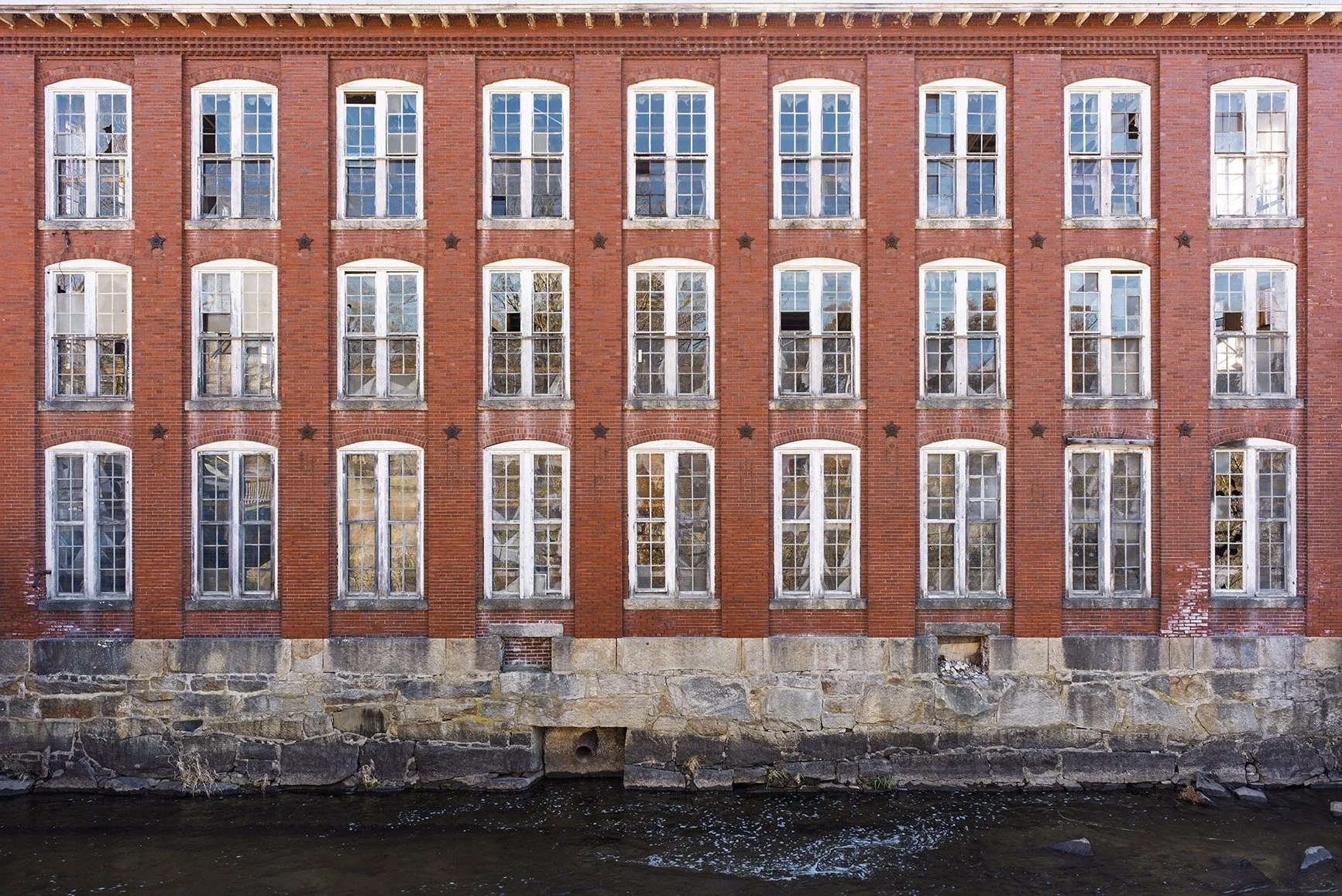
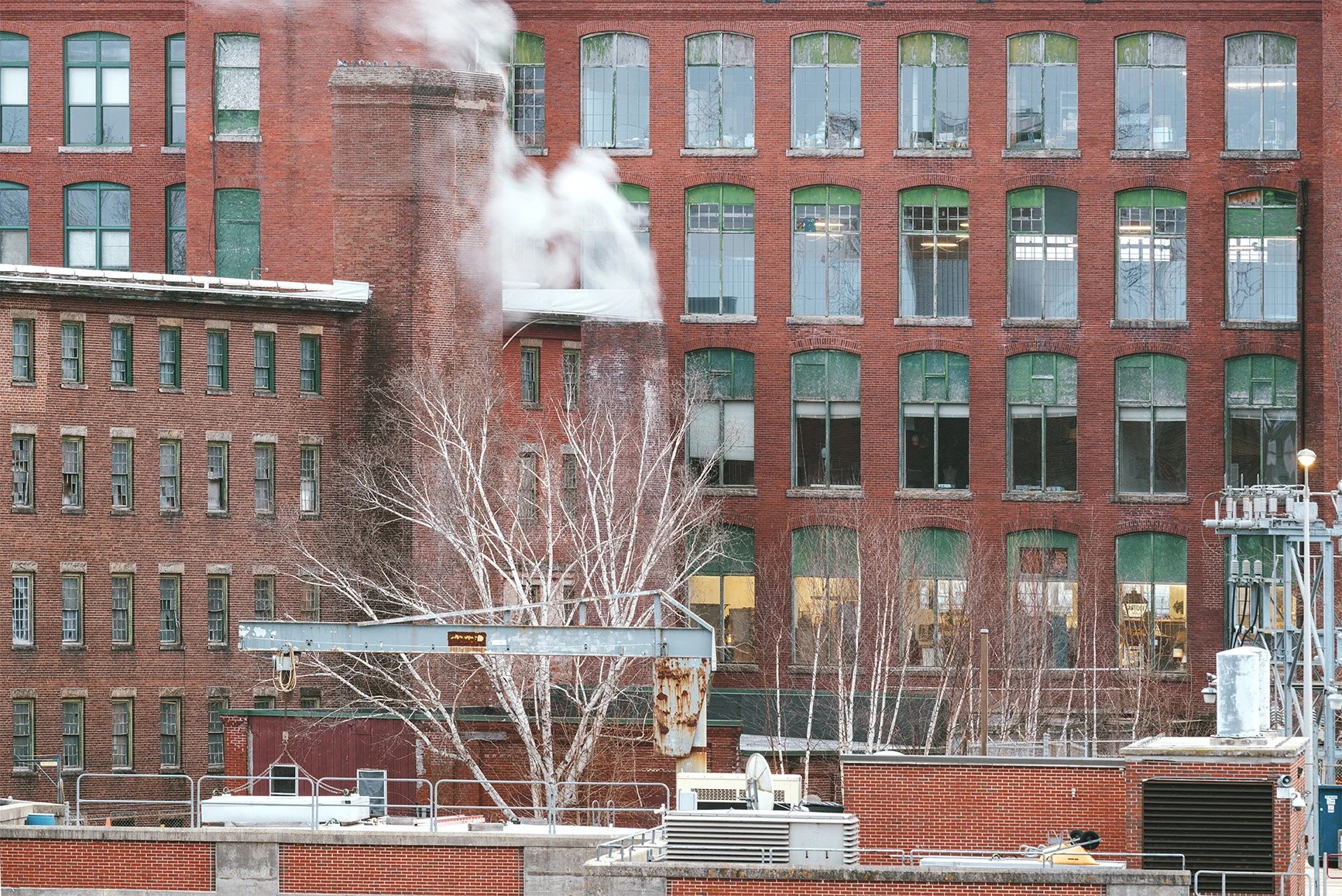
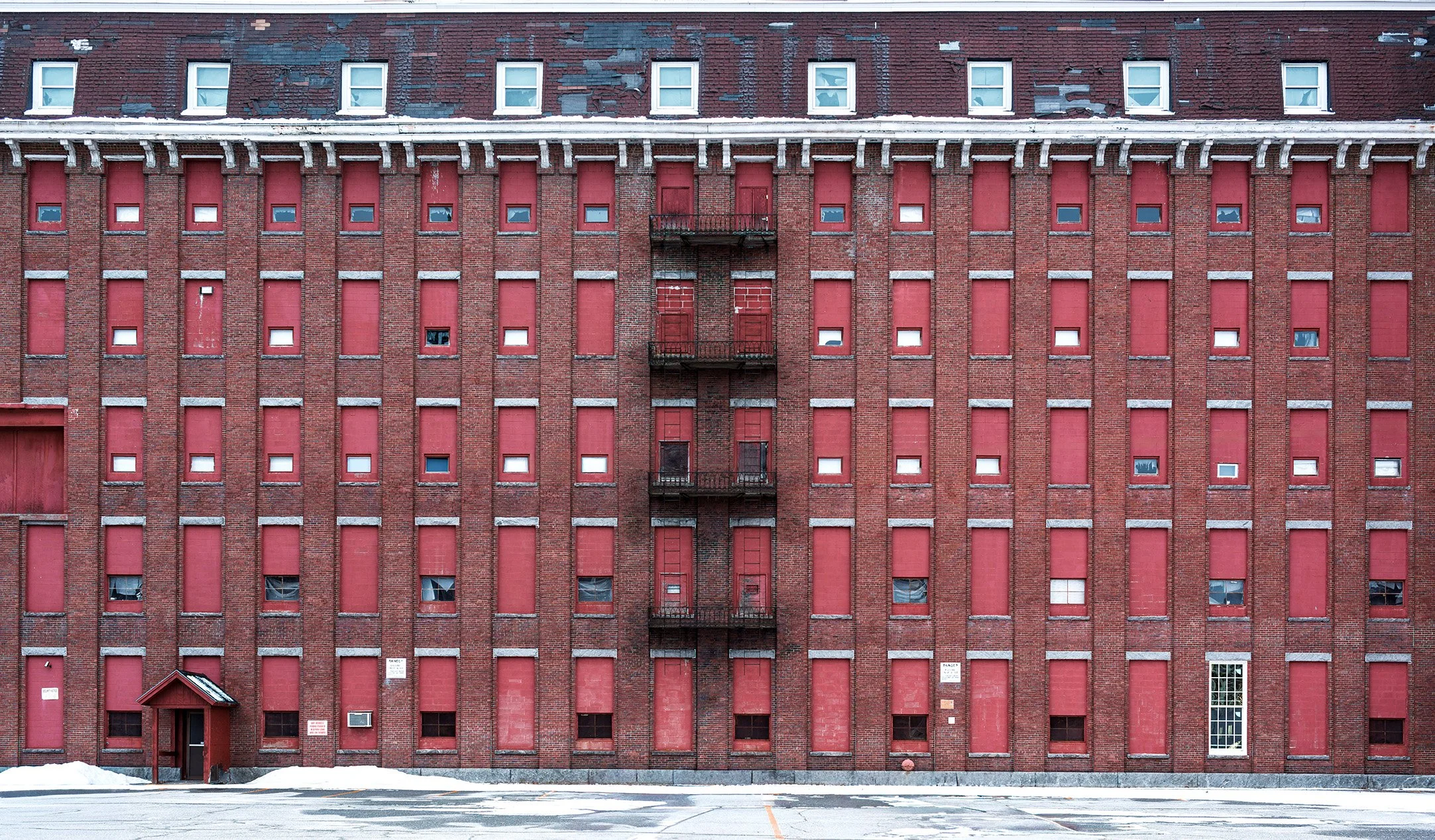
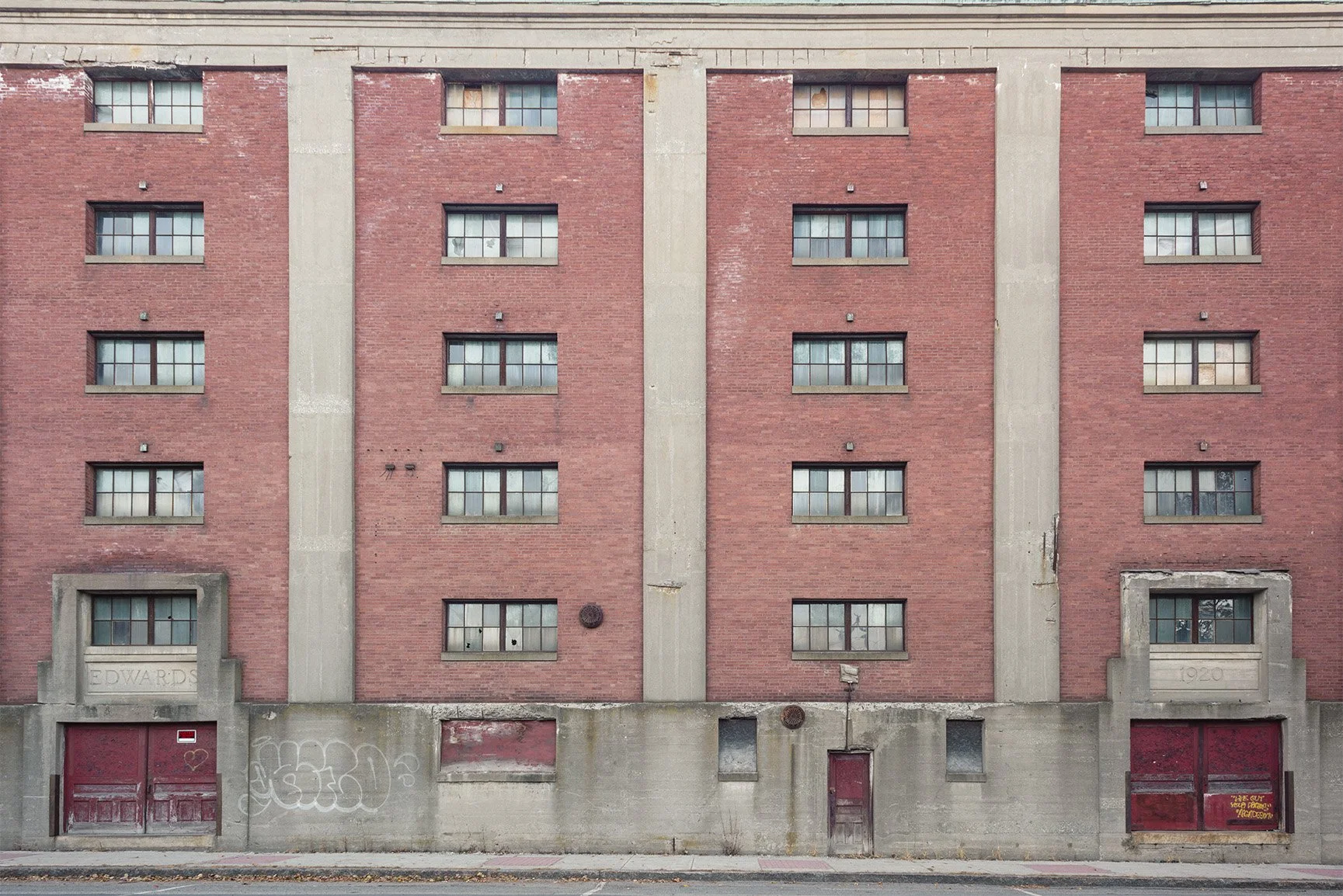
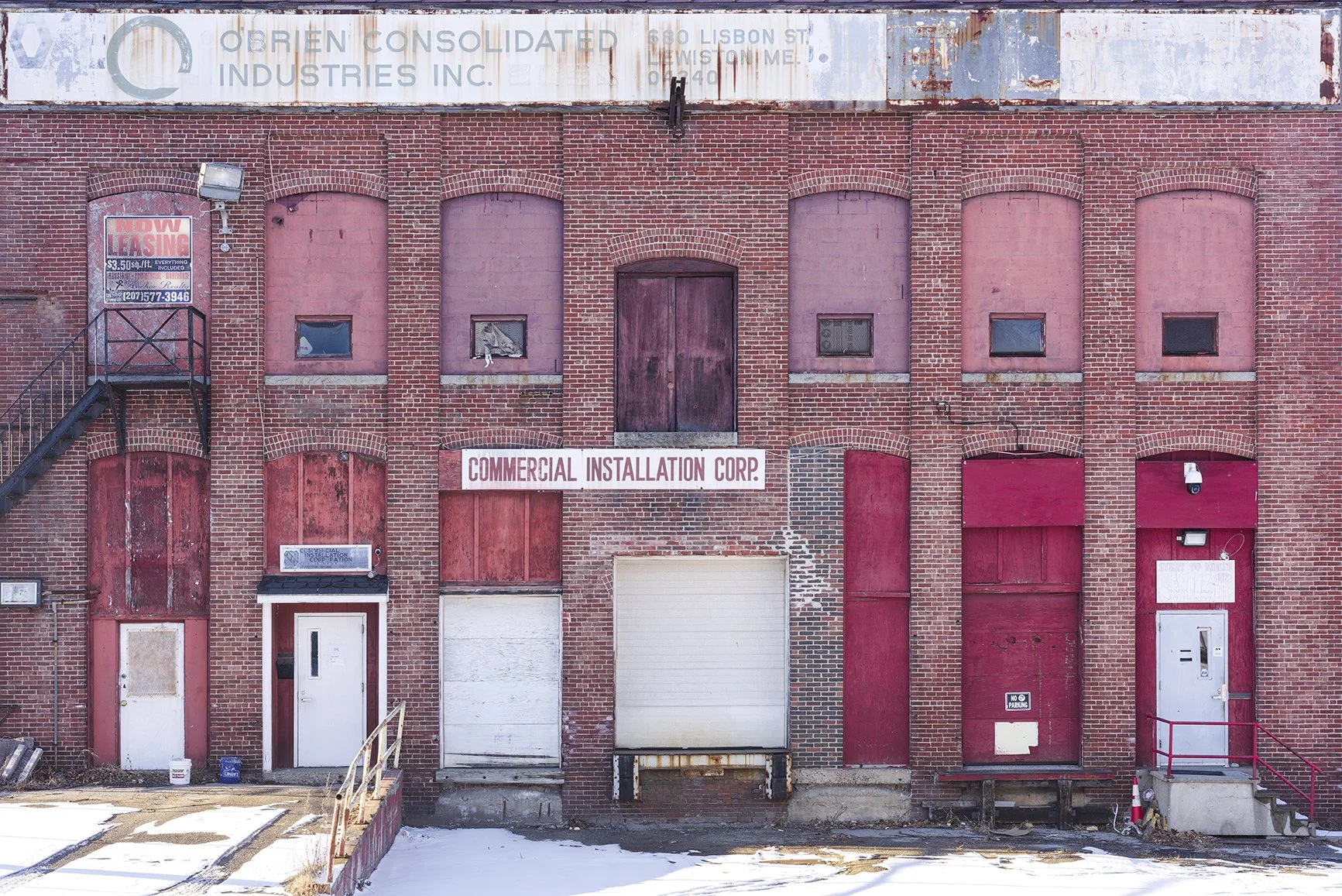
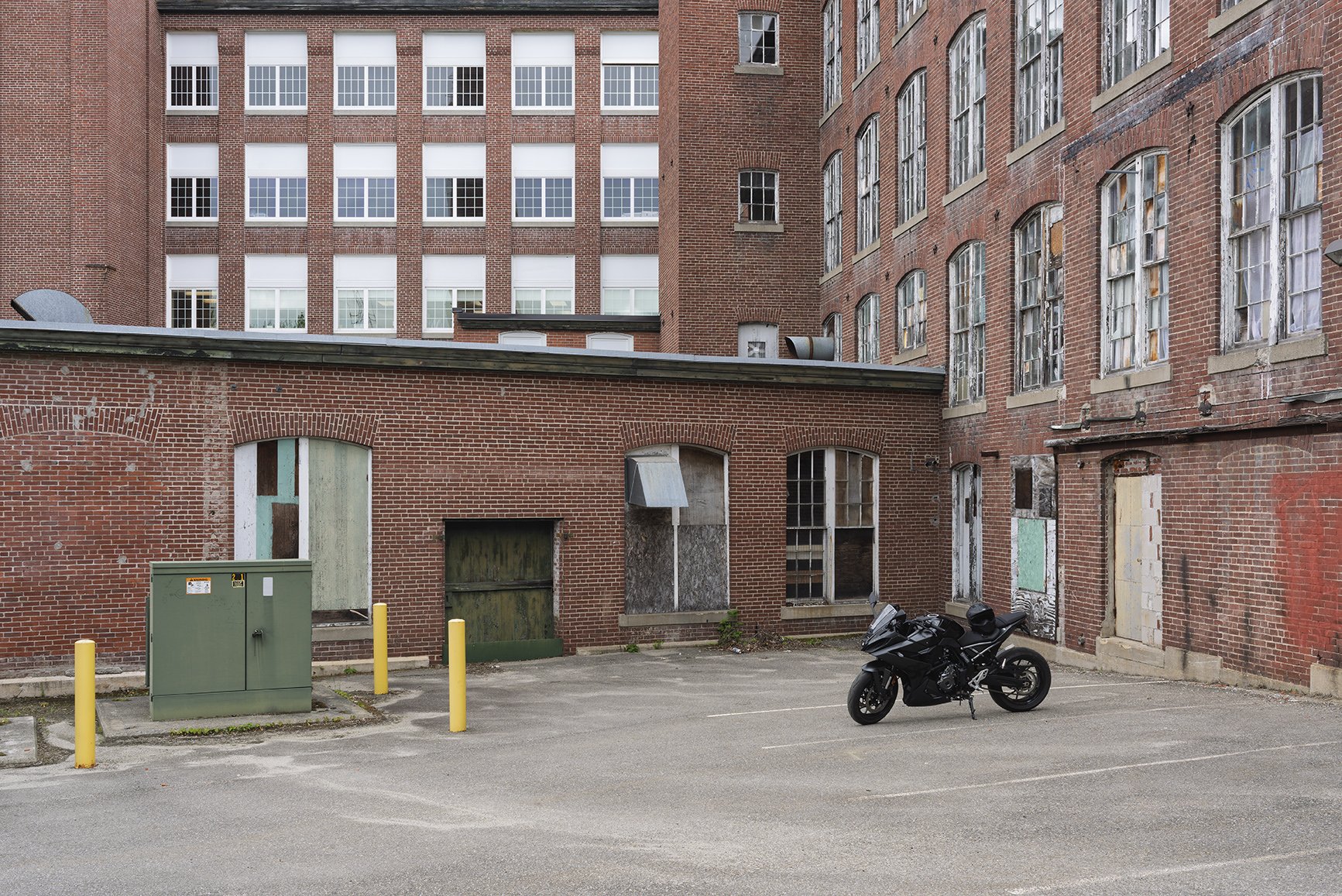
Today, as many of these mills stand silent, their weathered brickwork, towering windows, and riverside foundations offer a tangible connection to that remarkable period. Though the machinery has stopped and the workers have long since departed, the structures retain the physical presence of an era defined by ingenuity, ambition, hard work, and profound economic change. When I stand before them, I find myself responding to memory—both inherited and sensed—visualizing what remains after the machines and the people have gone quiet. Floor after floor of heavy timbers and iron, worn smooth by decades of motion, seems to hold the memory of every machine that once shook its frame. By nature, I am tactile, drawn by an inner voice toward places of danger and decay, where I imagine seething motors still pressing through brick walls amid shattered glass, overgrown vegetation, and collapsing roofs, all whispering, come closer. I smell the musk of rotting wood floors, taste the grit of crumbling mortar, study the texture of each brick, and imagine the weight of thick panes of glass and the sharp shards of fallen windows beneath my hands. These sensory encounters draw me beyond the visible structure, toward the lingering presence of the people who once filled these spaces with movement, sound, and purpose.
To look upon these surviving mills is to glimpse more than a vanished industry; it is to recognize the enduring imprint of human endeavor on the American landscape. Their preservation allows future generations to appreciate the people behind the production, the communities behind the commerce, and the history embedded in the buildings themselves. For me, photographing these places is both an act of discovery and a personal reckoning with the past—a way of listening to the echoes of those who came before me and acknowledging the lives that continue to inhabit these spaces through memory. The mills remind us that industrial progress was not built by machines alone, but by the countless individuals whose hands, skills, and determination gave those machines purpose. In this way, Maine’s historic textile mills remain powerful symbols of the foundations upon which modern America was built—a legacy woven from labor, innovation, resilience, and the lives of ordinary people who helped shape an extraordinary age.
RATING 3
Maine’s cotton and woolen mills helped shape America’s rise as an industrial nation during the 19th and early 20th centuries. Built along rivers and waterfalls, these immense brick structures harnessed waterpower to transform raw cotton and wool into yarn, blankets, clothing, and fabrics for a growing country. Communities such as Lewiston, Biddeford, Saco, and Waterville flourished around their mills, becoming centers of manufacturing, commerce, and working-class life. Today, these buildings feel like more than remnants of a vanished industry. They seem inhabited, carrying a presence that lives beyond architecture and history. Standing before them, I find myself responding to a memory both inherited and sensed, imagining what remains after the machines and the people have gone quiet.
My connection to these places is inseparable from my own family history. I think of my French Canadian grandfather, sipping a Ballantine Ale and smoking Pall Malls at the dining room table while counting the piecework pay he earned for every shoe he made. I think, too, of my Irish grandmother from County Mayo, who crossed the Atlantic alone as a twelve-year-old child and spent her teenage years laboring in the woolen mills of Boston and Worcester. Their lives were part of the larger story of industrial America, where generations of working people exchanged their labor, endurance, and youth for the promise of a better future. The mills brought opportunity and helped build communities, but their prosperity rested upon long hours, demanding work, and the sacrifices of ordinary people whose stories are rarely preserved in the monumental histories of industry.
When I enter these abandoned spaces, I feel drawn toward the physical evidence of that vanished world. Floor after floor of heavy timbers and iron, worn smooth by decades of motion, seems to hold the memory of every machine that once shook its frame. By nature, I am tactile, guided by an inner voice that pulls me closer to places of danger and decay. I imagine the motors still seething behind the brick walls, their force lingering amid shattered glass, overgrown vegetation, and collapsing roofs. The buildings seem to whisper, come closer. I smell the musk of rotting wood floors, taste the grit of crumbling mortar, study the texture of each brick, and feel the imagined weight of thick panes of glass and the sharp edges of fallen windows. These sensations draw me beyond the visible structure into a more intimate encounter with time, memory, and absence.
Through this work, I seek to recognize the lives that remain embedded in these places long after production has ceased. The mills were never simply factories; they were engines of technological change, gathering places for immigrant communities, sources of livelihood, and witnesses to the transformation of a nation. Their silent interiors preserve traces of the hands that operated the machinery, the families who depended on the wages, and the communities that grew in their shadow. Though the industry has largely disappeared, its physical presence endures in the brickwork, the worn timbers, the waterways, and the immense rooms where labor once defined the rhythm of daily life. More than abandoned factories, these structures preserve the legacy of the people and communities who helped weave the fabric of America’s industrial age. For me, photographing them is both an act of discovery and a deeply personal reckoning with the past—a way of listening to the echoes of those who came before me and acknowledging the human lives that continue to inhabit these places in memory.
RATING 1;
More than abandoned factories, these structures preserve the legacy of the people and communities who helped weave the fabric of America’s industrial age. Within their massive brick walls, generations of workers devoted their lives to transforming raw cotton and wool into products that clothed and furnished a growing nation. The rhythmic movement of machinery once filled these buildings, while the labor of men and women sustained families, built neighborhoods, and shaped the character of entire towns. The mills were not simply places of production; they were the heart of communities whose daily lives revolved around the rhythms of industry.
Their influence extended far beyond the factory floor. The wealth and employment generated by textile manufacturing helped build homes, schools, churches, businesses, and transportation networks, connecting Maine’s river towns to a rapidly expanding national economy. Waves of immigrants and workers from distant places brought their skills, traditions, and aspirations, creating diverse communities bound together by the shared experience of industrial life. Their stories reflect both the promise of opportunity and the personal sacrifices that accompanied America’s transformation from an agricultural society into an industrial power.
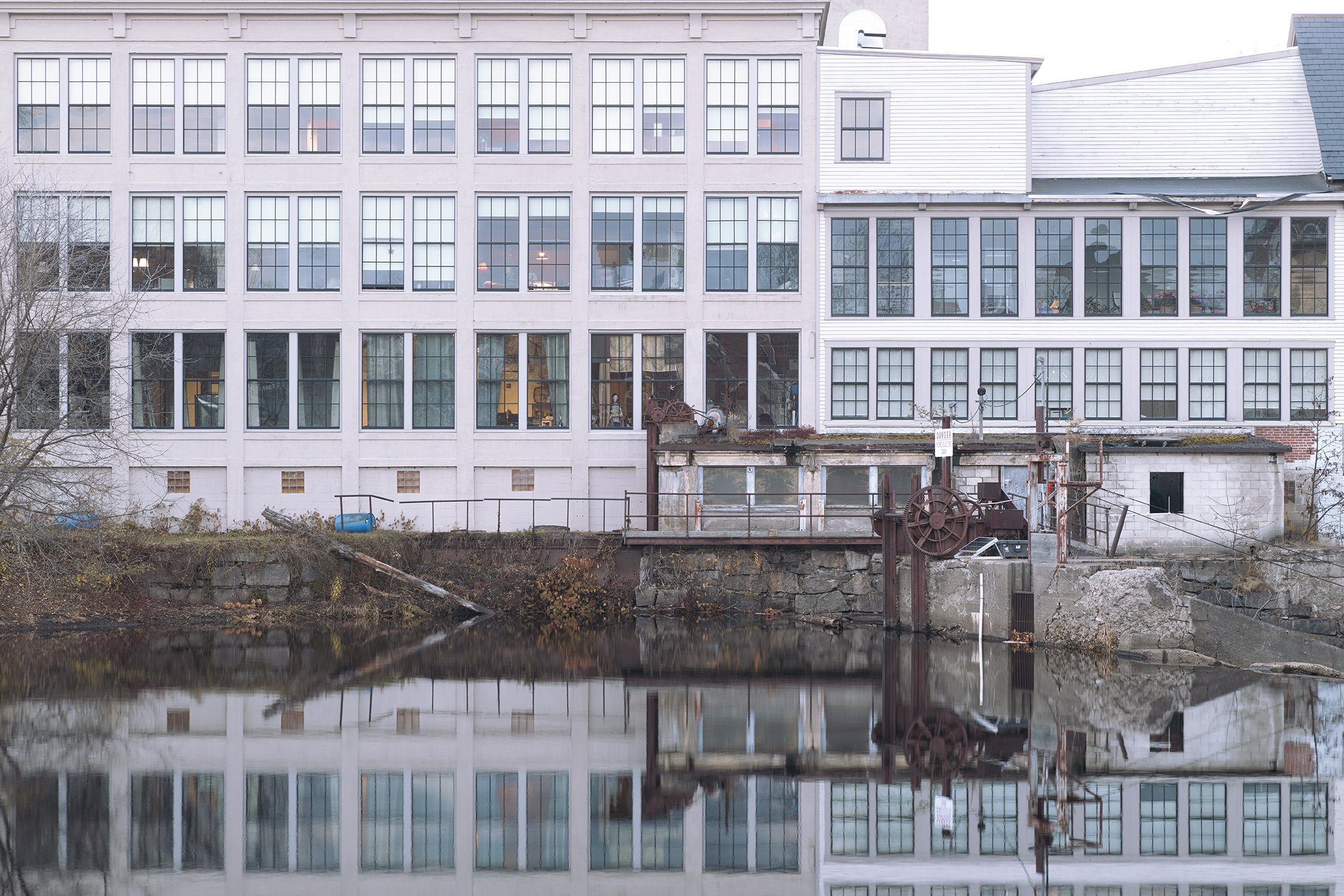
Today, as many of these mills stand silent, their weathered brickwork, towering windows, and riverside foundations offer a tangible connection to that remarkable period. Though the machinery has stopped and the workers have long since departed, the structures retain the physical presence of an era defined by ingenuity, ambition, hard work, and profound economic change. They remind us that industrial progress was not built by machines alone, but by the countless individuals whose hands, skills, and determination gave those machines purpose.
To look upon these surviving mills is to glimpse more than a vanished industry; it is to recognize the enduring imprint of human endeavor on the American landscape. Their preservation allows future generations to appreciate the people behind the production, the communities behind the commerce, and the history embedded in the buildings themselves. In this way, Maine’s historic textile mills remain powerful symbols of the foundations upon which modern America was built—a legacy woven from labor, innovation, resilience, and the lives of ordinary people who helped shape an extraordinary age.
RATING: FINAL
Opening Paragraph:
Cotton, Woolens Portfolio is More than abandoned factories. These structures preserve the legacy of the people and communities who helped weave the fabric of America’s industrial age. Within their massive brick walls, generations of workers devoted their lives to transforming raw cotton and wool into products that clothed and furnished a growing nation. The rhythmic movement of machinery once filled these buildings, while the labor of men and women sustained families, built neighborhoods, and shaped the character of entire towns. The mills were not simply places of production; they were the heart of communities whose daily lives revolved around the rhythms of industry. Today, these buildings feel like more than remnants of a vanished era. They feel inhabited, carrying a presence that lives beyond architecture and history, as though the lives and labors of those who passed through them have never entirely departed.
last paragraph
To look upon these surviving mills is to glimpse more than a vanished industry; it is to recognize the enduring imprint of human endeavor on the American landscape. Their preservation allows future generations to appreciate the people behind the production, the communities behind the commerce, and the history embedded in the buildings themselves. For me, photographing these places is both an act of discovery and a personal reckoning with the past—a way of listening to the echoes of those who came before me and acknowledging the lives that continue to inhabit these spaces through memory. These mills remind us that industrial progress was not built by machines alone, but by the countless individuals whose hands, skills, and determination gave those machines purpose. In this way, Maine’s historic textile mills remain powerful symbols of the foundations upon which modern America was built—a legacy woven from labor, innovation, resilience, and the lives of ordinary people who helped shape an extraordinary age.







Echoes, Still Portfolios
Clocks, Cupolas, Towers Cotton, Woolens Grain, Leather, Pulp Facades Falls, Outlets, Rivers Empty Empires Exteriors Glass, Iron, Stone Interiors Machinery Murals Neighborhoods Renaissance Signature Portfolios
Millworks by County
Androscoggin Aroostook Cumberland Franklin Hancock Kennebec Knox Lincoln Oxford Penobscot Piscataquis Sagadahoc Somerset Waldo Washington York
Bibliography
Inquiries
Megunticook River
Camden, Knox County, Maine
From the Echoes, Still: Maine's Industrial Remnants Collection (2024–2028)
Cotton, Woolens Portfolio
Historical Narrative
Knox Woolen Mill: The industrialization of coastal Maine in the nineteenth century
Kevin LeDuc Pigment print on Hahnemühle Baryta Rag Edition of 5 + 1 Artist’s Proof (A/P) + 1 Bon à Tirer (B.A.T.) Portfolio of 40 Images
Paper Size: 35 × 50 inches Image Size: 30 × 45 inches Borders: Approximately 2 ½ inches (All Sides) Mounting: Archival hinge or float mounting