

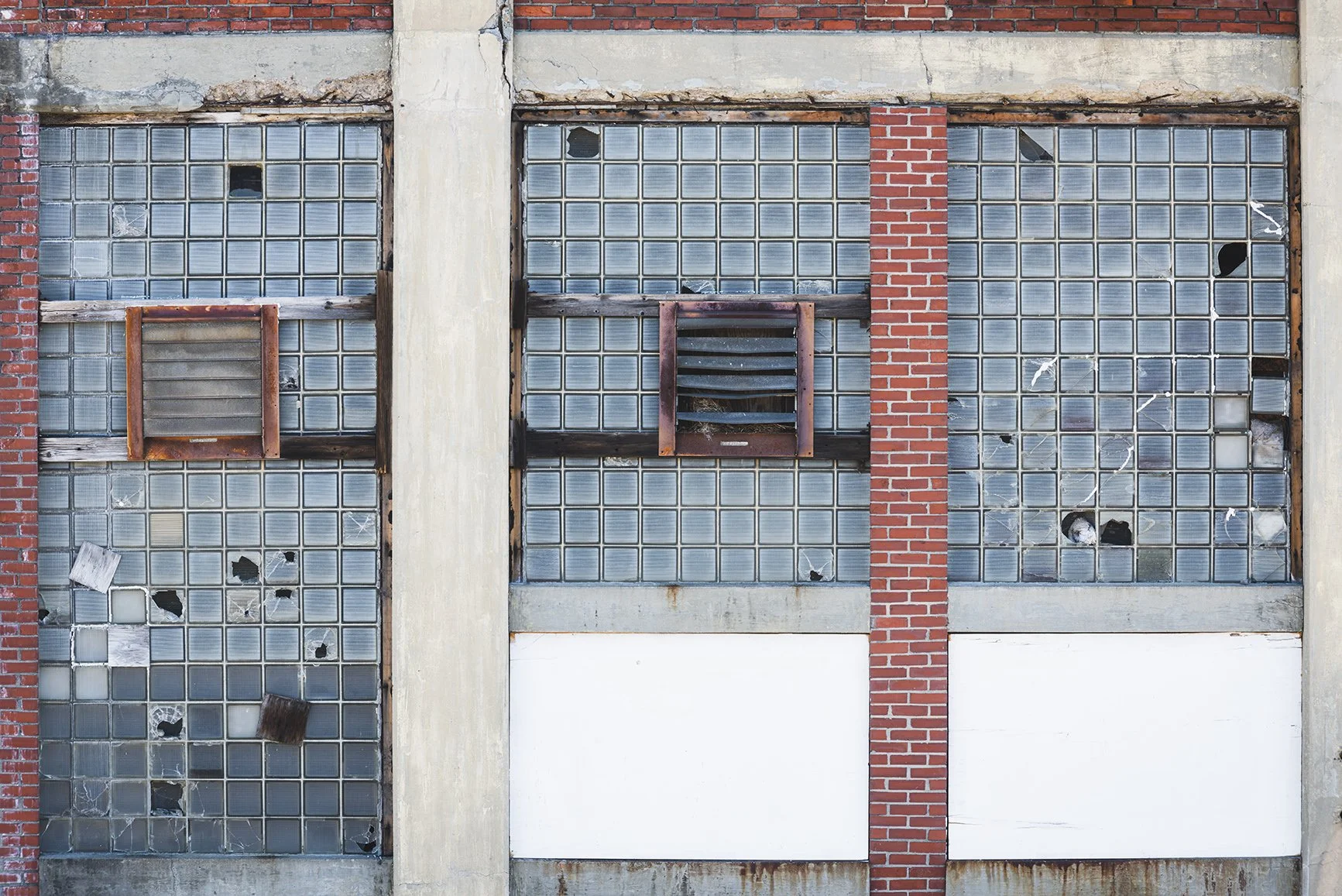
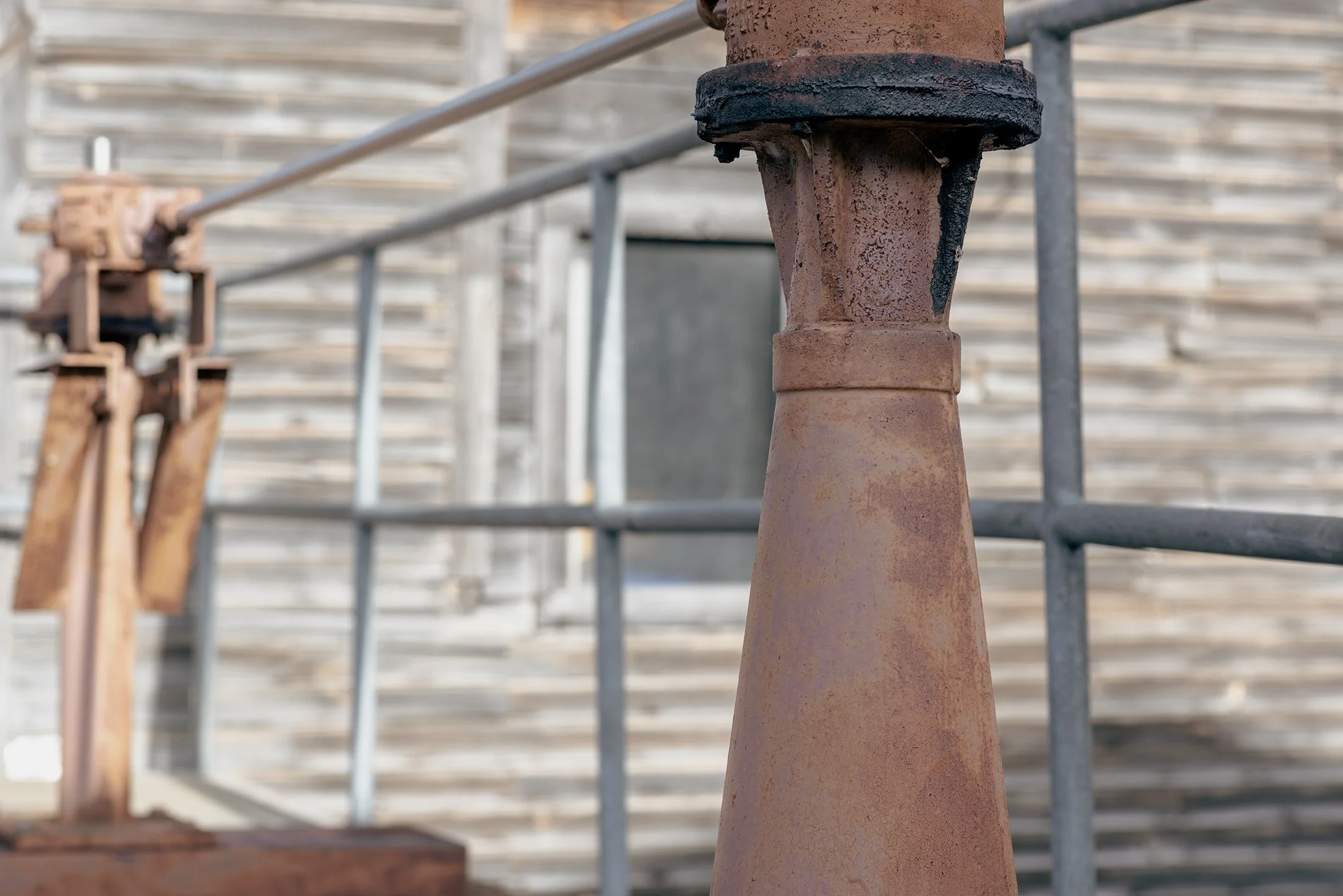

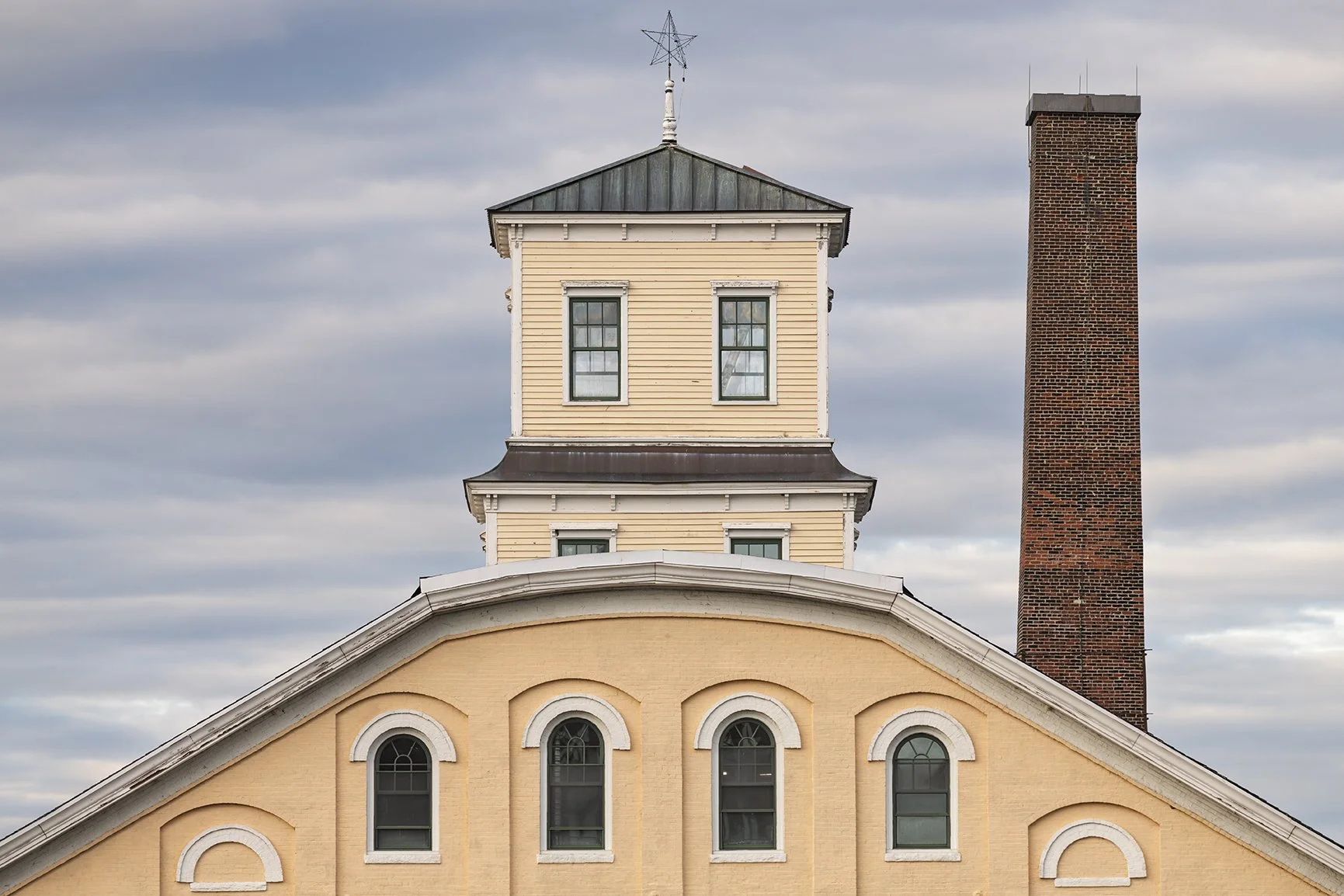


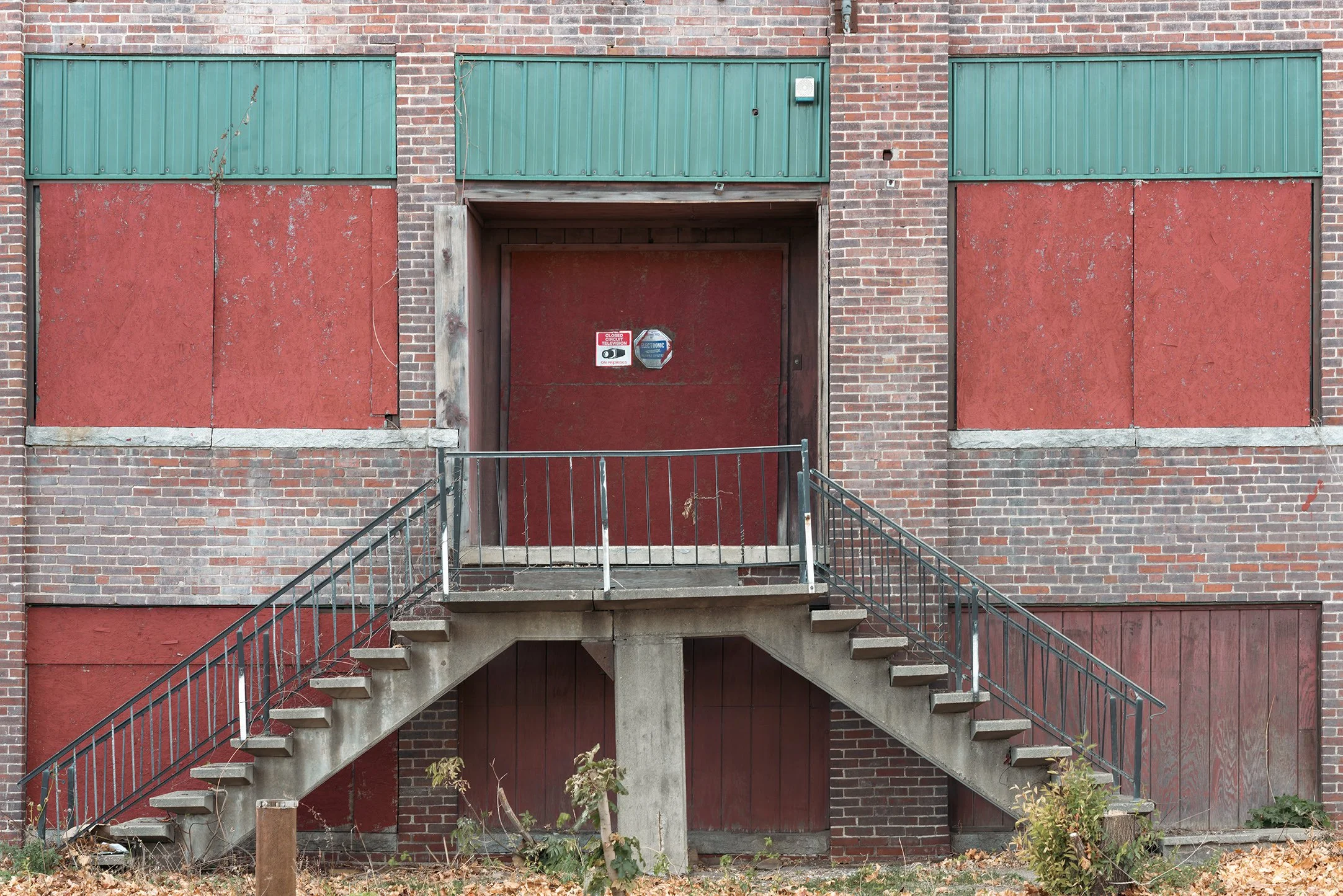

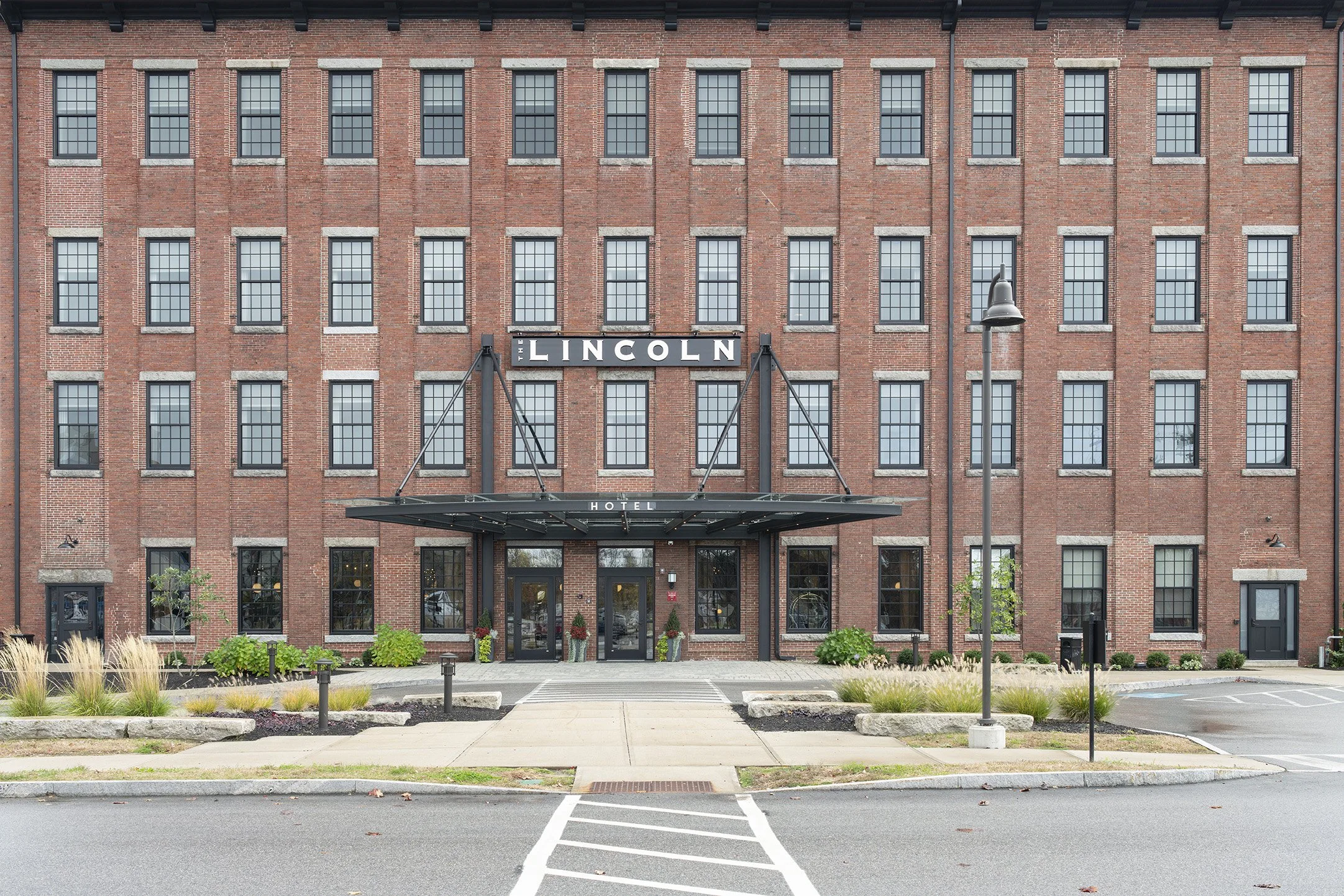


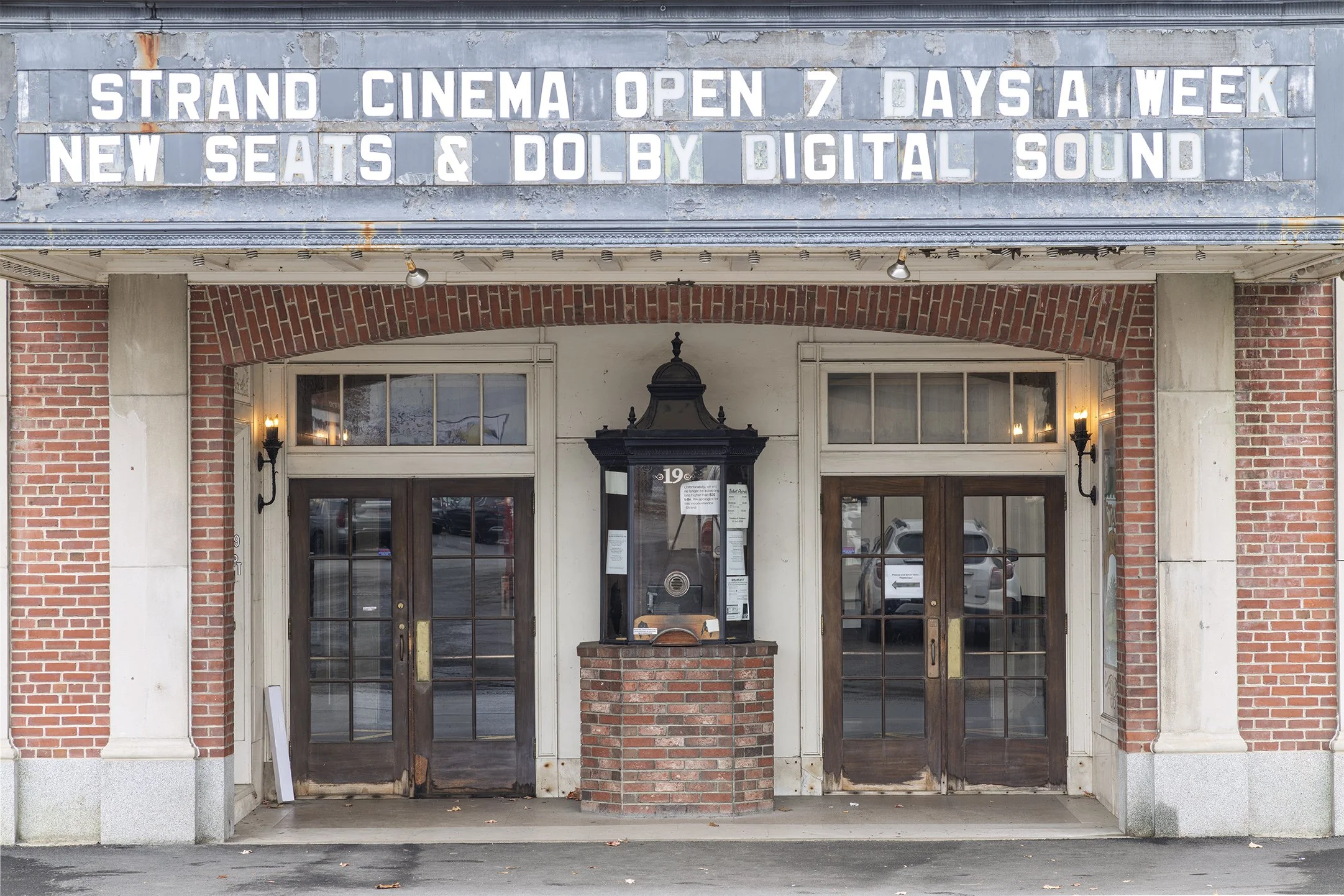

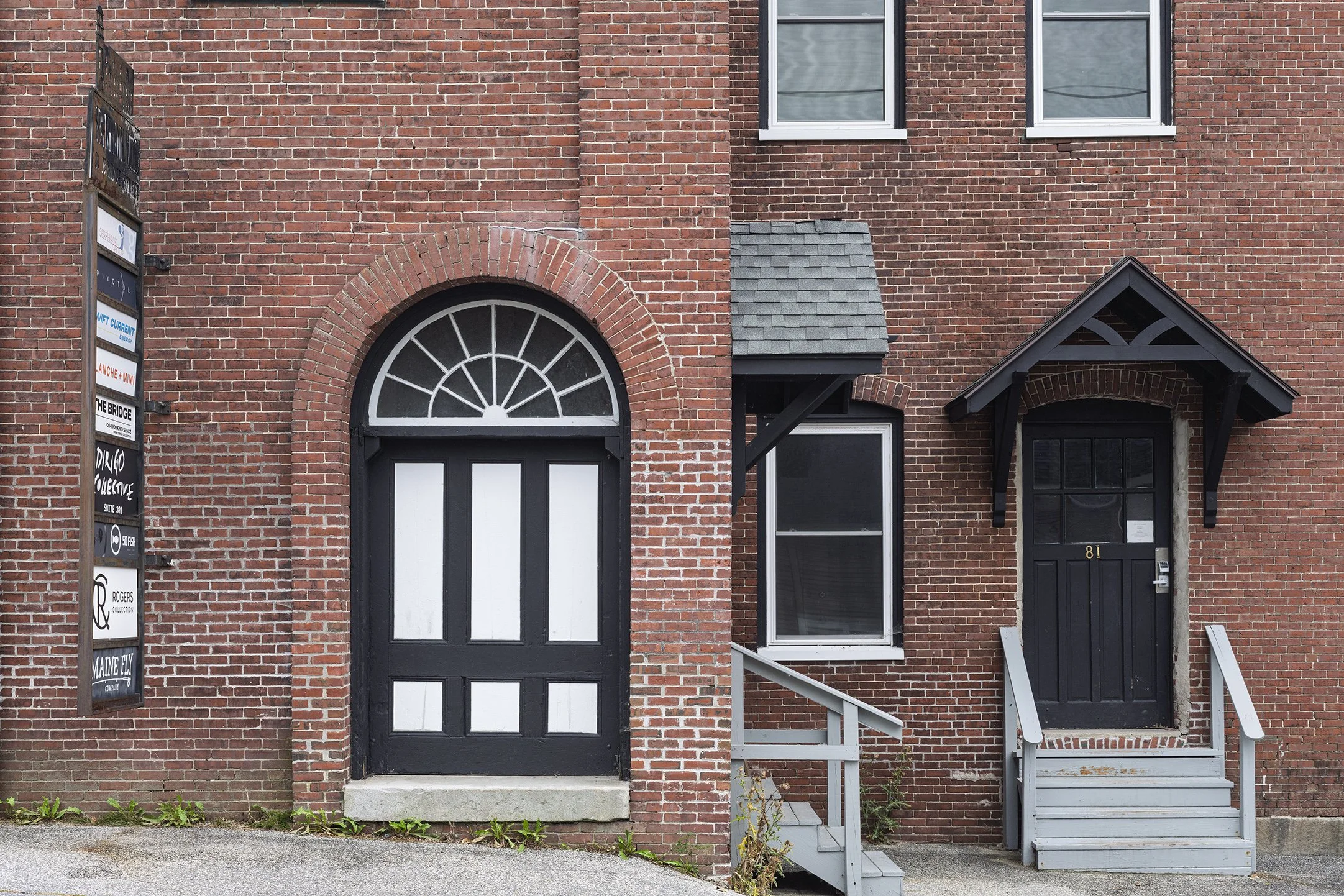


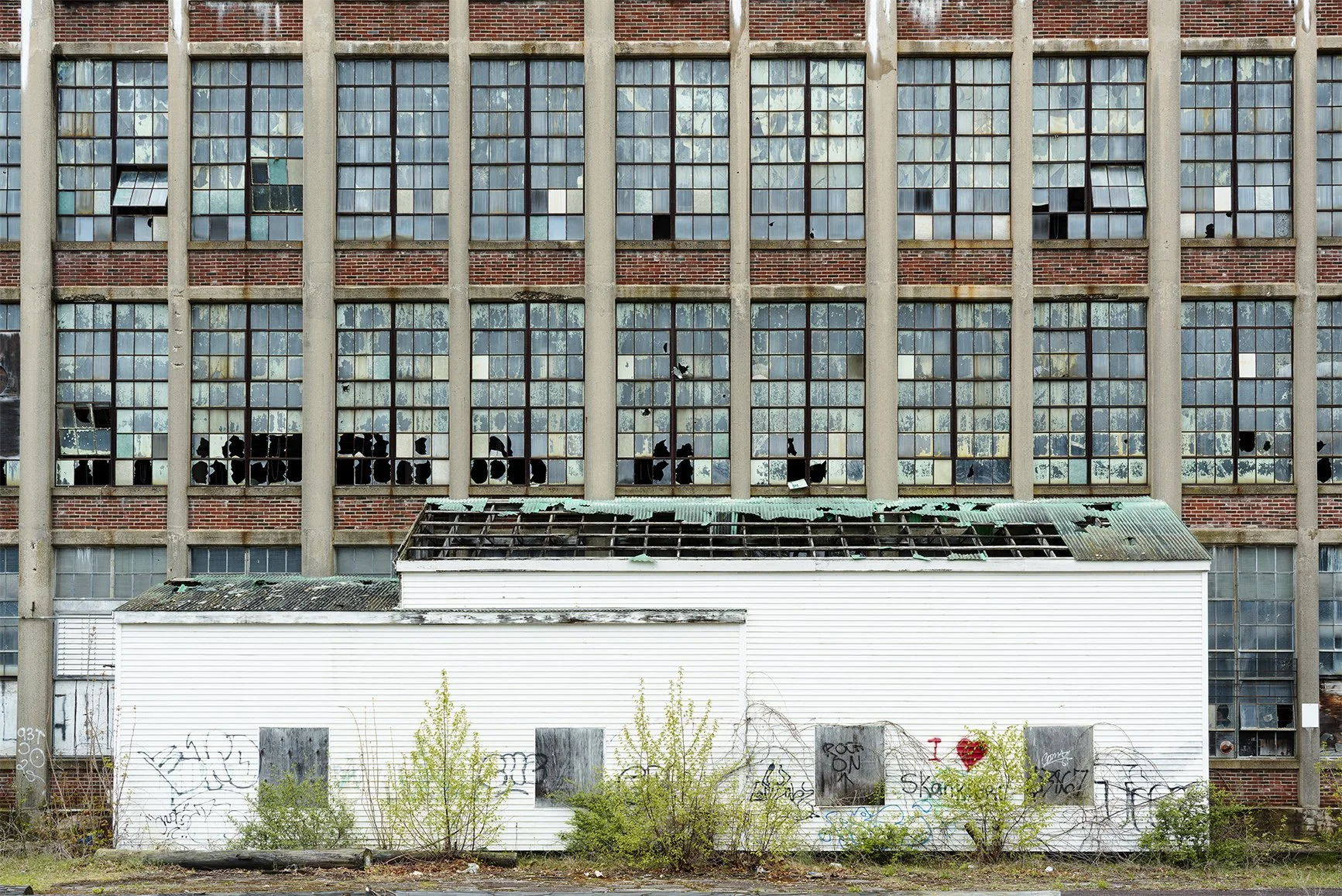




Kevin LeDuc Topsham Paper Company, c.1868, Topsham, Sagadahoc County, Maine, From Echoes, Still (2024-2027) – Clocks, Cupolas, Towers Portfolio, Pigment print, 30 × 45 inches, price $0.00
Androscoggin River, Pejepscot Falls
Brunswick, Cumberland County, Maine
Portfolio Narrative
Brunswick Cotton Manufactory Company, c. 1809 presents a layered portrait of one of Maine's earliest textile manufacturing sites. Through views of the tower, industrial landscape, architectural details, mechanical systems, and contemporary adaptations, the sequence traces nearly two centuries of change. The photographs reveal not only what remains, but how historic industrial spaces continue to carry evidence of labor, innovation, and memory.
Historical Narrative
Brunswick Cotton Manufactory Company: Production, Labor, and Community
Kevin LeDuc Pigment print on Hahnemühle Baryta Edition of 5 + 1 Artist's Proof (Portfolio of 5 Images)
Paper Size: 40 × 55 inches Image Size: 31.33 × 37 inches Borders: Approximately 4 inches (All Sides)
Maine Central Railroad, c. 1878–1920
Steamboat Lane, Water Street, Waterfront Park
Gardiner, Kennebec County, Maine
Portfolio Narrative
The Maine Central Railroad and Steamboat Lane Bridge, Gardiner, Maine, c. 1897–1903 documents the surviving evidence of Gardiner’s historic Kennebec River waterfront railroad system. Centered on the Steamboat Lane Bridge and its associated raised trestle, the portfolio examines the masonry bridge, elevated railroad alignment, and surrounding waterfront landscape that connected the Maine Central Railroad with Gardiner’s commercial industries. From the late nineteenth century through 1920, the railroad served ice houses, lumber mills, coal dealers, freight facilities, locomotive operations, and the steamboat passenger depot, transforming the waterfront into an integrated rail-and-river transportation center.
The sequence emphasizes the engineering and construction of the Steamboat Lane Bridge. Its stone masonry, elevated railroad crossing, structural proportions, and relationship to the roadway reveal the practical engineering required to carry the Maine Central Railroad above Steamboat Lane while maintaining access to Gardiner’s waterfront. Estimated to date from approximately 1897–1903, the bridge represents an important stage in the development of the railroad’s elevated waterfront system. Its surviving masonry preserves a tangible record of the engineering, craftsmanship, and transportation infrastructure that shaped Gardiner during the industrial era.
Historical Narrative
Trenton Flint & Spar Company (1864–c. 1930s): Feldspar Mining and Milling at Cathance Station, Topsham, Sagadahoc County, Maine
Kevin LeDuc Pigment print on Hahnemühle Baryta Edition of 5 + 1 Artist's Proof (Portfolio of 5 Images)
Paper Size: 40 × 55 inches Image Size: 31.33 × 37 inches Borders: Approximately 4 inches (All Sides)
Mousam River, Stump Pond, River Street Dam
Sanford, York County, Maine
From the Echoes, Still: Maine's Industrial Remnants Collection (2024–2028)
Cotton, Woolens Portfolio
Historical Narrative
International Woolen Company: The Largest Single Building In Sanford’s Mill Yard
Kevin LeDuc Pigment print on Hahnemühle Baryta Edition of 5 + 1 Artist's Proof (Portfolio of 40 Images)
Paper Size: 40 × 55 inches Image Size: 31.33 × 37 inches Borders: Approximately 4 inches (All Sides)
Midnight Wreath– Renaissance portfolio, Brunswick Cotton Manufactory Company, c. 1809, Cumberland County, Pejepscot Falls, Brunswick, Maine
DJ Rob– Neighborhoods portfolio, Somerset County, Skowhegan, Maine
From the Echoes, Still: Maine’s Industrial Remnants – Artist Two Print Edition portfolio, 2020-2026
Pigment print on Hahnemühle Baryta
AP + Edition of 4
30 × 45 inches
Bridge Street
Yarmouth, Cumberland County, Maine
From the Echoes, Still: Maine’s Industrial Remnants – Artist Two Print Edition portfolio, 2024-2028
Pigment print on Hahnemühle Baryta
AP + Edition of 4
30 × 45 inches
Edition Includes
Studio B, from the– Renaissance portfolio
Maine Fly, from the– Renaissance portfolio





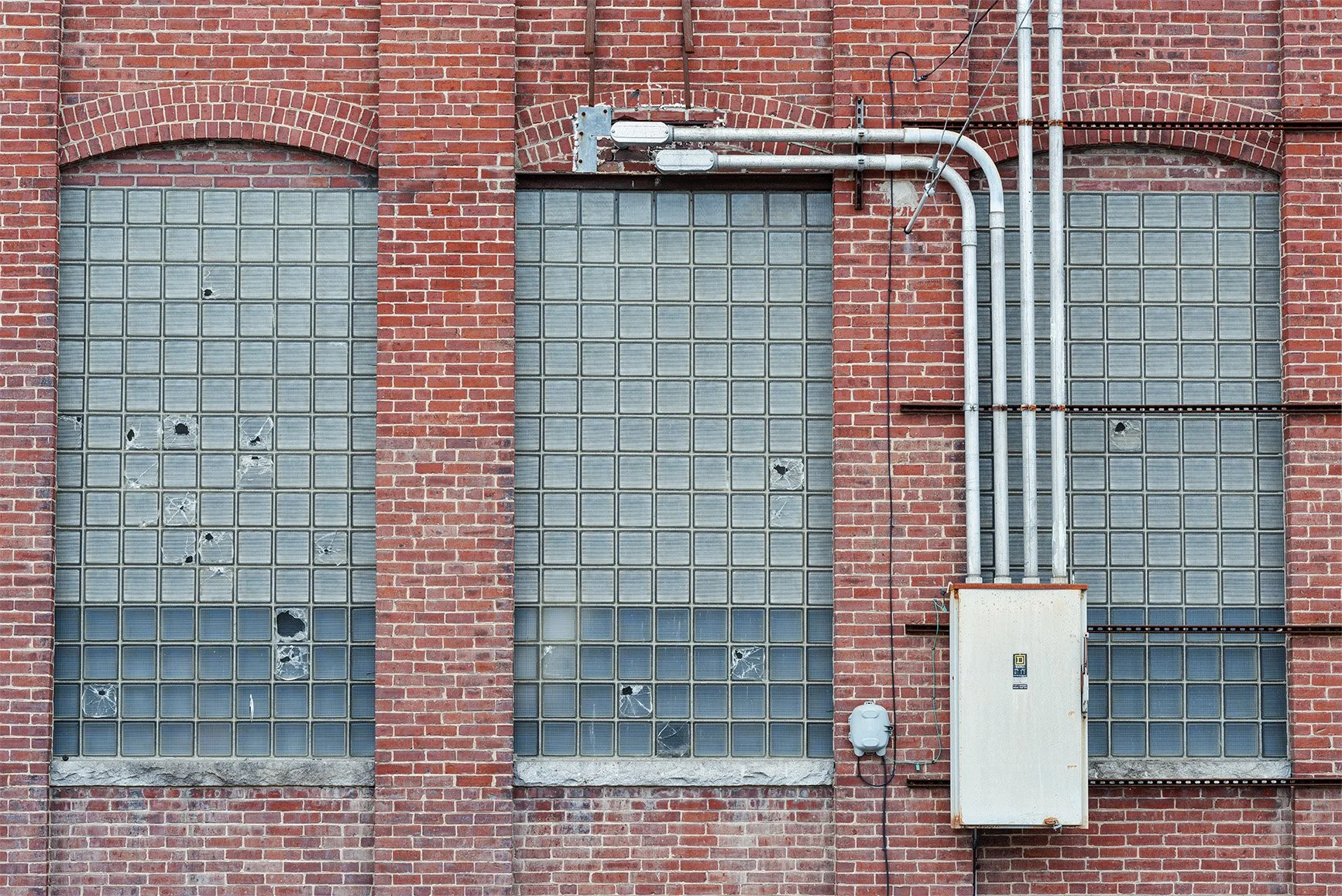


Cathance Station Topsham, Sagadahoc County, Maine
Portfolio Narrative The Trenton Flint and Spar Company, c. 1869 documents the surviving machinery of one of Maine's earliest commercial feldspar-processing operations. Centered on the company's historic ball mill, the photographs examine the weathered iron surfaces, structural details, and mechanical forms that once transformed quarried pegmatite into finely ground feldspar for the nation's ceramic and glass industries. Through close studies and broader contextual views, the portfolio preserves the physical evidence of an industrial process that connected Maine's mineral resources to manufacturers across the United States.
The sequence emphasizes both engineering and material memory. Layers of rust, feldspar residue, worn mounting bolts, and the massive rotating drum reveal decades of continuous industrial use, while the machine's monumental scale reflects the specialized technology required to process one of Maine's most valuable industrial minerals. No longer in operation, the surviving mill stands as a rare artifact of the state's mining history, embodying the craftsmanship, labor, and mechanical innovation that defined the Cathance works during the late nineteenth and early twentieth centuries.
Historical Narrative
Trenton Flint & Spar Company (1864–c. 1930s): Feldspar Mining and Milling at Cathance Station, Topsham, Sagadahoc County, Maine
Kevin LeDuc Pigment print on Hahnemühle Baryta Edition of 5 + 1 Artist's Proof (Portfolio of 5 Images)
Paper Size: 40 × 55 inches Image Size: 31.33 × 37 inches Borders: Approximately 4 inches (All Sides)