Echoes, Still
Kennebec County
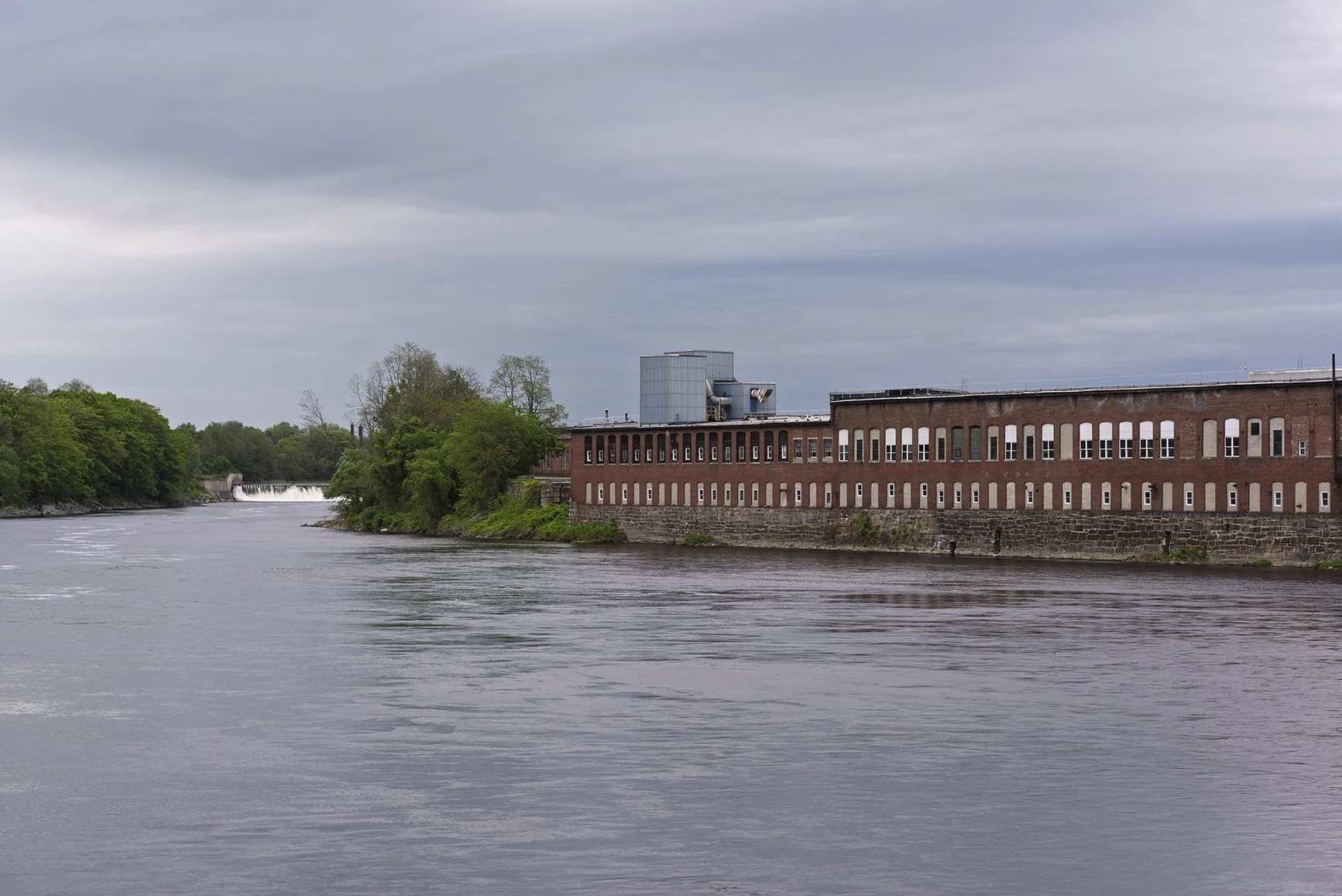


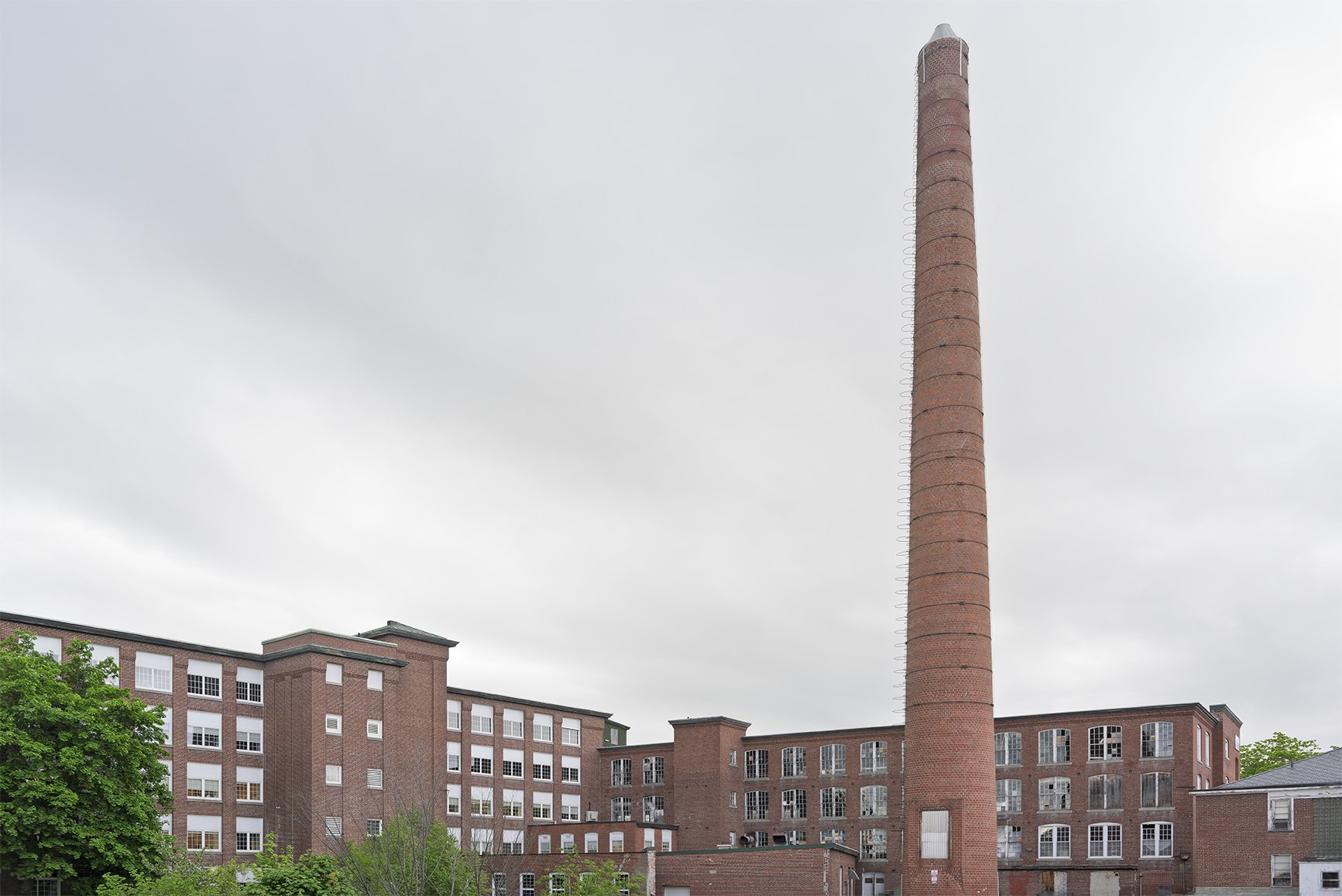


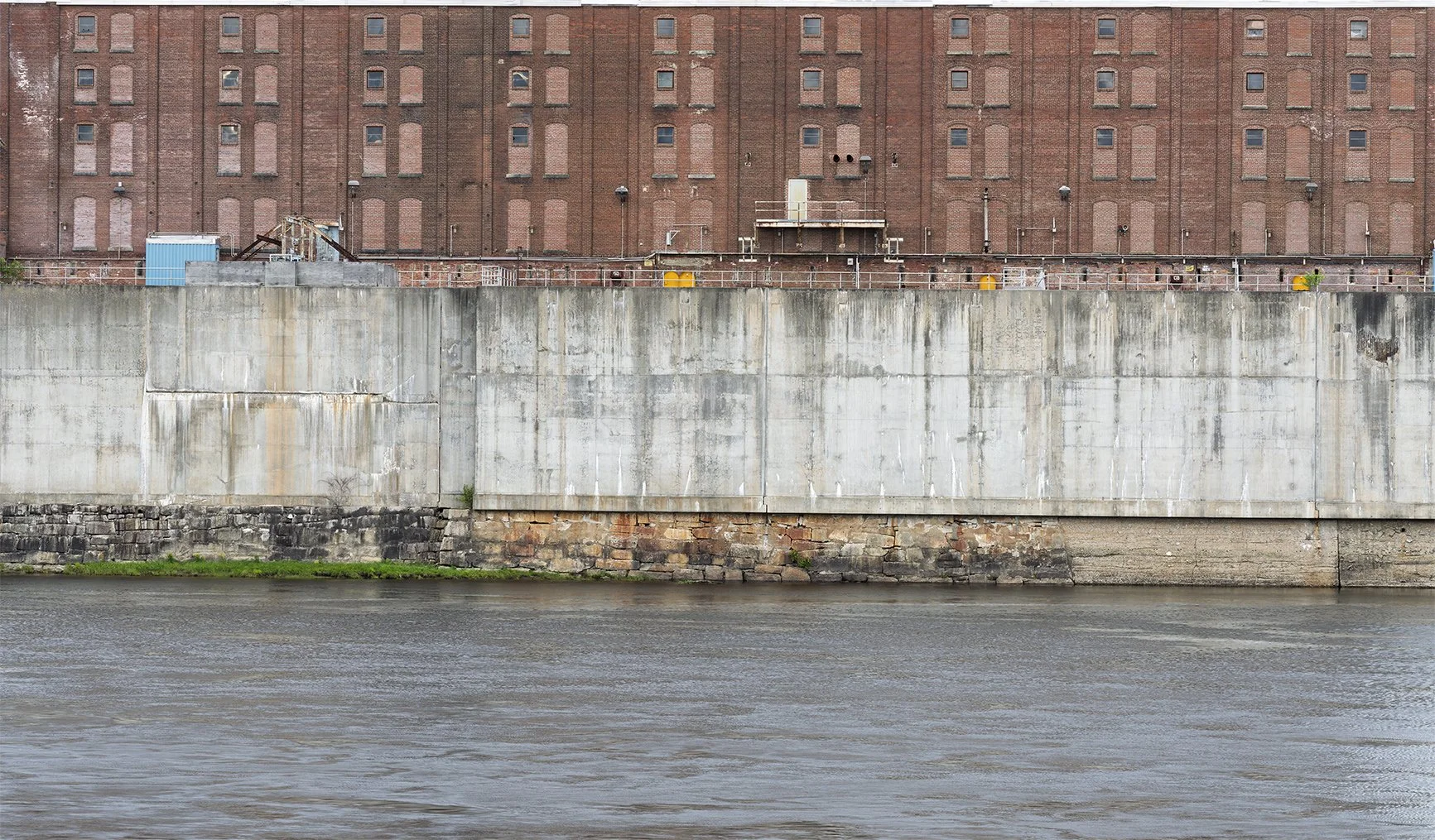



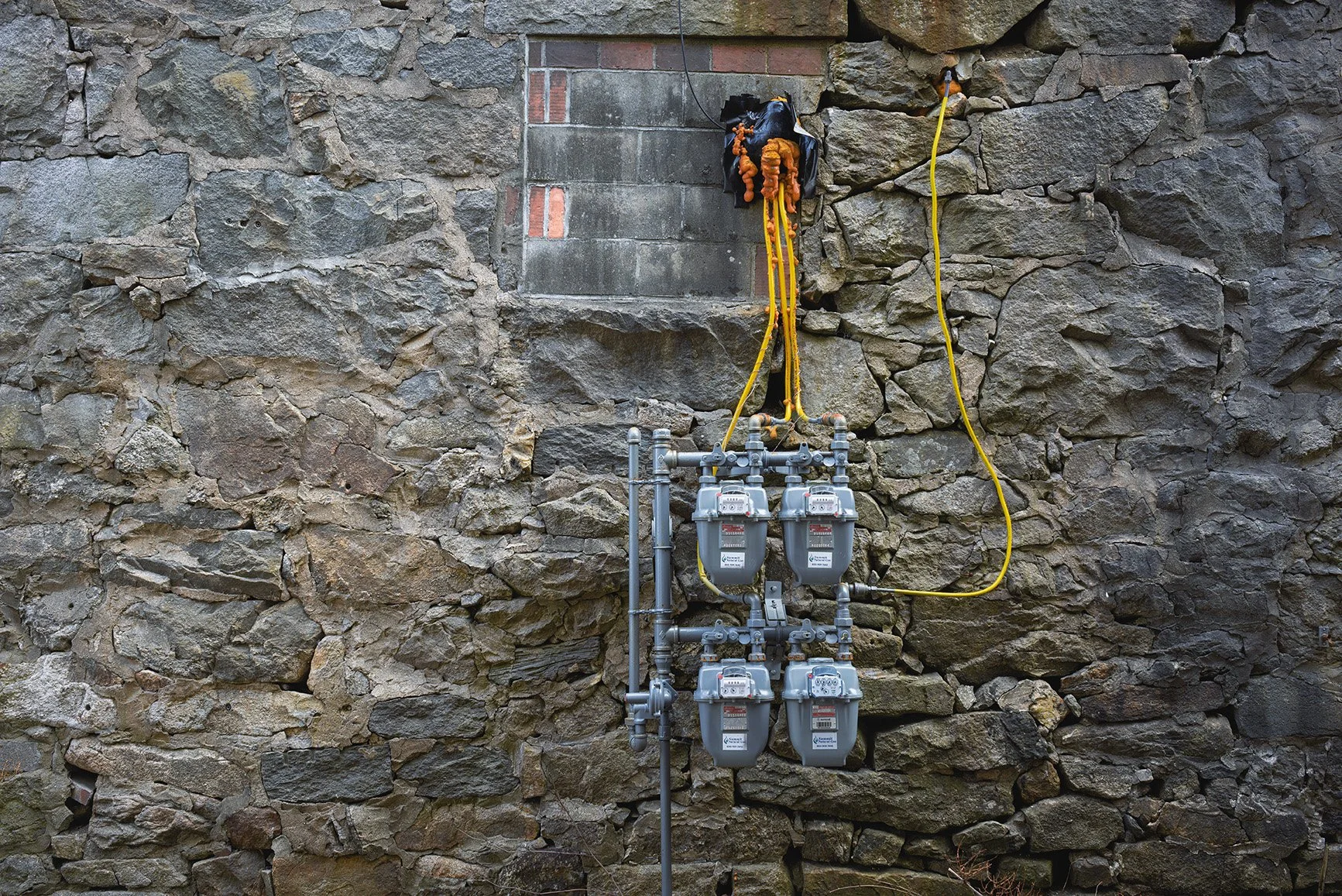





















-
The Hallowell Cotton Mill: Industry and Community Development in Hallowell, Maine
Founders, Construction, and Early Industrial Development
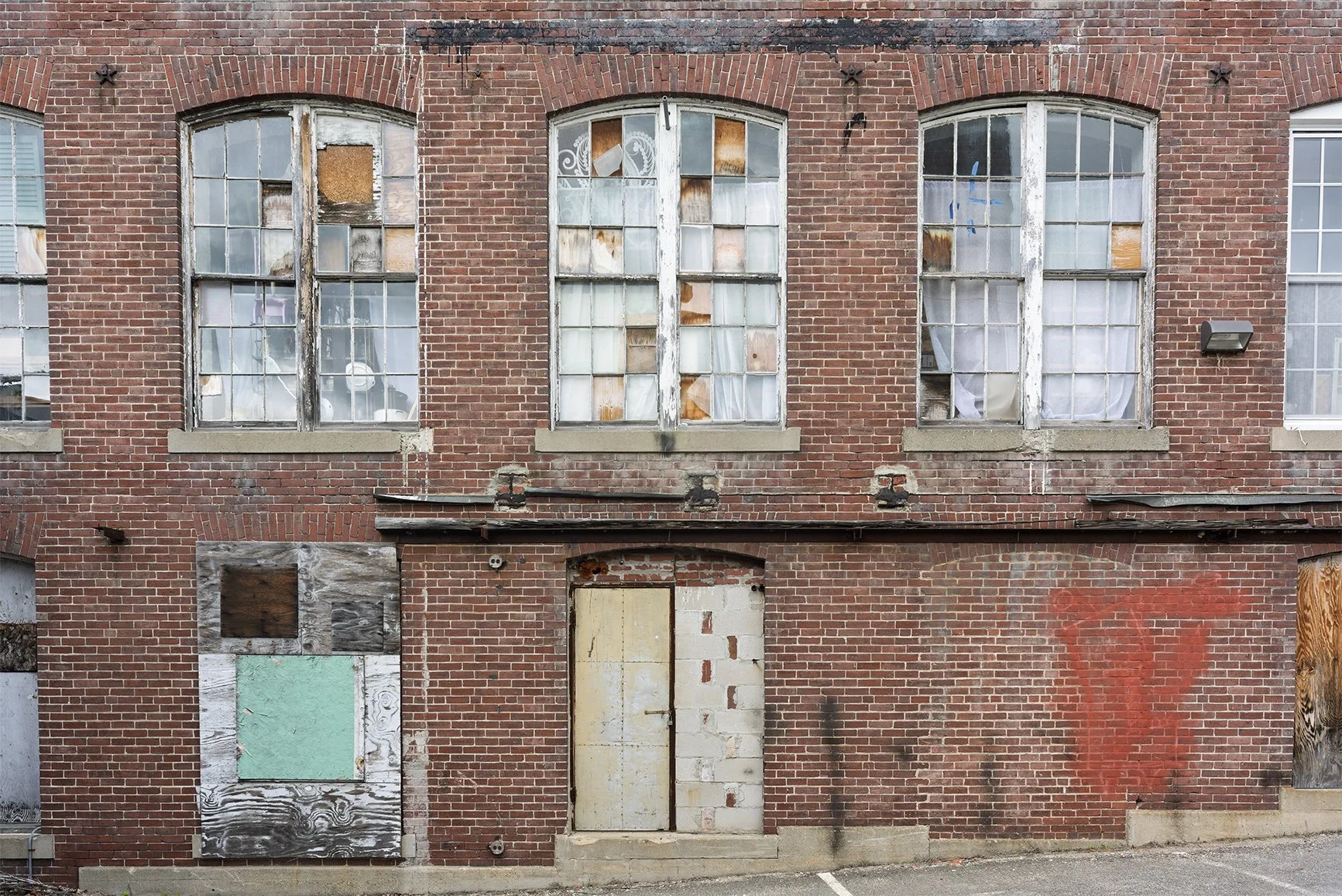
The Hallowell Cotton Mill emerged in the mid‑nineteenth century during a period of rapid industrial expansion across New England. Constructed in 1845, the mill was established by a group of local investors who recognized the potential of mechanized textile production in the Kennebec River valley. Among the principal organizers were prominent Hallowell businessmen including George Robinson, Justin E. Smith, John P. Flagg, Eben G. Dole, C. D. Bachelder, and Captain Lawson Watts. These men provided the capital necessary to construct the factory and launch one of the city’s most important manufacturing enterprises.¹
The mill was strategically located along Water and Second Streets near the Kennebec River, placing it within Hallowell’s established commercial district. During the early nineteenth century, the city had been an active shipping port where lumber, granite, and agricultural goods moved along the river toward coastal markets. By the 1840s, however, industrialization was beginning to reshape the regional economy, and investors increasingly sought to harness mechanized manufacturing as a source of economic growth.²
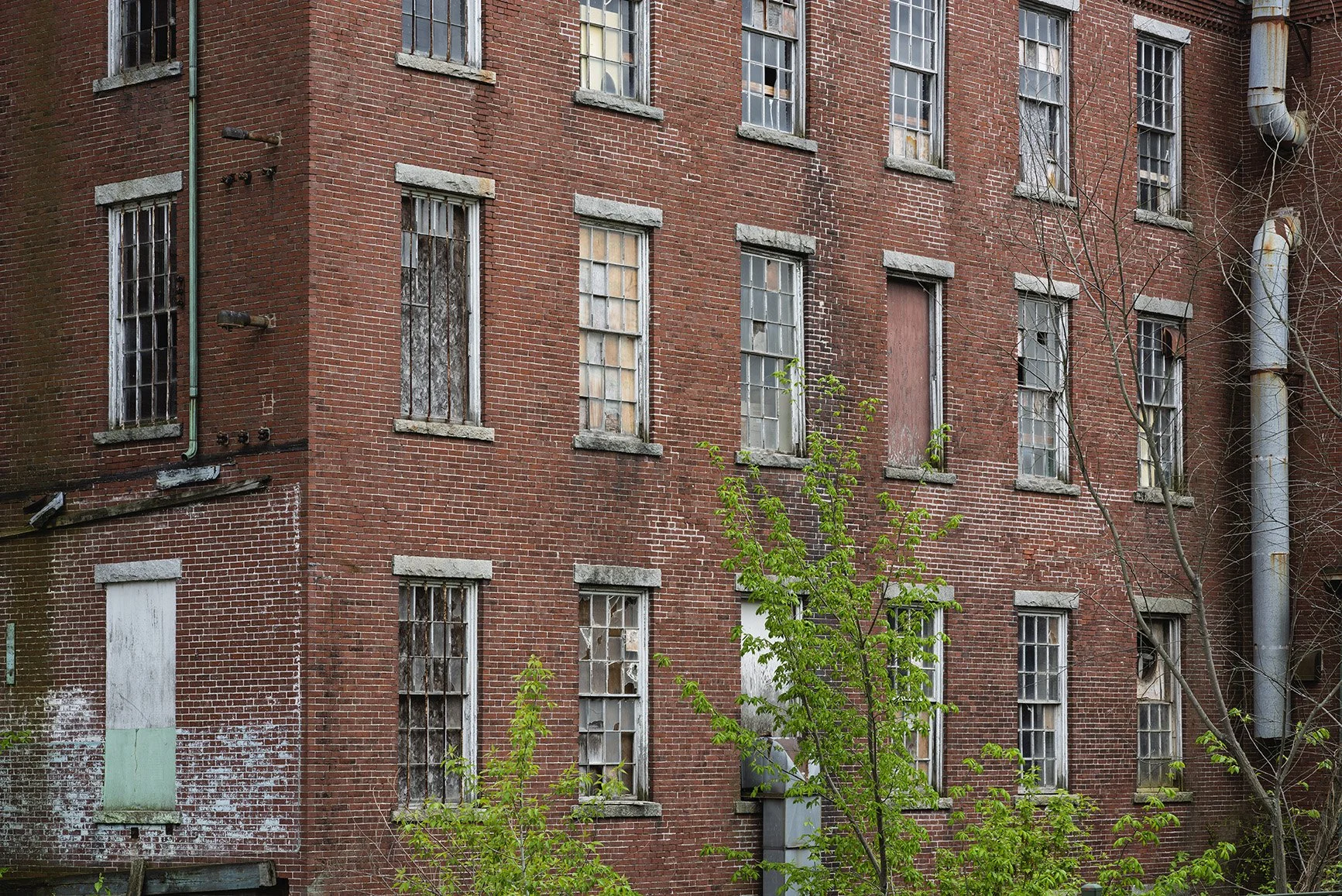
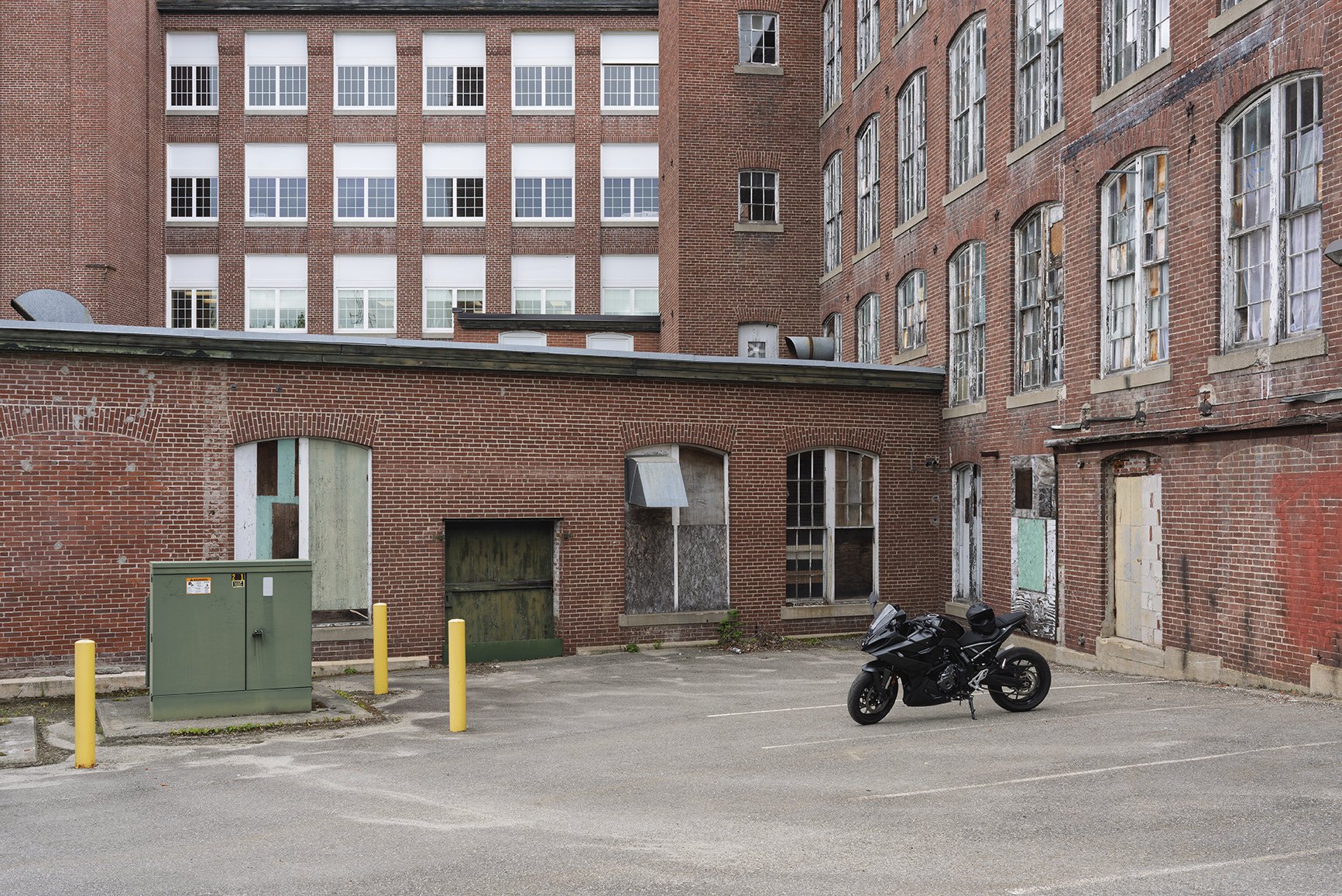
The building itself was imposing for the period. Constructed of brick and extending approximately 252 feet in length, the mill rose three to four stories and housed large rooms designed to accommodate spinning frames, power looms, and other machinery required for textile production.³ The factory contained more than 15,000 spindles, demonstrating the significant scale of the operation compared with other industrial facilities in Maine at the time.⁴
Unlike earlier mills that relied primarily on waterpower, the Hallowell Cotton Mill depended largely on steam engines fueled by coal. These engines were built locally by machinists associated with the McClench Iron Works, reflecting the development of mechanical industries in the region.⁵ Steam power allowed the factory to operate continuously and independently of seasonal fluctuations in water flow, making it possible to sustain large‑scale textile production. The adoption of steam technology also placed the mill within a broader national trend toward increasingly mechanized manufacturing during the Industrial Revolution in the United States.
Industrial Operations and Machinery
The internal operations of the Hallowell Cotton Mill followed the standard pattern of nineteenth‑century cotton textile manufacturing. Raw cotton, typically shipped from southern ports such as New Orleans, arrived in compressed bales and was processed through several stages of mechanical production: carding, spinning, weaving, and finishing, each performed with specialized machinery housed within the factory’s large workrooms.⁶
At its peak, the mill operated approximately 215 looms and produced a wide range of cotton textiles. Principal products included sheeting, jeans cloth, coat linings, prints, and other woven fabrics sold to garment manufacturers or distributed as finished cloth to regional markets.⁷ Much of the mill’s production was transported by rail to large commercial centers such as New York, where textile goods were sold through wholesale distributors.⁸
The factory required substantial quantities of raw materials and energy to maintain its operations. Historical accounts indicate that the mill consumed around thirty-five bales of cotton per week while burning roughly thirty tons of coal to power its steam engines.⁹ These inputs produced approximately 43,000 yards of finished fabric each week, demonstrating the significant output that even a mid‑sized New England mill could achieve.
Labor was essential to sustaining this level of production. At the height of operations in the 1860s, the mill employed about 200 workers.¹⁰ As was typical in the textile industry, the workforce included men, women, and children who performed various tasks such as tending spinning frames, operating looms, transporting materials, and maintaining machinery. Child labor was common, though local authorities required that younger workers attend school part of the year.¹¹
The working day was long and demanding. Employees generally worked ten to twelve hours per day in environments filled with mechanical noise and airborne cotton fibers. Despite these conditions, the factory provided a reliable source of wage labor in a community that had previously relied heavily on maritime trade and small-scale commerce.
Architecture and Industrial Design of the Mill Building
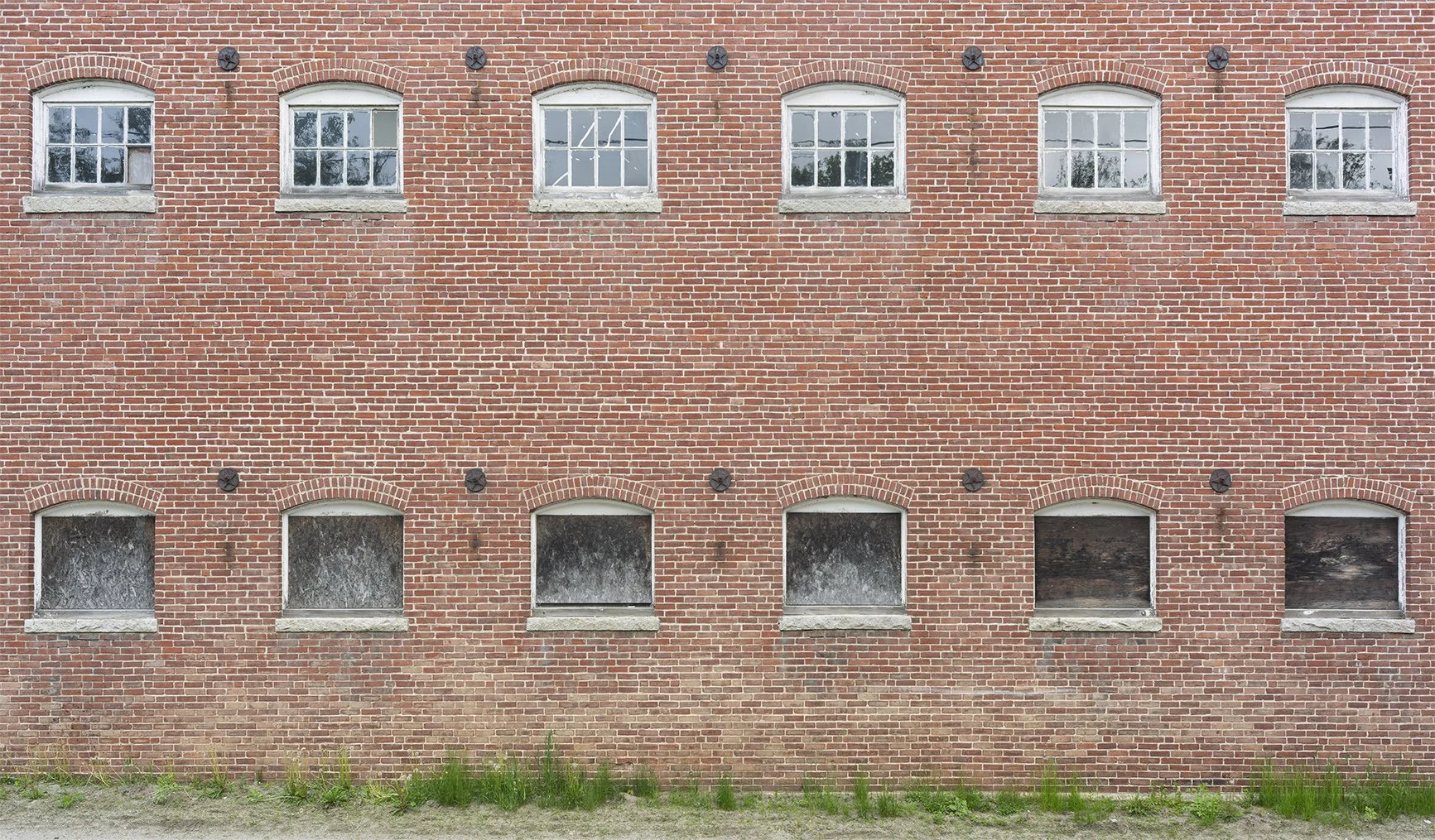
The Hallowell Cotton Mill was notable not only for its economic impact but also for its architectural design, reflecting mid-nineteenth-century industrial engineering practices. The mill’s brick exterior provided durability and fire resistance, a critical concern for textile operations.¹² Its long rectangular footprint, measuring approximately 252 by 50 feet, allowed for linear production flows, with raw cotton entering one end of the building and finished cloth exiting the other.¹³
Internally, the mill was divided into large, open workrooms with heavy timber posts and beams capable of supporting the substantial weight of spinning frames and looms.¹⁴ High ceilings and rows of tall windows maximized natural light, reducing reliance on candles or oil lamps and improving working conditions.
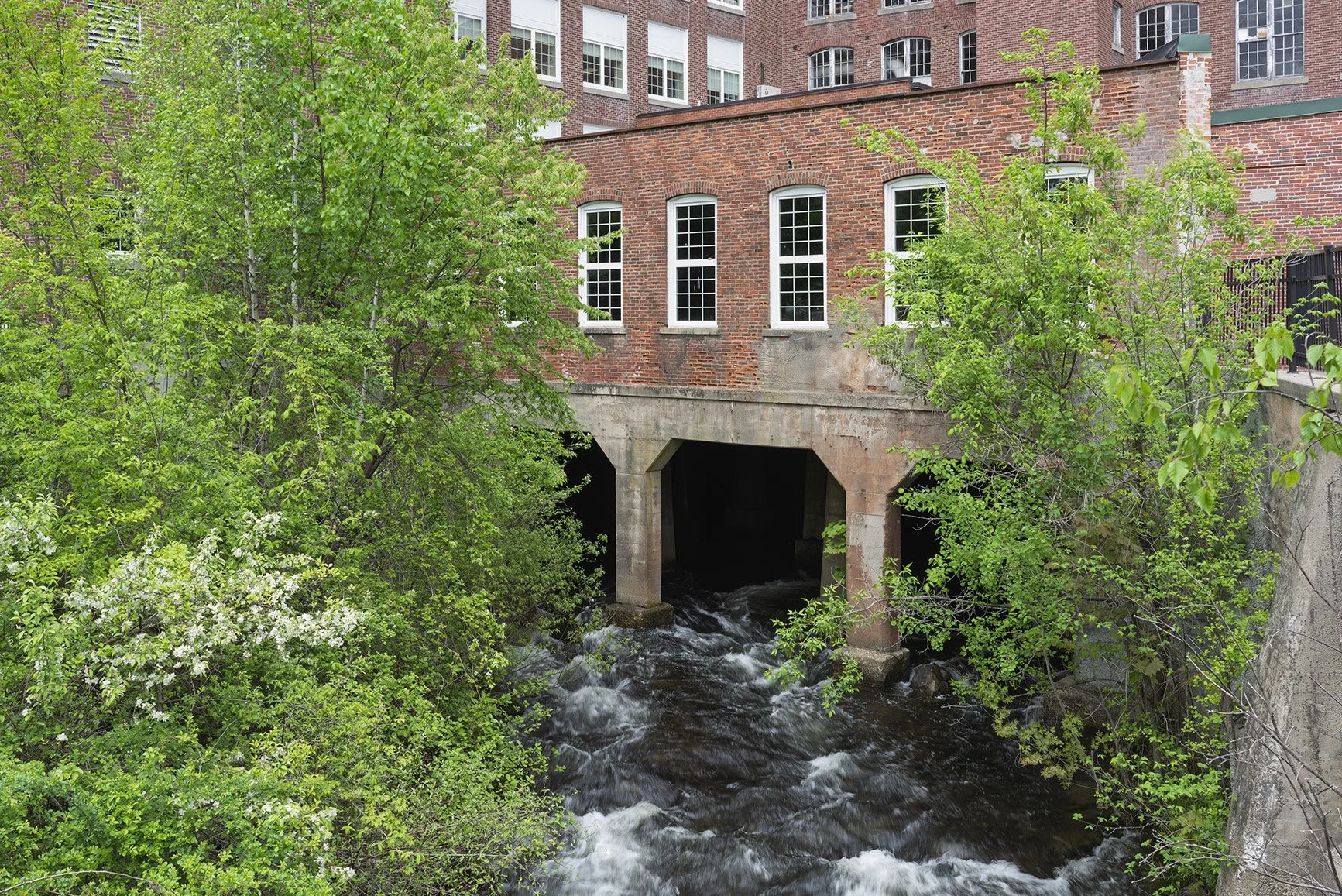
The steam engines were housed in a separate engine room on the lower floor, with line shafts and belts distributing mechanical power to spinning frames and looms on upper floors.¹⁵ This setup represented the intersection of traditional mill engineering and emerging mechanical technology. The building’s adaptability also facilitated later conversions for shoe manufacturing and other industrial uses.
Community Development and Social Impact
The establishment of the Hallowell Cotton Mill had profound effects on the city’s social and economic landscape. As employment opportunities expanded, workers and their families settled in neighborhoods near the factory, creating a small industrial community. Housing developments such as the Row House on Second Street provided accommodations for mill workers.¹⁶
In addition to housing, the mill’s proprietors supported institutions intended to meet workforce needs. During the 1850s, a nearby building known as the Old School House was constructed to provide education for children who both lived and worked in the mill community.¹⁷
The mill also influenced the city’s commercial life. Workers required food, clothing, and other necessities, stimulating local businesses along Water Street and other nearby thoroughfares.
The Hallowell Cotton Mill was part of Maine’s broader industrial economy. While cities such as Lewiston and Biddeford developed massive textile complexes, smaller towns like Hallowell operated more modest mills that nonetheless played a critical role in regional manufacturing networks.
Expansion, Ownership Changes, and Industrial Decline
By 1867, the factory was expanded to accommodate additional machinery and increased production capacity.¹⁸
Despite this success, the industry faced challenges toward the end of the century. Advances in manufacturing technology and shifting economic conditions encouraged investors to build mills in the southern United States, closer to cotton plantations and lower labor costs.¹⁹
In 1886, the Hallowell Cotton Mill was purchased by Samuel R. Payson of Boston, who reorganized the business and renamed it Kennebec River Mills the following year.²⁰ By 1890, after nearly 50 years of operation, cotton manufacturing at the mill ended, and its machinery was reportedly sold to a textile firm in Georgia.²¹
Later Industrial Uses and the Shoe Industry
Although cotton manufacturing ended, the building continued as an industrial site. Its strong construction and central location made it suitable for other manufacturing. By the early twentieth century, the mill became associated with Maine’s shoe industry, one of the state’s most important industrial sectors.²²
Occupants included the O’Brien Electrophone Company (c. 1909–1915), producing electric automobile horns and signaling devices, followed by footwear manufacturers such as Johnson Shoe Company, James Hamburger Shoe Company, Nelson-Weiner Shoe Company, and Hy-Style Shoe Company.²³²⁴
The Johnson Shoe Company produced men’s leather work and dress shoes; the James Hamburger Shoe Company specialized in women’s and children’s footwear; the Nelson-Weiner Shoe Company made men’s and boys’ shoes; and Hy-Style Shoe Company focused on affordable women’s casual shoes.²⁵²⁶²⁷ By 1966, shoe production had largely ceased.²⁸
Labor and Working Conditions in the Mill
Workers in both eras faced long hours and physically demanding labor. Cotton-era employees dealt with dust, lint, and mechanical hazards, with workdays of ten to twelve hours.²⁹ Children also worked while attending school part of the year.³⁰
Shoe industry workers faced risks from cutting leather, stitching, and operating machinery, as well as repetitive strain.³¹ Despite these hazards, industrial employment provided relatively stable income.
Hallowell in Maine’s Textile Economy
The Hallowell Cotton Mill illustrates the rise and decline of New England’s textile industry. While larger cities became regional hubs, smaller towns relied on mid-sized mills to provide employment and sustain commerce.³²
Processing southern cotton into finished cloth connected Hallowell to a national supply chain. Its closure in 1890 reflected the southward shift of textile production, though later adaptation for shoe manufacturing demonstrates New England towns’ economic resilience.³³³⁴
Preservation and Adaptive Reuse
Following the departure of shoe manufacturers, the mill stood largely vacant until 1979, when the Advisory Council on Historic Preservation approved its conversion into housing for elderly residents.³⁵ The building now serves as a landmark of Hallowell’s industrial heritage and illustrates how nineteenth-century industrial architecture can accommodate modern community needs.
Footnotes
Hubbard Free Library, Hallowell Cotton Mill Historical Notes, 1.
Maine Historic Preservation Commission, Hallowell Historic District, National Register of Historic Places Documentation, 3.
Hubbard Free Library, “Hallowell Cotton Mill, Academy Street, ca. 1885,” 2.
Ibid., 3.
Historic American Engineering Record, Hallowell Cotton Mill Steam Room, HAER No. ME‑2, 5.
Hubbard Free Library, Hallowell Cotton Mill Historical Notes, 6.
Ibid., 7.
Historic American Engineering Record, HAER No. ME‑2, 8.
Hubbard Free Library, photo collection description, 4.
City of Hallowell, Comprehensive Plan: Existing Conditions Report, 2020, 12.
Hubbard Free Library, “Hallowell Cotton Mill, Academy Street,” 5.
Historic American Engineering Record, HAER No. ME‑2, 9.
Ibid., 10.
Ibid., 11.
Ibid., 12.
Historic Hallowell Project, History of the Cotton Mill, 14.
Hallowell Historic Rooming House and Old School House historical description, 16.
Historic Hallowell Project, History of the Cotton Mill, 17.
Ibid., 18.
Ibid., 19.
Ibid., 20.
Historic American Engineering Record, HAER No. ME‑2, 21.
Hubbard Free Library, Hallowell Cotton Mill Historical Notes, 22.
Maine Memory Network, archival description, 23.
Maine State Archives, Maine Shoe Manufacturing Industry Records, 24.
Ibid., 25.
Ibid., 26.
City of Hallowell historical industrial records, 27.
Hubbard Free Library, Hallowell Cotton Mill Historical Notes, 28.
Ibid., 29.
Maine shoe manufacturing industry summaries, Maine State Archives, 30.
Maine Historic Preservation Commission, Hallowell Historic District, 31.
Hubbard Free Library, Hallowell Cotton Mill Historical Notes, 32.
Ibid., 33.
Advisory Council on Historic Preservation, Hallowell Cotton Mill Redevelopment Documentation, 34.
Bibliography
Advisory Council on Historic Preservation. Hallowell Cotton Mill Redevelopment Documentation. Washington, D.C., 1979.
City of Hallowell, Maine. Hallowell Comprehensive Plan: Existing Conditions Report. Hallowell, 2020.
Historic American Engineering Record. Hallowell Cotton Mill Steam Room, HAER No. ME‑2. Library of Congress documentation.
Historic Hallowell Project. History of the Cotton Mill. Hubbard Free Library local history collection.
Hubbard Free Library. “Hallowell Cotton Mill, Academy Street, ca. 1885.” Maine Memory Network archival collection.
Maine Historic Preservation Commission. Hallowell Historic District. National Register of Historic Places documentation.
Maine State Archives. Maine Shoe Manufacturing Industry Records, 1920–1960. Augusta, Maine.
-
Introduction
The late nineteenth and early twentieth centuries marked a period of rapid expansion in the American paper industry, driven by technological innovation, growing literacy, and the rise of mass-market print media. Among the prominent industrial centers was Maine, whose abundant forests and waterways provided ideal conditions for pulp and paper manufacturing. Within this context, the Hollingsworth & Whitney Company emerged in Winslow, Maine, in 1892, as a vertically integrated operation producing both pulp and finished paper for commercial and administrative use. The company quickly became one of the state’s largest paper producers, combining large-scale production capacity with a diversified product line that included printing papers, writing papers, and, later, specialized tabulating card stock.¹
The development of Hollingsworth & Whitney parallels the broader trajectory of the U.S. paper industry, including notable competitors such as the Scott Paper Company, founded in 1879 in Philadelphia, Pennsylvania. Scott Paper initially focused on consumer paper products, including toilet paper, paper towels, and facial tissues, which were marketed directly to households and commercial enterprises. By the early twentieth century, Scott Paper had become a national brand, pioneering marketing and distribution strategies that complemented the industrial-scale production of companies like Hollingsworth & Whitney.²
In 1954, Hollingsworth & Whitney was acquired by the Scott Paper Company, integrating its Maine mills into a broader national network. This merger allowed Scott to expand its industrial and consumer paper lines while preserving Hollingsworth & Whitney’s specialized products, such as tabulating card stock. Scott’s post-acquisition product portfolio included toilet tissue, paper towels, napkins, facial tissues, baby wipes, paper plates, and tablecloths, highlighting the company’s dual focus on both household and industrial paper markets.³
The Winslow mill’s history must also be understood within the context of technological innovation, labor organization, and community development that characterized New England mills. From its founding, Hollingsworth & Whitney relied on steam-powered Fourdrinier machines, pulping technology, and precise finishing equipment, enabling both high-volume production and specialized output. Simultaneously, the mill shaped local society by employing men, women, and children across hierarchical labor structures, providing limited community infrastructure, and fostering a paternalistic industrial culture.⁴
This manuscript examines the Hollingsworth & Whitney Company as a case study in industrial development, labor practices, technological adaptation, and community influence. By analyzing production rates, paper products, workforce composition, wages, and the company’s engagement with the surrounding community, it situates the Winslow mill within Maine’s industrial ecosystem and the broader U.S. paper industry, illustrating how one facility contributed to both regional economic growth and national technological advancements.
I. Founding and Early Expansion
The Hollingsworth & Whitney Company was established in 1892 in Winslow, Maine, as part of the growing New England pulp and paper industry, leveraging the abundant timber and waterways of the Kennebec River Valley. The founding partnership between Samuel Hollingsworth and William Whitney was initially motivated by the growing demand for paper products in the United States, as literacy and commerce expanded. Early company records indicate that the mill began operations with two paper machines and an accompanying pulp mill, producing both finished paper and groundwood pulp for commercial distribution.¹
The Winslow site was strategically selected for its access to river power, transportation networks, and raw materials, and its location facilitated both regional and national distribution. The company emphasized technological efficiency, incorporating large-scale Fourdrinier machines, which allowed continuous paper production on wide rolls. Early marketing materials and local accounts highlight the mill’s first product as a high-quality paper for printing and writing purposes, which quickly gained market recognition and facilitated early growth.² By 1900, the Winslow mill employed approximately 150 workers, with the workforce steadily increasing alongside machinery expansions and diversifying product lines.³
II. Production, Labor, Community, and Industrial Paternalism
By the turn of the twentieth century, the Hollingsworth & Whitney mill had developed into a substantial industrial enterprise. In its initial phase, the mill produced approximately 20 tons of finished paper and 30 tons of groundwood pulp per day, which translates to an estimated annual output of 6,240 tons of paper and 9,360 tons of pulp, assuming a six-day workweek of 52 weeks. With subsequent expansions, including the addition of new paper machines in 1913 and 1916, the facility’s production capacity increased dramatically, reaching 235 tons per day. Based on the same workweek, this equates to roughly 73,320 tons of total annual output, with approximately 29,328 tons consisting of finished paper and 43,992 tons of pulp. This immense scale of production not only underscores the mill’s role as a leading Maine industrial enterprise but also contextualizes the labor demands that shaped workforce composition, including the deployment of skilled and unskilled adult workers, women in auxiliary roles, and child laborers in supporting tasks.⁴
The workforce at Hollingsworth & Whitney reflected the hierarchical structure common in New England paper mills of the period. Skilled male workers, such as machine operators, engineers, firemen, carpenters, and mechanics, performed technical and physically demanding labor and commanded the highest wages. Pay at the mill was formally structured according to skill set rather than gender; nevertheless, female workers, often employed in lower-skilled auxiliary roles such as sorting, bundling, feeding machines, and packing finished paper, could earn roughly $0.85 per day, while skilled adult male workers received around $3.00 per day, reflecting the broader occupational wage hierarchy in industrial labor.⁵
Child labor was also a feature of the Winslow mill workforce, consistent with broader practices in Maine’s industrial economy prior to the 1915 child labor law restricting children under age fourteen from working during school hours. Children were often assigned tasks suited to smaller stature and simpler duties, such as sweeping floors, carrying materials, or assisting adults at machinery. Their wages were typically a fraction of adult earnings, ranging from 10 to 20 percent of an adult male wage, and many families relied on these contributions to supplement household income. Workdays for children were long by contemporary standards, sometimes reaching 10–13 hours per day, six days per week, often under conditions that posed physical hazards and fatigue.⁶
Industrial labor in the mill generally followed a six-day, 60-hour week, with pay measured on a daily rather than hourly basis. While men predominantly occupied skilled and supervisory positions, women and children were integral to sustaining production levels that enabled the Winslow mill to maintain high daily output and meet the diverse demand for writing papers, printing papers, groundwood pulp, and later, specialized tabulating card stock.⁷
The mill’s labor system was intertwined with a form of industrial paternalism: the company invested in community infrastructure, including a clubhouse for workers and their families, recreational opportunities, and limited social support, fostering a sense of collective identity even as labor conditions and wage disparities persisted.⁸
Despite occasional grievances regarding pay or working conditions, Hollingsworth & Whitney did not experience major documented labor strikes during its core operating period. In contrast, the Scott Paper Company, which acquired the mill in 1954, faced notable labor unrest. In 1980, 650 paperworkers and 72 machinists at a Scott Paper mill engaged in a 105-day strike over wages, benefits, and work conditions, ultimately resolving the dispute through a union-negotiated contract.⁹ Following acquisitions of Maine mills, Scott Paper faced additional union resistance to corporate labor restructuring, particularly in Somerset and Westbrook, reflecting broader tensions in the industry regarding joint labor-management initiatives and technological changes in production.¹⁰
Historians suggest that the Winslow mill avoided strikes due to a combination of paternalistic labor practices, community engagement, and local negotiation mechanisms. The company’s investment in recreational facilities, worker clubhouses, and modest social support contributed to a cooperative labor environment, reducing the incentive for industrial action. Nevertheless, wage disparities, long hours, and reliance on child labor underscore that industrial harmony coexisted with social inequality, reflecting broader trends in early twentieth-century American manufacturing.¹¹
III. Technological Innovations and Specialized Production
Technological innovation was central to the mill’s success. From its earliest years, the Winslow facility utilized steam-powered Fourdrinier paper machines, which allowed for continuous sheet production on wide rolls. These machines were later complemented by refiners and pulping equipment capable of processing both softwood and hardwood fibers, producing high-quality paper suitable for commercial printing, correspondence, and administrative use.¹²
During World War II, Hollingsworth & Whitney gained recognition for its production of tabulating card stock, the heavy, uniform paper used in punched-card computing systems such as IBM tabulators employed by the federal government. The mill became the sole domestic supplier of this specialized stock, requiring highly consistent thickness, strength, and dimensional precision. Production volumes for this purpose were quadrupled during the war, illustrating both the mill’s capacity for adaptation and its importance to national data processing infrastructure.¹³
Following the 1954 acquisition, Scott Paper integrated the Winslow facility into its consumer product manufacturing network, producing toilet tissue, paper towels, facial tissues, napkins, and paper plates, in addition to maintaining specialized industrial grades.¹⁴ This combination of consumer and industrial paper production demonstrates the mill’s continued relevance to both regional industry and national markets.
IV. Community and Industrial Identity
The Winslow mill functioned as more than a production site; it was central to the community’s economic and social life. The company’s investment in recreational and social spaces, particularly a clubhouse for employees and their families, exemplified a model of industrial paternalism that sought to create a shared identity among workers, reduce labor unrest, and stabilize local society. The clubhouse hosted a variety of recreational activities, including weekly dances, card games, amateur theatrical performances, baseball and bowling leagues, and educational lectures, providing workers and their families with structured leisure and opportunities for social interaction. These events fostered a sense of belonging and communal pride, while subtly reinforcing loyalty to the company.¹⁵
The mill’s influence extended beyond the clubhouse into the wider community. A notable local landmark, the “Two-Cent Bridge” spanning the Kennebec River, was constructed in 1901 and became a vital transportation link for mill workers and residents. The bridge earned its nickname from the toll that was originally set at two cents for pedestrians, bicycles, and horse-drawn vehicles, facilitating daily commutes to the mill and nearby businesses. Its presence not only supported economic activity but also symbolized the interconnectedness of industrial development and civic infrastructure, reflecting how Hollingsworth & Whitney contributed to the physical and social landscape of Winslow.¹⁶
Industrial paternalism coexisted with stark labor inequalities, including hierarchical job assignments, gendered wage gaps, and reliance on child labor. These disparities reflect broader trends in American industrial history and illustrate the complex negotiations between productivity, social welfare, and corporate control that characterized early twentieth-century mills. The integration of recreation, civic investment, and infrastructure such as the Two-Cent Bridge underscores how the Winslow mill shaped both daily life and broader community identity.
V. Conclusion
The Hollingsworth & Whitney Company in Winslow, Maine, represents a microcosm of New England industrial development, combining advanced technology, diversified paper production, hierarchical labor systems, and community engagement. Annual outputs exceeding 73,000 tons in its fully expanded phase highlight the scale of its industrial achievement, while labor dynamics reveal the roles of men, women, and children in sustaining production. Through both its products and its social interventions, the mill shaped the lives of employees and their families, leaving a lasting imprint on Maine’s economic, technological, and social history. The 1954 acquisition by Scott Paper ensured the continuation of industrial and consumer paper production, linking Maine’s mill to a national market for household goods and sustaining the Winslow mill’s historical legacy.
Footnotes
Mary Grow, “Up and Down the Kennebec Valley: Winslow, Hollingsworth & Whitney,” The Town Line, January 3, 2024, 3.
Encyclopedia of Business and History, Scott Paper Company, 2024, 2–3.
Scott Paper Company, Company History and Product Profile, 1954 Acquisition Files, 2–5.
U.S. Bureau of Labor Statistics, Wages and Hours of Labor in the Paper and Pulp Industry, 1923, Bulletin No. 365 (Washington, DC: U.S. Government Printing Office, 1923), 13–14.
Ibid., 13–14.
Maine State Legislature, Labor and Industry Report 1924–26 (Portland, ME: Maine State Legislature, 1926), 13–14.
Grow, “Up and Down the Kennebec Valley,” 3.
Ibid.
United Press International, “A 105-Day-Old Strike by Paperworkers and Machinists at the Scott Paper Company Mill Ended with New Contract Acceptance,” October 8, 1980, 1–2.
United Paperworkers’ International Union, Strike Activity Reports at Maine Mills, 1980s, Archival Records, Maine State Archives, Augusta, ME, 4–6.
Grow, “Up and Down the Kennebec Valley,” 3.
Ibid., 3.
Ibid., 3–4.
Scott Paper Company, Company History and Product Profile, 2–5.
Grow, “Up and Down the Kennebec Valley,” 3.
Winslow Historical Society, The Two-Cent Bridge and Kennebec River Infrastructure, Winslow, ME: Winslow Historical Society Press, 2008, 5–7.
Bibliography
Bureau of Labor Statistics. Wages and Hours of Labor in the Paper and Pulp Industry, 1923. Bulletin No. 365. Washington, DC: U.S. Government Printing Office, 1923. 13–14.
Grow, Mary. “Up and Down the Kennebec Valley: Winslow, Hollingsworth & Whitney.” The Town Line, January 3, 2024, 3.
Maine State Legislature. Labor and Industry Report 1924–26. Portland, ME: Maine State Legislature, 1926. 13–14.
Scott Paper Company. Company History and Product Profile. 1954 Acquisition Files. Philadelphia, PA: Scott Corporate Archives, 1954. 2–5.
United Paperworkers’ International Union. Strike Activity Reports at Maine Mills, 1980s. Archival Records, Maine State Archives, Augusta, ME. 4–6.
United Press International. “A 105-Day-Old Strike by Paperworkers and Machinists at the Scott Paper Company Mill Ended with New Contract Acceptance.” UPI Archives, October 8, 1980. 1–2.
Encyclopedia of Business and History. Scott Paper Company. 2024. 2–3.
Winslow Historical Society. The Two-Cent Bridge and Kennebec River Infrastructure. Winslow, ME: Winslow Historical Society Press, 2008. 5–7.
-
The North Vassalboro Woolen Manufacturing Company in North Vassalboro, Maine, is a historically significant textile facility that dates back to 1850. Textile manufacture in the village had early roots in wool carding and cloth dressing, but it was the entrepreneurial initiative of John D. Lang, a Quaker businessman and abolitionist, Alton Pope, and Peter M. Stackpole that catalyzed local industrial growth. By 1836, Lang — who brought capital and operational experience from Providence, Rhode Island — had joined his brothers‑in‑law Pope and Stackpole to invest in wool carding and dressing facilities in North Vassalboro, Maine, operating as Lang, Stackpole & Pope along Outlet Stream.¹
Building on this foundation, Lang purchased the adjacent tannery property around 1850, and in 1851 the first substantial brick woolen mill was constructed, replacing the earlier wool operation.² A brick kiln was built on site, the bricks fired, and the mill walls erected — a testament to the hands-on industrial capacity of the enterprise. By 1861, the mill had been expanded to 47 by 200 feet, making it the largest woolen mill in New England at the time.³ At its peak in the late 19th century, the mill employed nearly 600 people, many of whom were immigrants from Ireland, England, and French-speaking Canada. The mill produced fine woolen cloth, including cashmere and kersey, and in 1899 became part of the American Woolen Company, one of the largest textile trusts in the United States during the Industrial Revolution.⁴
North Vassalboro Woolen Manufacturing Company and Vassalboro Manufacturing Company
The mill was first formalized as the North Vassalboro Woolen Manufacturing Company in the mid-1850s, with John D. Lang as president and his son Thomas Lang as mill agent.⁵ This corporate organization allowed the consolidation of smaller workshops, formal management of production, and oversight of the growing workforce.
Later, the company became known as the Vassalboro Manufacturing Company, reflecting reorganization and expansion of operations in the late 1850s to 1860s.⁶ Under these structures, the mill continued to grow and innovate, hiring skilled and unskilled labor to meet increasing demand.
The company recruited workers from England, Ireland, and French-speaking Canada, reshaping the village’s demographics and establishing North Vassalboro as a thriving mill town.⁷ Workers labored 10–12 hours per day, six days a week, in noisy, dusty environments typical of woolen textile production. Children and teenagers often worked in spooling, carding, and weaving rooms, while adults managed heavier machinery. Wages were modest, and workers commonly received pay in cash on payday, lining up at the administration office. Departments included picking, carding, spinning, weaving, dyeing, finishing, and shipping, each overseen by supervisors to maintain production and safety standards.⁸
Industrial Operations and Machinery
The mill quickly established its reputation for high-quality textiles. In 1851, samples of cassimere fabric produced at the mill won a gold medal at the London World’s Fair, confirming the competitive quality of its woolen products in the global market.⁹
The mill produced a variety of woolen fabrics for both civilian and military markets. During World War I and World War II, it manufactured durable navy-blue fabric for U.S. military uniforms.¹⁰ Operations relied on waterpower from nearby streams and steam engines, which together powered the mill’s extensive machinery. The facility used carding machines, which cleaned and aligned raw wool fibers; spinning frames, which twisted fibers into yarn; power looms, which wove the yarn into finished cloth; dyeing vats, used for coloring fabric; and finishing machines, including fulling mills and presses, which refined texture and durability.¹¹
The mill supported a thriving mill village, including worker housing, a store, a post office, and the nearby Mill Agent’s House, a Greek Revival home built in 1851 that still stands and is listed on the National Register of Historic Places.¹²
Sale to the American Woolen Company
By the late 1890s, economic conditions and industry pressures encouraged consolidation among textile manufacturers. Small and medium-sized firms like the Vassalboro Manufacturing Company faced competition from larger producers and periodic financial strain.¹³ In 1899, the company was sold to the American Woolen Company (AWC), a corporate trust formed that same year through the consolidation of multiple New England mills.¹⁴ The sale reflected broader industry trends: larger firms could stabilize prices, rationalize production, and manage technological modernization. While the acquisition brought capital infusion and integration into a broader operational network, local control and ownership diminished.
Later History and Adaptive Reuse
Textile production ceased in 1955, displacing approximately 400 employees. Afterward, the mill passed through multiple owners, housing paper production, mechanical repair shops, and food packing operations. The solid brick structure survived decades of use but suffered significant damage in the 2017 windstorm, which severely affected the roof.¹⁵
In 2010, local resident Salem Breton purchased the mill complex for under $35,000 and invested more than $100,000 in its restoration. The building, now called The Olde Mill Place, serves as a community center, hosting craft fairs, haunted house events, antique markets, weddings, mountain bike races, and the annual Parafest Maine, a paranormal convention attracting ghost hunters and supernatural enthusiasts.¹⁵ The Save the Mill campaign continues fundraising for ongoing repairs and preservation, ensuring that this monument to Maine’s industrial heritage remains a living part of the Vassalboro community.
Footnotes
Town Line (Maine), “Up and Down the Kennebec Valley: Dams and Mills,” accessed 2024.
Town Line (Maine), “Up and Down the Kennebec Valley: Natural Resources,” accessed 2024, 3–4.
Ibid., 5.
Alfred D. Chandler Jr., The Visible Hand: The Managerial Revolution in American Business (Cambridge, MA: Harvard University Press, 1977), 241.
Town Line (Maine), “Up and Down the Kennebec Valley: Dams and Mills,” 5–6.
Ibid.
Ibid., 6.
Town Line (Maine), “There Is Still Plenty of Life — and Afterlife — in the North Vassalboro Olde Mill,” accessed 2024.
Janice Clowes, Vassalboro (Charleston, SC: Arcadia Publishing, 2007), 32; Town Line (Maine), “Up and Down the Kennebec Valley: Dams and Mills,” accessed 2024.
Town of Vassalboro, Annual Report (Vassalboro, ME, 2012), 130–132.
Ibid.
Ibid.
Chandler, The Visible Hand, 239–241.
Ibid., 241.
Town Line (Maine), “There Is Still Plenty of Life — and Afterlife — in the North Vassalboro Olde Mill,” accessed 2024.
Bibliography
Chandler, Alfred D., Jr. The Visible Hand: The Managerial Revolution in American Business. Cambridge, MA: Harvard University Press, 1977, 235–260.
Clowes, John, et al. Vassalboro (Images of America). Charleston, SC: Arcadia Publishing, 2007, 30–38.
Goebel-Bain, Michael. National Register of Historic Places Nomination: Vassalboro Mill Historic District. Augusta: Maine Historic Preservation Commission, 2020, 1–35.
Town Line (Maine). “Up and Down the Kennebec Valley: Dams and Mills.” Accessed 2024.
Up and Down the Kennebec Valley: Natural Resources.” Accessed 2024.
There Is Still Plenty of Life — and Afterlife — in the North Vassalboro Olde Mill.” Accessed 2024.
Town of Vassalboro. Annual Report. Vassalboro, ME, 2012, 110–135.
-
The Hathaway Site and Industrial Development in Waterville, Maine
The Hathaway site in Waterville, Maine, has been central to the city’s industrial identity since 1865, when George Alfred secured water and property rights at Ticonic Falls, enabling the construction of a dam on the Kennebec River.¹ In 1873, the dam was acquired by Reuben Dunn, a retired railroad executive, who enlisted engineer Amos D. Lockwood to design a cotton mill.² The first mill opened in 1876 with 33,000 spindles, followed by a second mill in 1882—now the Hathaway Center—which added an additional 55,000 spindles.³
At its height, the Lockwood Cotton Mill employed nearly 1,200 workers, many of them French-Canadian immigrants from rural Quebec.⁴ Entire families often worked in the mill, including children as young as twelve, laboring long hours from 6 a.m. to 6 p.m., six days a week, in physically demanding and hazardous conditions.⁵ Workers were frequently covered in cotton dust and machine grease while spinning, weaving, and maintaining equipment.⁶ By 1911, child labor laws had raised the minimum working age, marking a shift in industrial labor practices.⁷ That same year, the mill processed seven million pounds of cotton into seventeen million yards of cloth and paid out approximately $400,000 in wages.⁸
Mill management was predominantly of English descent, while French-speaking workers filled most lower-level positions.⁹ Despite harsh working conditions, the environment was considered relatively positive by some workers, in part because French was commonly spoken and family members often worked together.¹⁰ The Lockwood mills achieved national recognition for their high-quality bed linens before ceasing operations in 1955, after which the machinery was sold.¹¹
The site entered a new phase in 1956 when it was acquired by the C. F. Hathaway Company, a shirt manufacturer founded in Waterville in 1853.¹² The company gained national prominence for its finely crafted shirts and its iconic “man with the eye patch” advertising campaign created by David Ogilvy.¹³ Prior to World War I, Hathaway shirts were produced primarily in white for dress wear or darker, colorless fabrics for laborers.¹⁴ During the war, the company fulfilled U.S. Army contracts for khaki shirts.¹⁵
Like Lockwood, Hathaway employed many French-Canadian immigrants but avoided hiring very young workers, due both to the precision required in shirt-making and to founder Charles Hathaway’s strict religious values.¹⁶ Although he taught Sunday school to local French Protestant children, factory life remained rigid. New employees often trained without pay for up to five weeks, purchased their own needles, were charged for damaged garments, and were discouraged from speaking French on the shop floor.¹⁷ The mill ultimately closed in 2002 under Warnaco ownership.¹⁸
In 2006, developer Paul Boghossian, affiliated with Colby College, purchased and redeveloped the property as the Hathaway Creative Center.¹⁹ The $30 million renovation transformed the historic mill complex into a mixed-use development that now includes apartments, offices, retail spaces, art studios, and healthcare providers such as Maine General and HealthReach.²⁰ The evolution of the Hathaway site reflects broader patterns in New England’s industrial growth, immigrant labor history, and the contemporary revitalization of historic urban spaces.
Footnotes
William David Barry, Waterville: A Pictorial History (Norfolk, VA: Donning Company, 1988), 42–45.
Maine Historic Preservation Commission, Industrial Development along the Kennebec River (Augusta: MHPC, 1995), 112–115.
Earle G. Shettleworth Jr., “Textile Manufacturing in Central Maine,” Maine History 32, no. 1 (1993): 21–24.
Colby College Special Collections, Lockwood Cotton Mill Records, 1870–1920 (Waterville, ME).
Ronald D. Cohen, Workers and Reform in Maine, 1870–1920 (Ithaca, NY: Cornell University Press, 1981), 67–70.
United States Bureau of Labor Statistics, Conditions of Child Labor in the Textile Industry (Washington, DC: Government Printing Office, 1911), 14–16.
Barry, Waterville, 58.
Maine Department of Labor, Annual Report of the Bureau of Industrial and Labor Statistics (Augusta, 1912), 203.
Shettleworth, “Textile Manufacturing,” 29.
Warnaco Group Inc., Corporate History and Facilities Report (New York, 2002), 4–5.
David Ogilvy, Ogilvy on Advertising (New York: Crown Publishers, 1983), 72–74.
F. C. Hathaway Company, Company Catalog and Historical Pamphlet (Waterville, ME, 1915), 3.
Cohen, Workers and Reform in Maine, 112–114.
Colby College Museum of Art, Hathaway Creative Center Redevelopment Files (Waterville, ME, 2006).
Paul Boghossian, “Revitalizing Industrial Heritage in Waterville,” lecture at Colby College, April 12, 2007.
Bibliography
Barry, William David. Waterville: A Pictorial History. Norfolk, VA: Donning Company, 1988.
Boghossian, Paul. “Revitalizing Industrial Heritage in Waterville.” Lecture, Colby College, Waterville, ME, April 12, 2007.
Cohen, Ronald D. Workers and Reform in Maine, 1870–1920. Ithaca, NY: Cornell University Press, 1981.
Colby College Museum of Art. Hathaway Creative Center Redevelopment Files. Waterville, ME, 2006.
Colby College Special Collections. Lockwood Cotton Mill Records, 1870–1920. Waterville, ME.
F. C. Hathaway Company. Company Catalog and Historical Pamphlet. Waterville, ME, 1915.
Maine Department of Labor. Annual Report of the Bureau of Industrial and Labor Statistics. Augusta: State of Maine, 1912.
Maine Historic Preservation Commission. Industrial Development along the Kennebec River. Augusta, 1995.
Ogilvy, David. Ogilvy on Advertising. New York: Crown Publishers, 1983.
Shettleworth, Earle G., Jr. “Textile Manufacturing in Central Maine.” Maine History 32, no. 1 (1993): 19–34.
United States Bureau of Labor Statistics. Conditions of Child Labor in the Textile Industry. Washington, DC: Government Printing Office, 1911.
Warnaco Group Inc. Corporate History and Facilities Report. New York, 2002.
-
Lockwood Cotton Mill and Industrial Waterville
The Lockwood Cotton Mill, located along the west bank of the Kennebec River just south of downtown Waterville, stands among the most significant industrial complexes in central Maine. Developed in the final quarter of the nineteenth century, the mill embodied the convergence of waterpower, textile manufacturing, and community formation that defined New England’s industrial era. Its long operational life—from cotton cloth to shirtmaking and, later, adaptive reuse—reflects the broader economic transitions of Maine and the nation.¹
Origins and Waterpower Development
Industrial development at the site began with the harnessing of Ticonic Falls, one of the most powerful water drops on the Kennebec River. In the early 1870s, water rights and dam control were acquired by Reuben Foster Dunn, a retired railroad executive and prominent investor.² Dunn sought to attract large-scale manufacturing to Waterville and enlisted Amos D. Lockwood, a nationally recognized textile engineer, to design and oversee construction of a modern cotton mill complex.³
Lockwood brought experience from major textile centers in Massachusetts and Rhode Island, and his name was given to the enterprise in recognition of his expertise. Construction of Mill No. 1 began in 1874, and production commenced in 1876, marking Waterville’s entry into large-scale textile manufacturing.¹
Expansion and Operations
The success of the first mill led quickly to expansion. Mill No. 2 and Mill No. 3 were constructed between 1882 and 1883, creating a contiguous industrial complex of brick buildings connected by courtyards, canals, and power infrastructure.⁴ By the turn of the twentieth century, the Lockwood Company operated more than 33,000 spindles, producing cotton sheeting, ticking, and other cloth goods for national markets.³
At its peak around 1900, the mill employed approximately 1,200 to 1,300 workers, making it one of the largest employers in the region.¹ The workforce was predominantly female, supplemented by male machinists, engineers, and laborers. Mill schedules were regimented, with long workdays governed by bells and overseen by floor supervisors. Wages were modest but steady, and mill employment drew workers from Waterville, surrounding towns, and immigrant communities.
Architecture and Power Systems
The Lockwood mills were constructed using “slow-burning” fire-resistant methods, characterized by massive timber beams, thick brick walls, and open floor plans designed to reduce fire risk.⁵ This construction method, combined with on-site fire suppression systems, made the complex among the most advanced industrial facilities of its time in Maine.
Initially powered entirely by water, the complex evolved alongside industrial technology. By the early twentieth century, water turbines were supplemented by hydroelectric generation, culminating in the construction of a power station and dam improvements in 1918–1919.⁴ This transition allowed the mills to maintain production reliability and modernize machinery while continuing to rely on the Kennebec River as their primary energy source.
Decline of Cotton Manufacturing
Like many New England textile operations, the Lockwood mills faced increasing competition from Southern manufacturers in the early twentieth century. Rising labor costs, aging equipment, and shifting markets gradually eroded profitability. Cotton textile production ceased at the Lockwood complex in 1955, ending nearly eighty years of continuous operation.¹
The Hathaway Era
The mill complex entered a new phase in 1956, when portions of the facility—particularly Mill No. 2—were acquired by the C. F. Hathaway Shirt Company. Founded in Waterville in 1853, Hathaway was internationally renowned for its high-quality men’s shirts and distinctive advertising campaigns.⁶
For several decades, the company used the Lockwood buildings for manufacturing, offices, and warehousing. Hathaway’s presence preserved the industrial character of the site and continued its role as a major local employer. The company ultimately ceased operations in 2002, reflecting the continued decline of domestic garment manufacturing.
Historic Recognition and Adaptive Reuse
In 2007, the Lockwood complex was listed on the National Register of Historic Places as the Lockwood Mill Historic District, recognizing its architectural integrity and significance in Maine’s industrial history.⁵
In the early twenty-first century, redevelopment efforts focused on adaptive reuse rather than demolition. Portions of the complex were transformed into the Hathaway Creative Center, incorporating residential units, offices, health services, and small businesses. Additional redevelopment initiatives have sought to reconnect the site to Waterville’s downtown and riverfront, integrating historic preservation with economic revitalization.⁷
Significance
The Lockwood Cotton Mill illustrates the full arc of New England industrial history: water-powered manufacturing, labor-intensive textile production, technological transition, industrial decline, and adaptive reuse. Its survival as a largely intact complex offers a rare physical record of Maine’s role in nineteenth-century textile manufacturing and its ongoing efforts to reimagine historic industrial spaces for contemporary use.
Footnotes
National Register of Historic Places, Lockwood Mill Historic District Nomination Form, 2007.
William David Barry, Up and Down the Kennebec River (Augusta: Maine Historic Preservation Commission, 1998).
Amos D. Lockwood Papers, Textile Engineering Records, Massachusetts Historical Society.
Maine Historic Preservation Commission, Industrial Waterpower Resources of the Kennebec River, 2005.
National Park Service, Industrial Architecture in New England, Bulletin Series, no. 12.
Douglas McIntyre, The C.F. Hathaway Company and the American Shirt Industry (Waterville: Colby College Press, 1989).
City of Waterville, Downtown and Riverfront Redevelopment Plan, 2019.
Bibliography
Barry, William David. Up and Down the Kennebec River. Augusta: Maine Historic Preservation Commission, 1998.
City of Waterville. Downtown and Riverfront Redevelopment Plan. Waterville, 2019.
Lockwood, Amos D. Textile Engineering and Mill Construction. Boston: Industrial Press, 1895.
Maine Historic Preservation Commission. Industrial Waterpower Resources of the Kennebec River. Augusta, 2005.
McIntyre, Douglas. The C.F. Hathaway Company and the American Shirt Industry. Waterville: Colby College Press, 1989.
National Park Service. Industrial Architecture in New England. Washington, D.C., Bulletin Series, no. 12.
National Register of Historic Places. Lockwood Mill Historic District Nomination Form. Washington, D.C., 2007.
-
Naval Cloth from Winthrop, Maine:
Two Centuries of Textile Manufacturing on Maranacook Stream
The textile mills of Winthrop, Maine, occupy a distinctive place in the industrial and military history of New England. From the incorporation of the Winthrop Woolen & Cotton Manufactory in 1809 through the final years of the Carleton Woolen Mill in the early twenty-first century, this site along Maranacook Stream supported nearly two hundred years of continuous textile production. Over that long history, the mill evolved from a small waterpowered manufactory into a major producer of heavy woolen fabrics, including cloth used in United States Navy uniforms such as the peacoat.
The Winthrop Woolen & Cotton Manufactory began operations by 1814, reflecting early American efforts to establish domestic textile production following independence.¹ The site was chosen for its access to waterpower, with Maranacook Stream providing the energy needed to drive early spinning and weaving machinery.² Initially, the mill used water frames, carding machines, and handlooms, employing a small number of spindles and looms sufficient for local markets.³
In 1866, Boston investors reorganized the operation as the Winthrop Mills Company, ushering in a period of substantial expansion.⁴ Large brick mill buildings, canals, and dams were constructed, enabling greater production and more efficient use of waterpower. Machinery inventories from similar Maine mills of the late 19th century suggest Winthrop Mills operated between 5,000–8,000 spindles, 150–200 looms, and 10–15 carding engines, powered by water turbines supplemented with steam engines.⁵ These machines allowed the production of woolen blankets, heavy wool cloth, and cotton warp, while simultaneously supporting the growing local economy and employment.
By the late nineteenth century, the mill had become one of the most significant industrial employers in Kennebec County. The workforce included hundreds of men and women, including many French Canadian immigrants, whose migration to central Maine was closely tied to opportunities in textile manufacturing.⁶ Technological change gradually altered production methods: while waterpower remained central to the site’s identity, the mill increasingly relied on electric motors by the early twentieth century, allowing greater flexibility and continuous operation.⁷
During the twentieth century, Winthrop Mills—and later its successor, the Carleton Woolen Company, which acquired the property in 1954—specialized in dense, tightly woven wool cloth.⁸ These fabrics were particularly well suited for institutional and military use. At this time, the United States Navy depended on domestic textile mills to supply standardized wool cloth for uniforms, including the iconic peacoat, a double-breasted overcoat designed to protect sailors from cold, wind, and sea spray.⁹
Navy procurement practices typically separated textile production from garment manufacture. Mills produced wool cloth according to federal specifications, while finished garments were cut and sewn by contracted clothing manufacturers.¹⁰ Within this system, wool woven at Winthrop and later at the Carleton Woolen Mill entered the military supply chain as uniform cloth, even though the peacoats themselves were assembled elsewhere.¹¹ The production of such naval cloth places the Winthrop site within a broader New England network that supported American military readiness during the World Wars and the Cold War era.
By the late twentieth century, however, global competition, rising production costs, and the decline of domestic woolen manufacturing placed increasing strain on operations. Significant layoffs began in the late 1990s, and textile production ceased by 2002, ending nearly 190 years of continuous manufacturing on the site.¹²
Today, the former mill complex—recognized as the Winthrop Mills Historic District and listed on the National Register of Historic Places—stands as a testament to Maine’s industrial heritage.¹³ From early waterpowered production to the manufacture of wool cloth used in U.S. Navy uniforms, the Winthrop mills illustrate how a small Maine town contributed materially to national industry and defense.
Footnotes
William D. Williamson, The History of the State of Maine (Hallowell, ME: Glazier, Masters & Co., 1832), 2:611.
Caroline F. Ware, The Early New England Cotton Manufacture (Boston: Houghton Mifflin, 1931), 44–46.
Williamson, History of Maine, 2:612; see also James H. Goodwin, Textile Manufacturing in Maine, 1820–1900 (Augusta, ME: Maine Historical Society, 1981), 55–57.
Maine Historic Preservation Commission, Winthrop Mills Historic District National Register of Historic Places Nomination (Augusta, ME, 2014), 7–9.
Goodwin, Textile Manufacturing in Maine, 58–60; Maine Historic Preservation Commission, Winthrop Mills Nomination, 11.
Yves Roby, The Franco-Americans of New England (Sillery, QC: Septentrion, 2004), 85–87.
Maine Historic Preservation Commission, Winthrop Mills Nomination, 13.
“Winthrop Mills Company,” Wikipedia, last modified 2024.
United States Navy Bureau of Supplies and Accounts, Specifications for Naval Clothing, various editions, 1930s–1960s.
Ibid.
John L. Cobbs, U.S. Military Uniforms in the Twentieth Century (Washington, DC: Smithsonian Institution Press, 1993), 142–145.
Colin Woodard, “Carleton Woolen Mill Named to National Register,” Portland Press Herald, January 12, 2015.
Maine Historic Preservation Commission, Winthrop Mills Nomination.
Bibliography
Cobbs, John L. U.S. Military Uniforms in the Twentieth Century. Washington, DC: Smithsonian Institution Press, 1993.
Goodwin, James H. Textile Manufacturing in Maine, 1820–1900. Augusta, ME: Maine Historical Society, 1981.
Maine Historic Preservation Commission. Winthrop Mills Historic District National Register of Historic Places Nomination. Augusta, ME, 2014.
Roby, Yves. The Franco-Americans of New England. Sillery, QC: Septentrion, 2004.
Ware, Caroline F. The Early New England Cotton Manufacture. Boston: Houghton Mifflin, 1931.
Williamson, William D. The History of the State of Maine. Vol. 2. Hallowell, ME: Glazier, Masters & Co., 1832.
Woodard, Colin. “Carleton Woolen Mill Named to National Register.” Portland Press Herald, January 12, 2015.