Echoes, Still
Aroostook County



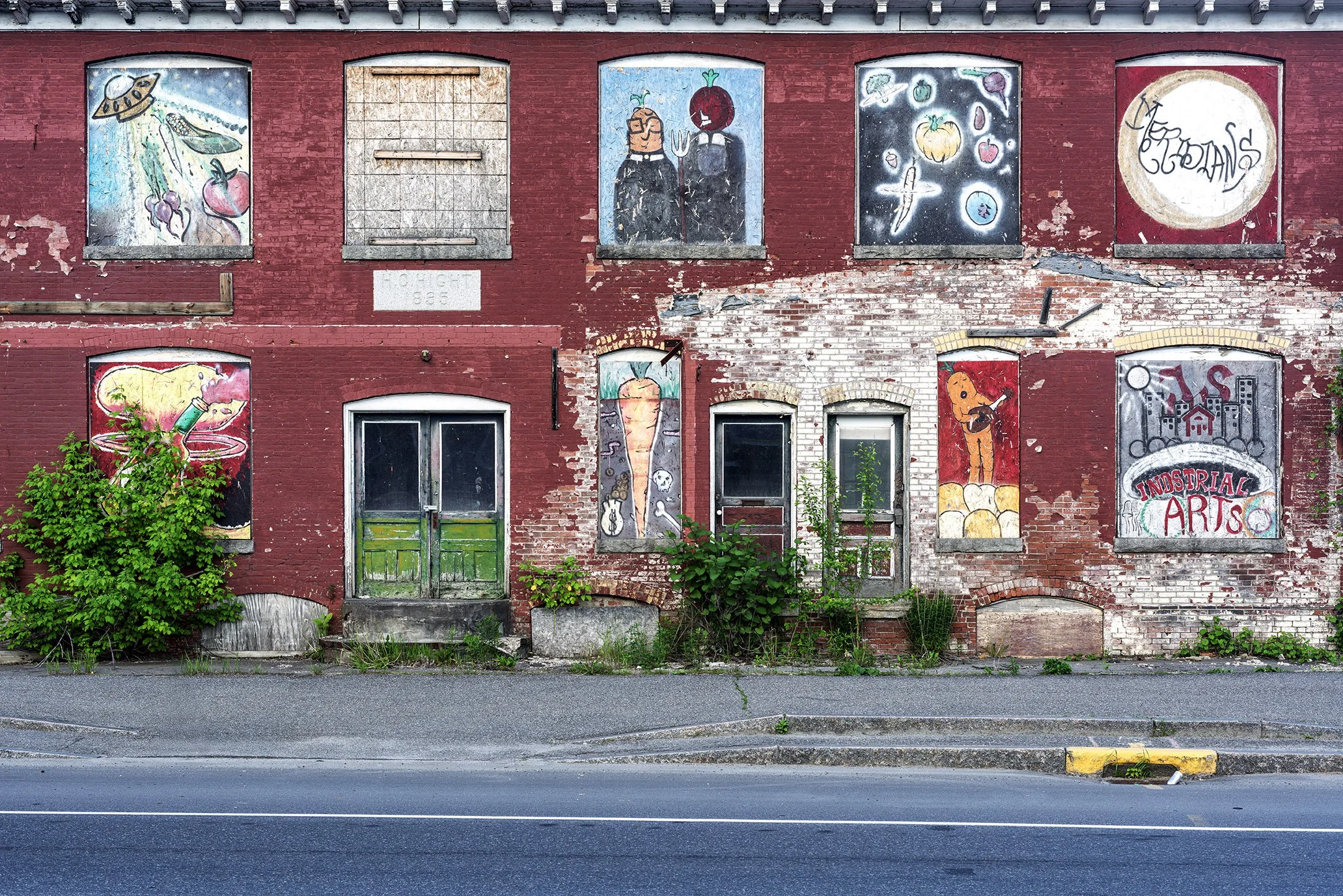

-
Market Square, Houlton, Maine: Commerce, Industry, and Community (ca. 1895–1906)
Market Square in Houlton, Maine, emerged in the late nineteenth century as the principal commercial and social hub of Aroostook County. Its development was closely tied to the extension of the New Brunswick Railway into Maine in the 1870s and 1880s, connecting Houlton to larger markets in Bangor and the Maritime provinces.¹ Later, the Bangor and Aroostook Railroad, reaching Houlton in the early 1890s, further enhanced freight and passenger service, sparking a downtown building boom.² Rail connections allowed for the shipment of agricultural products, lumber, textiles, and manufactured goods, fostering population growth and creating employment in transport, retail, construction, and services.
By the 1890s, Houlton’s commercial core had consolidated around Market Square. Fires in 1884 and 1902 destroyed older wooden buildings, prompting the construction of brick and masonry commercial blocks between 1885 and 1910.³ These blocks linked local industry, including grist and woolen mills, to regional markets and provided a foundation for the town’s economic expansion.
Brick Commercial Blocks and Their Uses
J. A. Millar Block (1894). Occupying a prominent Market Square corner, the Millar Block’s ground floor hosted clothiers, dry goods stores, and general merchants, while upper floors accommodated offices and meeting spaces. Rail access allowed these businesses to distribute both locally produced goods and imported merchandise.⁴
Perks Brothers Block (c. 1895). This block housed Perks Bros. Drug Store, supplying patent medicines, toiletries, and household goods. Its Market Square location and proximity to rail enabled efficient receipt of goods and service to nearby rural communities.⁵
H. T. Frisbie Block (c. 1895). Home to H. T. Frisbie Dry Goods, this block sold woolens, cottons, linens, and other fabrics crucial for local dressmakers, seamstresses, and tailors. Upper floors often served as offices or workshops. Rail transport connected these stores with textile mills in Maine and New England, supporting Houlton’s bespoke clothing trade.⁶
J. M. Rice Block (1897). Accommodating clothiers, accessory shops, and offices, the Rice Block expanded Houlton’s commercial capacity and benefited from the increasing freight and passenger traffic brought by rail.⁷
Walter P. Mansur Block (1905–06). Later tenants included national chains, such as F.W. Woolworth Co., selling ready-to-wear clothing, household goods, and sundries, highlighting Houlton’s integration into national retail networks through rail connectivity.⁸
First National Bank (1907). This bank provided financial services supporting merchants, mill workers, and farmers, exemplifying the financial infrastructure underpinning Market Square’s growth.⁹
Products, Services, and Trades in Market Square
Textiles & Cloth. Stores like H. T. Frisbie and Lane & Pearce sold wool, cotton, linens, and other fabrics essential for local dressmakers, seamstresses, and tailors. Rail transport allowed these shops to source goods from distant mills and distribute locally produced clothing, reinforcing links between mills and retail commerce.¹⁰
Clothing Sales. Fred Verplast Clothing offered finished garments and likely provided tailoring or alteration services. Such stores bridged custom clothing production and ready-made apparel, especially for travelers and rural consumers arriving via the railroad.¹¹
Hardware & Tools. Shops such as Kinney & Watson Hardware supplied farm implements, household tools, and industrial hardware. These goods supported both local mill operations and rural clientele, with rail transport facilitating inventory replenishment.¹²
Confectionery, Books, and Sundries. B. D. Hatheway Candy provided confections, James Frank Holland Books supplied books, stationery, and periodicals, and Perks Bros. Drugs offered patent medicines and sundries. All benefited from rail shipments and traveling clientele.¹³
Jewelry & Watchmaking. E. B. White Jewelry sold watches, clocks, and jewelry, offering repair services to an expanding urban population.¹⁴
Cigars & Tobacco. Warren Skillen, Cigar Maker exemplified craft artisanal trades thriving alongside Houlton’s growing retail network.¹⁵
Tailors, Dressmakers, and Seamstresses. Operating often from upper floors, these artisans relied on local dry goods stores for fabrics. Rail transport enabled delivery of high-quality imported textiles to Houlton.¹⁶
Economic Role of Market Square and the Railroad
Market Square functioned as a central retail and distribution hub for Houlton and surrounding rural communities. Rail access allowed goods from regional mills, national suppliers, and local artisans to reach Houlton efficiently, while bringing customers into the town. The synergy of retail, rail transportation, and local production contributed to population growth, with Houlton’s population increasing from about 2,850 in 1870 to 3,500–4,000 by the 1890s.¹⁷
Clustered businesses in Market Square — dry goods stores, clothing shops, hardware purveyors, confectioneries, pharmacies, tobacconists, and bookstores — benefited from both freight shipments and customer traffic facilitated by rail. Merchants often extended credit to rural clients and workers, supporting local economic circulation. Rail connectivity also allowed Houlton to serve as a regional commercial center, linking industrial production, artisanal crafts, and retail trade in an integrated economy.¹⁸
Brick blocks such as Millar, Rice, Frisbie, Perks, and Mansur anchored this vibrant mix of retail, artisanal, and service industries, demonstrating how transportation infrastructure, commercial investment, and skilled labor collectively sustained Houlton’s economic resilience into the twentieth century.¹⁹
Footnotes
Arthur E. Bowley and Charles W. Turner, Railroads in Maine: A History of the Development of the Rail Lines (Portland: Maine Historical Press, 1924), 97–99.
Maine Board of Railroad Commissioners, Annual Report of the Railroad Commissioners of the State of Maine (Augusta: Stevens & Sayward, 1893), 14–15.
Market Square Reconstruction Records, Aroostook County Historical & Art Museum Archives, 1884–1902 Reconstruction File, p. 3.
“Millar Block Building History, 1894,” Aroostook County Historical & Art Museum Archives, Architectural Records, Box 7, p. 12.
“Perks Bros. Drug Store, Market Square, 1895,” Aroostook County Historical & Art Museum Archives, Retail Trade Files, Box 3, p. 15.
“Frisbie Block and Frisbie Dry Goods, Houlton,” Aroostook County Historical & Art Museum Archives, Business Photographs Collection, p. 8.
City of Houlton Building Permits, 1897, Municipal Archives, Houlton City Hall, Permit No. 1897‑42, p. 4.
“Walter P. Mansur Block Construction,” Aroostook County Historical & Art Museum Archives, Architectural Records, Box 12, p. 2.
First National Bank of Houlton: Charter and Early Records (Houlton: First National Bank Historical Collection, 1907), p. 1.
Aroostook County Historical & Art Museum Retail Ledgers, Dry Goods Sales Records, 1890–1900, p. 20.
Ibid., Clothing Sales Accounts, 1892–1898, p. 21.
Ibid., Hardware & Implements Ledger, 1891–1899, p. 22.
Ibid., Miscellaneous Retail Index, 1890–1898, p. 23.
Ibid., Jewelry & Timepiece Ledgers, 1893–1902, p. 24.
Ibid., Tobacco & Cigar Makers Ledger, 1891–1896, p. 25.
Ibid., Garment Trades Index, 1890–1900, p. 26.
United States Census, Decennial Census of 1870 & 1890, Aroostook County, Maine, Population Schedules.
Market Square Historic District Documentation, National Register of Historic Places Registration Form (Maine Historic Preservation Commission, 1986), Sections 8–9, pp. 1–3.
Ibid., Section 9, pp. 2–3.
Bibliography
Bowley, Arthur E., and Charles W. Turner. Railroads in Maine: A History of the Development of the Rail Lines. Portland: Maine Historical Press, 1924.
Maine Board of Railroad Commissioners. Annual Report of the Railroad Commissioners of the State of Maine. Augusta: Stevens & Sayward, 1893.
First National Bank of Houlton: Charter and Early Records. Houlton: First National Bank Historical Collection, 1907.
Market Square Historic District Documentation. National Register of Historic Places Registration Form. Maine Historic Preservation Commission, 1986.
Aroostook County Historical & Art Museum Archives (Houlton, Maine): Architectural Records; Business Photographs Collection; Retail Ledgers and Trade Indexes; Reconstruction Files.
-
Description text goes here
-
Description text goes here