L.N. Littlehale Grain Company, c. 1903
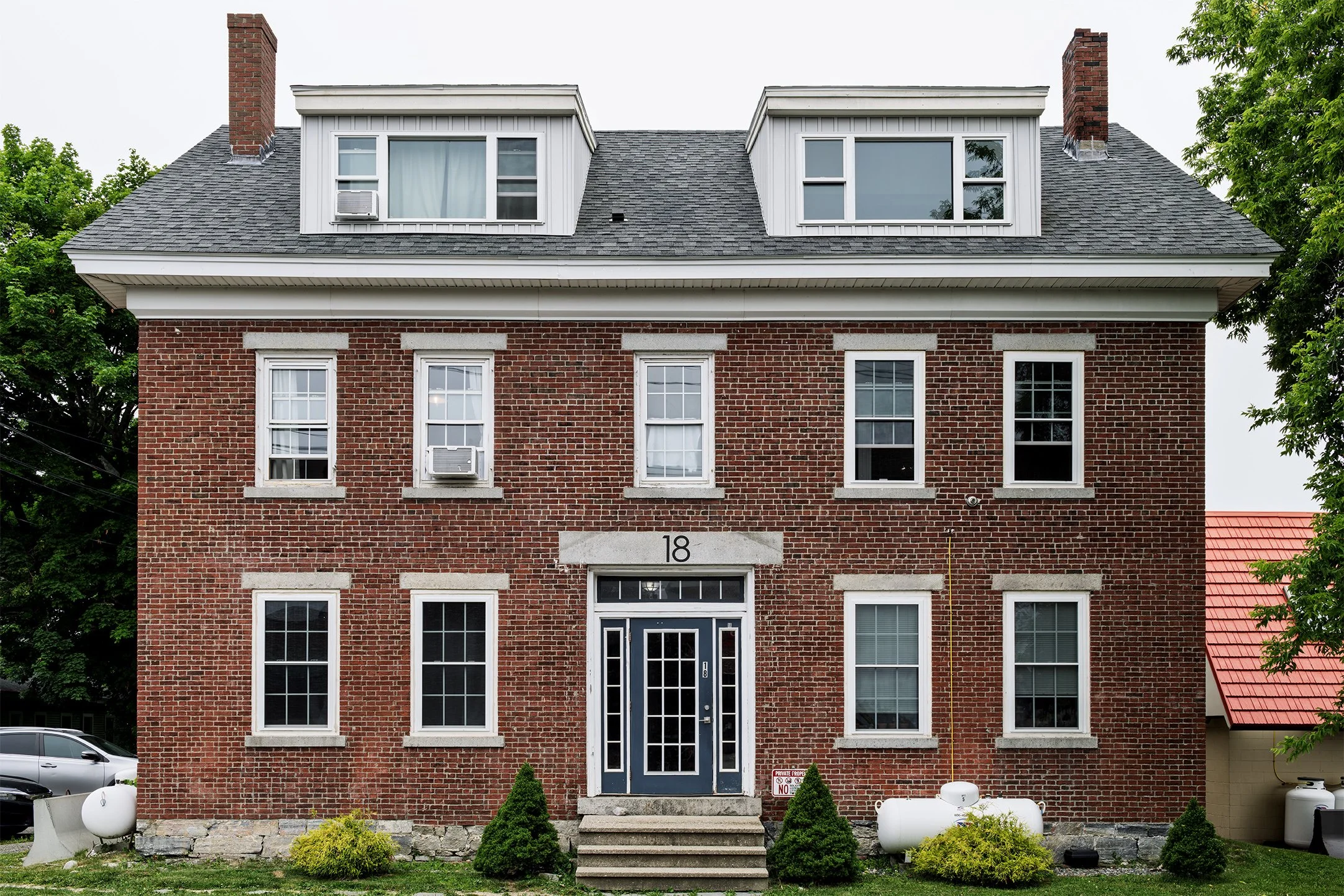
L.N. Littlehale Grain Company, c. 1903
18 Union Street Rockland, Knox County, Maine
From the Echoes, Still: Maine's Industrial Remnants Collection (2024–2028)
Grain, Leather, Pulp Portfolio
Historical Narrative
Kevin LeDuc Pigment print on Hahnemühle Baryta Rag Edition of 5 + 1 Artist’s Proof (A/P) + 1 Bon à Tirer (B.A.T.) Portfolio of 40 Images
Paper Size: 35 × 50 inches Image Size: 30 × 45 inches Borders: Approximately 2 ½ inches (All Sides) Mounting: Archival hinge or float mounting
Historic Significance
The L. N. Littlehale Grain Company represents an important but often overlooked aspect of Rockland’s industrial and commercial history. While the city is widely recognized for its maritime industries, including shipbuilding, fishing, lime production, and coastal trade, agricultural supply businesses played an essential role in supporting the surrounding rural economy. The company connected Rockland with the farming communities of Midcoast Maine by providing grain, feed products, and other agricultural necessities that linked local farmers to larger regional and national markets.
The company’s location beside the Maine Central Railroad was central to its success and illustrates the relationship between transportation infrastructure and industrial development in early twentieth-century Rockland. Railroad access allowed the company to receive and distribute large quantities of bulk agricultural commodities efficiently, making it possible for the business to serve a broad regional customer base. Its placement within a railroad-oriented industrial district demonstrates how freight transportation shaped the physical growth of the city by encouraging the development of warehouses, commercial facilities, and other businesses dependent upon reliable shipping connections.
The L. N. Littlehale Grain Company also reflects the continuity and adaptation of agricultural commerce in Rockland. The transition of the business to the Knox County Grain Company demonstrates that the fundamental role of the operation remained unchanged: connecting farmers and consumers through the distribution of agricultural products. Later enterprises, including Knox Lincoln Farmers and K & L Feed Mill, continued this tradition while adapting to new technologies, truck transportation, and modern feed production methods.
Although little physical evidence of the original L. N. Littlehale Grain Company remains today, historical records, Sanborn Fire Insurance Maps, trade publications, and business documents preserve the story of an enterprise that contributed to the economic development of Rockland and Knox County. The company is historically significant as an example of how transportation networks, entrepreneurship, and agricultural commerce expanded Rockland’s economy beyond its maritime foundations and established the city as a regional center of trade and industry.
Historical Narrative
-
L. N. Littlehale Grain Company:
Agricultural Commerce, Railroad Freight, and the Development of Rockland, Maine
Introduction
During the late nineteenth and early twentieth centuries, Rockland, Maine, developed into more than a maritime and industrial center. While the city became widely recognized for lime production, shipbuilding, fishing, and coastal commerce, it also served as an important regional distribution center for agricultural products. Businesses dealing in grain, flour, livestock feed, and farm supplies connected the farming communities of Knox and Lincoln Counties with national markets through Rockland’s expanding transportation network.
Among the most significant of these agricultural enterprises was the L. N. Littlehale Grain Company. Established by L. N. Littlehale during the early twentieth century, the company became an important supplier of grain and feed products during a period when railroad transportation transformed the movement of commodities throughout New England.
Located adjacent to the Maine Central Railroad between Park Street, Union Street, and Portland Street, the company demonstrates the close relationship between transportation infrastructure and commercial development in early twentieth-century Rockland. The business depended upon railroad freight service to receive bulk commodities efficiently and distribute agricultural products throughout the surrounding region.
The history of the L. N. Littlehale Grain Company also illustrates a larger pattern in Rockland’s economic development. The railroad did not merely transport passengers; it supported industries and commercial enterprises that relied upon reliable movement of heavy goods. Grain dealers, warehouses, and agricultural suppliers became important parts of the railroad-era economy.
Following the Littlehale era, the business continued under new ownership as the Knox County Grain Company, maintaining Rockland’s role as an agricultural supply center. Later twentieth-century businesses, including Knox Lincoln Farmers and K & L Feed Mill, reflected further changes in agricultural commerce and transportation.
Together, these businesses demonstrate how railroad infrastructure shaped Rockland’s economy beyond its traditional maritime industries.
Establishment of the Business
The exact founding date of the L. N. Littlehale Grain Company has not yet been identified, but available records indicate that L. N. Littlehale was operating a successful grain and agricultural supply business in Rockland by 1903. During this period, commercial grain dealers played an important role in connecting local farmers with larger agricultural markets.
The early twentieth century was a period of significant change in American agriculture. Farmers increasingly depended upon commercial suppliers for products that could not be produced locally in sufficient quantities. Grain dealers provided essential materials such as feed grains, flour, and livestock supplements while also creating connections between rural producers and national distribution networks.
The Littlehale company developed during this period of expanding agricultural commerce. Rather than functioning only as a small retail establishment, the business operated as a regional supplier capable of receiving bulk shipments and distributing products throughout the surrounding area.
A 1903 article in The American Elevator and Grain Trade described Littlehale’s business practices and noted that he introduced a profit-sharing arrangement for employees beginning July 1 of that year.¹ The decision suggests that the company employed a regular workforce and had developed beyond a small local operation.
The adoption of employee profit sharing also reflects Littlehale’s approach to business management. At a time when many commercial enterprises relied on seasonal or temporary labor, encouraging employee participation may have helped retain experienced workers familiar with grain handling, storage, and distribution.
Products and Agricultural Services
The L. N. Littlehale Grain Company handled a wide variety of agricultural commodities required by farmers, livestock owners, and local merchants. A surviving 1906 business record identifies the company as a dealer in flour, corn, oats, cottonseed meal, and mill feeds.²
Each of these products served a specific purpose within the agricultural economy.
Flour was distributed for household and commercial use, while corn and oats were among the most common feed grains used for horses, dairy cattle, poultry, and other livestock. Cottonseed meal provided a concentrated protein supplement that became increasingly important in dairy and livestock production. Mill feeds, including bran and other grain by-products, offered economical sources of animal nutrition.
The company therefore served as more than a simple grain merchant. It acted as a regional agricultural supply center, receiving commodities from outside producers and redistributing them to customers throughout Midcoast Maine.
The ability to store and distribute large quantities of agricultural products required specialized facilities. Grain businesses needed warehouses, storage areas, loading facilities, and dependable transportation connections. These requirements made proximity to railroad infrastructure a significant advantage.
The Workforce
Although surviving records do not identify the exact number of employees employed by the L. N. Littlehale Grain Company, available evidence indicates that the business operated with a permanent workforce rather than functioning as a small retail establishment. The company’s participation in employee profit sharing in 1903 suggests an organization large enough to depend upon experienced workers and regular operations.³
The work performed within a grain and feed business required a variety of skills. Employees were responsible for unloading incoming shipments, moving and storing heavy commodities, maintaining inventories, preparing customer orders, and loading products for local delivery. Grain handling required physical labor as well as knowledge of storage practices, measurement, and product quality.
The company likely employed warehouse workers, delivery personnel, office staff, and managers who coordinated purchasing and distribution. Before the widespread adoption of motor trucks, local deliveries would have depended heavily upon horse-drawn wagons, making teamsters and delivery workers an important part of the operation.
The success of a grain company depended upon reliability and efficiency. Customers, especially farmers and livestock producers, required dependable access to feed supplies throughout the year. A company’s reputation was therefore based not only on the quality of its products but also on its ability to maintain steady inventories and provide timely delivery.
Littlehale’s decision to establish an employee profit-sharing arrangement demonstrates an understanding that experienced workers contributed directly to business success. In an industry involving heavy materials, seasonal demand, and complex distribution, retaining skilled employees provided an important competitive advantage.
Location and the Maine Central Railroad
The success of the L. N. Littlehale Grain Company was closely connected to its location within Rockland’s transportation network. The company was situated adjacent to the Maine Central Railroad between Park Street, Union Street, and Portland Street, placing it within one of the city’s important commercial and industrial districts.
The 1912 Sanborn Fire Insurance Map, Section 26, documents the relationship between the grain company property and the Maine Central Railroad corridor.⁴ The map shows the company positioned near railroad facilities, demonstrating how businesses that handled bulk commodities located themselves close to freight transportation.
This location provided several advantages. Grain and feed products were heavy, bulky commodities that were expensive to move over long distances by wagon. Railroad freight allowed the company to receive large shipments efficiently from distant suppliers and distribute products throughout the region.
The relationship between the grain company and the railroad was therefore not incidental. The business depended upon transportation infrastructure as part of its daily operation. The railroad provided access to national agricultural markets while allowing Rockland to serve as a regional distribution point.
The location also demonstrates the broader influence of the railroad on Rockland’s urban development. Industrial and commercial businesses frequently clustered near railroad lines because transportation access reduced operating costs and improved connections with suppliers and customers.
Warehouses, freight facilities, and businesses requiring bulk shipments developed along railroad corridors throughout the city. The L. N. Littlehale Grain Company was part of this larger transportation-based commercial landscape.
Railroad Spur Connection
The relationship between the L. N. Littlehale Grain Company and the Maine Central Railroad extended beyond simple proximity. The company established a direct connection with the railroad through a spur track arrangement that allowed freight cars to reach the property.
A railroad spur was essential for businesses handling bulk materials because it allowed commodities to move directly between freight cars and storage facilities. Instead of unloading goods at a distant freight yard and transporting them by wagon, the company could receive shipments directly at its own location.
The 1912 Sanborn Map provides visual evidence of the company’s location beside the railroad facilities, while later legal documentation confirms the importance of railroad access to the property.⁵
This connection illustrates how the railroad shaped the location and operation of industrial businesses in Rockland. Companies handling heavy materials often selected locations where direct rail access was possible. The availability of a spur track could determine whether a business could compete effectively within regional markets.
For the L. N. Littlehale Grain Company, railroad access transformed Rockland from a local trading center into a participant in a larger agricultural supply network. Grain arriving from outside Maine could be received, stored, and redistributed to customers throughout the surrounding counties.
Transition to Knox County Grain Company
As agricultural markets changed during the early twentieth century, ownership of the grain business also evolved. In 1921, Charles M. Richardson and Fred T. Studley acquired the Littlehale operation and reorganized it as the Knox County Grain Company, continuing an established business that had already become an important part of Rockland’s commercial community.⁶
The transition represented continuity rather than a complete break with the past. The company continued serving farmers, merchants, and livestock producers by supplying grain, flour, and feed products. The established customer base, location, and transportation advantages of the original business remained valuable assets.
The change also reflected broader developments within American agriculture. As farming became increasingly connected to national markets, local grain dealers became important intermediaries between producers and large-scale suppliers. Businesses like the Knox County Grain Company provided farmers with products that were difficult to obtain independently.
The company continued operating within the same railroad-oriented commercial environment that had supported the Littlehale business. Its history demonstrates the durability of agricultural commerce in Rockland and the importance of transportation infrastructure in maintaining regional trade.
Knox County Grain Company
The establishment of the Knox County Grain Company marked a new chapter in Rockland’s agricultural supply industry. Rather than representing the end of the Littlehale business, the transition preserved an important commercial operation while placing it under new management.
Under the ownership of Charles M. Richardson and Fred T. Studley, the Knox County Grain Company continued the primary functions established by L. N. Littlehale: receiving, storing, and distributing agricultural commodities throughout the region.⁷
The company supplied products essential to farming operations, including grain, flour, livestock feeds, and other agricultural materials. These supplies supported dairy farms, poultry operations, and livestock producers throughout Knox County and surrounding communities.
The company’s continued presence near the Maine Central Railroad remained a significant advantage. Bulk commodities could be delivered efficiently by rail, stored at the facility, and distributed locally. Railroad access reduced transportation costs and allowed the company to compete within a broader agricultural marketplace.
The Knox County Grain Company also operated during a period of major technological change. During the first half of the twentieth century, railroads remained central to freight movement, but the increasing availability of motor trucks and improved highways gradually transformed distribution methods.
By the mid-twentieth century, agricultural suppliers increasingly shifted toward prepared feeds, fertilizers, seeds, and specialized farm products. Businesses began relying more heavily on truck transportation rather than railroad freight. These changes eventually reshaped the agricultural supply industry in Rockland.
Although the exact closing date of the Knox County Grain Company has not yet been established, available evidence indicates that the company continued into the twentieth century before being replaced by newer agricultural enterprises. By the 1960s, businesses such as Knox Lincoln Farmers and K & L Feed Mill represented a new generation of agricultural commerce based on modern feed processing, storage technology, and highway transportation.
The Knox County Grain Company therefore represents a transitional period in Rockland’s economic history. It connected the railroad-centered grain trade of the early twentieth century with the modern agricultural supply industry that followed.
Historical Significance
The history of the L. N. Littlehale Grain Company demonstrates that Rockland’s economy extended beyond its better-known maritime industries. While shipbuilding, lime production, fishing, and coastal commerce shaped the city’s identity, agricultural supply businesses played an important role in supporting the surrounding rural economy.
The company represented a connection between Rockland and the farming communities of Midcoast Maine. Farmers depended upon commercial suppliers for products that could not be produced locally in sufficient quantities, including grain, feed supplements, and other agricultural necessities. The Littlehale business helped create a dependable supply chain linking regional farms with national agricultural markets.
The company’s location beside the Maine Central Railroad illustrates the relationship between transportation infrastructure and industrial development. Railroad access allowed the business to receive large quantities of commodities efficiently and distribute products throughout the region. Without dependable freight transportation, a grain business of this scale would have faced significant limitations.
The L. N. Littlehale Grain Company also demonstrates how transportation influenced the physical development of Rockland. Businesses handling heavy commodities frequently located near railroad corridors because proximity to freight service provided economic advantages. The company became part of a larger industrial district where railroad tracks, warehouses, commercial buildings, and shipping facilities operated together.
The transition from the L. N. Littlehale Grain Company to the Knox County Grain Company demonstrates the continuity of agricultural commerce in Rockland. Although ownership changed, the fundamental purpose of the business remained the same: connecting farmers and consumers with agricultural products through an efficient distribution system.
Later agricultural enterprises, including Knox Lincoln Farmers and K & L Feed Mill, continued this tradition while adapting to new technologies and transportation systems. These businesses moved away from the traditional railroad-centered grain trade and toward modern feed manufacturing, truck delivery, and expanded agricultural services.
The history of these companies provides a broader understanding of Rockland’s economic development. The city was not only a maritime center but also a regional commercial hub where transportation networks supported a wide variety of industries.
Today, little physical evidence of the L. N. Littlehale Grain Company remains. However, Sanborn Fire Insurance Maps, trade publications, court records, and business documents preserve the story of a company that contributed to the agricultural economy of Knox County.
The company stands as an example of how transportation, entrepreneurship, and local commerce combined to shape the development of early twentieth-century Rockland.
Conclusion
The L. N. Littlehale Grain Company was an important part of Rockland’s transition from a primarily maritime economy into a more diverse regional commercial center. Established during a period of rapid transportation and agricultural change, the company benefited from its strategic location beside the Maine Central Railroad and became a vital supplier of grain and feed products throughout the region.
The company’s success depended upon the relationship between commerce and transportation. Railroad freight allowed bulk agricultural commodities to move efficiently into Rockland, where they could be stored, processed, and distributed to farmers and merchants. The company’s location near Park Street, Union Street, and Portland Street demonstrates how railroad infrastructure influenced the placement of businesses and shaped the city’s industrial landscape.
The workforce, products, and operations of the company reveal the complexity of early twentieth-century agricultural commerce. Grain businesses required skilled employees, reliable transportation, and strong connections with both suppliers and customers.
The transition to the Knox County Grain Company illustrates the durability of the business model established by L. N. Littlehale. Rather than disappearing, the operation continued under new ownership and remained part of Rockland’s agricultural economy for decades.
Later changes in transportation and agriculture eventually transformed the industry. Trucks replaced many railroad freight functions, and agricultural businesses shifted toward modern feed production and specialized services. Companies such as Knox Lincoln Farmers and K & L Feed Mill reflected this new era.
The story of the L. N. Littlehale Grain Company is therefore not only the history of one business. It is the history of a transportation-supported enterprise that connected Rockland with the agricultural communities of Maine and the wider economy of New England.
Through its relationship with the Maine Central Railroad, its service to farmers, and its continuation through successor companies, the Littlehale grain business represents an important chapter in Rockland’s industrial and commercial history.
Footnotes
“Another Kind of Co-operation,” The American Elevator and Grain Trade (1903), describing L. N. Littlehale’s employee profit-sharing arrangement beginning July 1, 1903.
L. N. Littlehale business record, December 21, 1906, identifying the company’s products as flour, corn, oats, cottonseed meal, and mill feeds.
“Another Kind of Co-operation,” The American Elevator and Grain Trade (1903).
Sanborn Map Company, Insurance Map of Rockland, Maine (New York: Sanborn Map Company, 1912), Section 26.
Willband v. Grain Company, 128 Me. 64 (1930).
The American Elevator and Grain Trade; Willband v. Grain Company, 128 Me. 64 (1930).
Willband v. Grain Company, 128 Me. 64 (1930); The American Elevator and Grain Trade, documenting the continuation of the Littlehale grain business as the Knox County Grain Company.
Bibliography
The American Elevator and Grain Trade. Chicago: Grain and Elevator Publishing Company.
Sanborn Map Company. Insurance Map of Rockland, Maine. New York: Sanborn Map Company, 1912.
Willband v. Grain Company. 128 Me. 64. Supreme Judicial Court of Maine, 1930.
-
From Park Street Hill to Union Street:
The Evolution of Rockland, Maine’s Railroad Passenger Stations, 1871–Present
Abstract
The history of Rockland, Maine’s railroad passenger stations reflects the broader transformation of transportation, commerce, and community development in the nineteenth and twentieth centuries. Before the arrival of the railroad, Rockland’s economy depended heavily on maritime transportation and coastal trade. The completion of the Knox & Lincoln Railroad connection in 1871 introduced a new transportation system that linked the city with inland communities, regional markets, and national economic networks.
This essay examines the evolution of Rockland’s passenger railroad facilities through three major phases: the first terminal area near Park Street and New County Road, the waterfront depot era, and the construction of the Maine Central Railroad station at Union Street and Pleasant Street in 1917. Using Sanborn Fire Insurance Maps, historical records, and related documentary evidence, this essay examines how railroad facilities changed in response to the city’s economic needs.
The railroad influenced more than passenger movement. Freight connections supported commercial enterprises, including the L. N. Littlehale Grain Company and later agricultural supply businesses such as Knox Lincoln Farmers and K & L Feed Mill, Inc. These businesses demonstrate how railroad infrastructure shaped industrial location, regional commerce, and the relationship between Rockland and surrounding agricultural communities.
Although passenger rail declined during the twentieth century due to the rise of automobiles, highways, and trucking, the physical and historical legacy of the railroad remains visible. Rockland’s railroad history illustrates how transportation systems influence urban growth, economic development, and community identity.
Introduction: The Railroad and the Transformation of Rockland
The development of railroad transportation in Rockland, Maine, illustrates the powerful influence of transportation technology on the growth of American communities. During the nineteenth century, Rockland was primarily shaped by its location on the Maine coast and by industries connected with maritime commerce. Shipbuilding, fishing, lime production, and coastal trade created a strong economic foundation, but transportation remained limited by geographic conditions.
The arrival of the railroad introduced a new system of movement that connected Rockland with inland communities and larger commercial networks. Rail transportation provided new opportunities for passenger travel and freight distribution while changing the physical organization of the city. Tracks, terminals, depots, and freight facilities became important elements of Rockland’s urban landscape.
The history of Rockland’s railroad stations can be understood through three major phases. The first began with the establishment of an early terminal near Park Street and New County Road after the arrival of the Knox & Lincoln Railroad in 1871. This facility reflected the practical requirements of a developing railroad system, where operations, equipment, and track arrangements were primary concerns.
The second phase involved the development of waterfront railroad facilities. As railroad service expanded, the relationship between rail transportation and Rockland’s maritime economy became increasingly important. The waterfront depot connected two major transportation systems and strengthened Rockland’s role as a commercial center.
The third phase was the construction of the Maine Central Railroad passenger station at Union Street and Pleasant Street in 1917. This station represented the maturity of passenger railroad service in Rockland. Unlike earlier facilities designed primarily around railroad operations, the new station functioned as a civic gateway and a visible symbol of the importance of rail transportation.
Sanborn Fire Insurance Maps provide important visual evidence for understanding these changes. Originally created for insurance purposes, the maps document buildings, streets, property uses, railroad facilities, and industrial development in remarkable detail. By comparing maps from different periods, historians can identify how transportation systems shaped and responded to changes in the urban environment.¹
These maps reveal not only where railroad buildings were located but also how the railroad influenced the organization and development of Rockland itself.
I. The Arrival of the Railroad, 1871
The arrival of the Knox & Lincoln Railroad in Rockland represented a major turning point in the city’s economic history. Before railroad construction, transportation depended heavily on coastal shipping and local networks. The railroad created a direct connection between Rockland and communities beyond the immediate coastline, allowing goods and passengers to move more efficiently.
The earliest railroad facilities reflected the priorities of nineteenth-century railroad construction. The first objective was to create a functioning transportation system capable of receiving trains, handling equipment, and supporting railroad operations. Passenger facilities were important, but they existed within a larger operational environment.
The first terminal area near Park Street and New County Road demonstrates this early emphasis. The facility required sufficient land for railroad purposes and reflected the challenges of introducing a new transportation technology into an existing community. The railroad needed space for tracks, storage, and operational functions before it could become fully integrated into the city.
The early railroad landscape also established patterns that influenced later development. Railroad corridors affected nearby streets, commercial activity, and industrial locations. Businesses increasingly valued locations near transportation infrastructure because access to rail service improved the movement of goods and expanded economic opportunities.
The first terminal therefore represented more than a place where trains arrived and departed. It marked the beginning of a new relationship between transportation and urban development. The railroad became an organizing force within Rockland, influencing where businesses located and how the city expanded.
The importance of railroad freight operations became especially apparent as businesses developed along railroad corridors. Grain dealers, warehouses, and manufacturing concerns relied on rail connections to move heavy commodities. The railroad transformed Rockland from a primarily coastal transportation center into a community connected with broader regional markets.
II. The Waterfront Depot Era: Railroads, Harbor Commerce, and Urban Growth
As railroad service expanded during the late nineteenth century, Rockland’s passenger facilities evolved from the requirements of a new operating system toward a closer relationship with the commercial life of the city. The development of waterfront railroad facilities reflected the importance of connecting two transportation networks that shaped Rockland’s economy: the railroad and the harbor.
The waterfront location provided important advantages. Rockland had long depended on maritime industries, and the railroad offered a new method for moving goods and people beyond the limits of coastal transportation. By bringing railroad facilities closer to the harbor, the city created a transportation district where rail, shipping, and commerce could operate together.
The waterfront depot period represented a significant change in the role of the railroad. The first terminal had primarily served the needs of railroad operations, but waterfront facilities became more closely associated with passenger movement, commercial activity, and public access. The railroad was becoming part of the daily experience of the city.
Sanborn Fire Insurance Maps provide important evidence of this transition. The 1912 Rockland atlas documents the relationship between railroad tracks, passenger facilities, streets, commercial buildings, and waterfront property. The maps show that the railroad was not an isolated industrial feature but part of a larger urban system.²
The arrangement of railroad property also demonstrates how transportation influenced land use. Businesses located near railroad facilities benefited from improved access to shipping and markets. Warehouses, industrial buildings, and commercial properties developed around transportation corridors, creating a landscape shaped by movement and exchange.
The waterfront depot therefore represented an intermediate stage in Rockland’s railroad history. It connected the operational needs of the early railroad with the passenger-centered development that would follow. The facility reflected a period when rail transportation was becoming increasingly important not only as an industrial system but also as a public service.
From Park Street Hill to Union Street:
The Evolution of Rockland, Maine’s Railroad Passenger Stations, 1871–Present
Part II
III. The Maine Central Railroad Station, 1917
The construction of the Maine Central Railroad passenger station at Union Street and Pleasant Street in 1917 represented the height of railroad development in Rockland. By the early twentieth century, railroads had become essential components of American communities, and passenger stations increasingly served as civic landmarks as well as transportation facilities.
The 1917 station reflected a different era from the original terminal and waterfront depot facilities. The earliest railroad buildings had been designed primarily around practical concerns: tracks, equipment, freight handling, and railroad operations. The Maine Central station placed greater emphasis on passenger comfort, accessibility, and public appearance.
The location of the station within the urban street network demonstrated the importance of integrating rail transportation with the community. Passengers could reach the station from surrounding neighborhoods and commercial areas, and the building served as a recognizable point of arrival for visitors and residents.
The station’s placement at Union Street and Pleasant Street also reflected the changing relationship between transportation and civic identity. Railroad stations throughout the United States became symbols of progress and connection. They were often among the first buildings visitors encountered when arriving in a community, and their design reflected local pride and economic confidence.
The 1922 Sanborn atlas provides evidence of Rockland’s railroad landscape after completion of the new station. The map documents a mature railroad district in which passenger facilities, railroad infrastructure, streets, and surrounding properties existed as parts of a coordinated urban environment.³
The station represented the confidence of the railroad era. During this period, passenger rail service connected communities throughout Maine and provided an important link between local economies and regional transportation networks. The station was therefore more than a transportation facility; it was a symbol of Rockland’s participation in a larger economic and technological system.
The physical development documented by the Sanborn Maps demonstrates how railroad facilities evolved with the needs of the city. The movement from the early terminal to the waterfront depot and finally to the Maine Central station shows a gradual transformation from railroad operations toward a more integrated civic transportation system.
The 1917 station also represented the peak of passenger rail importance in Rockland. Trains carried residents, business travelers, visitors, and seasonal passengers throughout the region. The station supported commerce and tourism while reinforcing Rockland’s position as a regional center.
IV. Reading Rockland Through Sanborn Fire Insurance Maps
Sanborn Fire Insurance Maps provide one of the most valuable sources for understanding Rockland’s railroad development. Although created primarily for insurance purposes, these maps document the physical arrangement of buildings, streets, industries, railroad tracks, and property uses with extraordinary detail.
For historians, Sanborn Maps provide evidence of change over time. By comparing editions from different years, it becomes possible to identify how railroad facilities expanded, how industrial properties developed, and how transportation corridors influenced urban growth.
The 1912 Sanborn Map is particularly significant for understanding Rockland’s industrial landscape during the early twentieth century. Section 26 documents the relationship between the Maine Central Railroad corridor and nearby commercial properties, including the location of the L. N. Littlehale Grain Company.⁴ The map shows the company positioned adjacent to railroad facilities in the area bounded by Park Street, Union Street, and Portland Street.
This location demonstrates the importance of railroad access for freight-dependent businesses. Grain companies required transportation systems capable of moving large quantities of heavy commodities efficiently. A direct relationship with the railroad allowed businesses to receive shipments, store materials, and distribute products throughout the region.
The Sanborn Maps also reveal the integration of railroad facilities with the surrounding city. Railroad property was not separate from Rockland’s urban environment. Instead, tracks, streets, warehouses, passenger facilities, and commercial buildings formed a connected transportation district.
The 1922 Sanborn Map documents the mature railroad landscape after the construction of the Maine Central Railroad station. Passenger facilities, freight infrastructure, and surrounding development existed together as parts of a coordinated transportation system.⁵
The value of Sanborn Maps extends beyond individual buildings. They reveal how transportation influenced land use decisions. Businesses located near railroad facilities because access to transportation reduced costs and improved connections with suppliers and markets. The maps therefore provide evidence of the railroad’s role in shaping Rockland’s physical development.
V. Railroad Freight, Agricultural Commerce, and Industrial Change
The influence of the railroad in Rockland extended beyond passenger travel. Freight operations supported businesses that depended on the movement of heavy commodities, including grain dealers, warehouses, and agricultural supply companies. These businesses demonstrate how transportation infrastructure shaped the economic life of the community.
L. N. Littlehale Grain Company
The L. N. Littlehale Grain Company represented an important example of railroad-connected commerce in early twentieth-century Rockland. Established by L. N. Littlehale by at least 1903, the company operated as a grain and agricultural supply business serving farmers and livestock producers throughout Knox County.⁶
The company handled products including flour, corn, oats, cottonseed meal, and mill feeds.⁷ These materials supported agricultural production by providing farmers with feed supplies and other essential commodities. The business functioned as a regional distribution center, connecting local customers with larger agricultural markets.
The scale of the operation required a workforce involved in receiving, storing, handling, and distributing agricultural products. Although an exact employee count has not been identified, contemporary records confirm that Littlehale employed workers and introduced a profit-sharing arrangement with employees in 1903.⁸ This indicates that the company operated beyond a small retail establishment and required regular labor for its activities.
The company’s location was central to its success. The L. N. Littlehale Grain Company was situated adjacent to the Maine Central Railroad corridor between Park Street, Union Street, and Portland Street. The 1912 Sanborn Fire Insurance Map, Section 26, documents the relationship between the grain company property and railroad facilities.⁹
The company established a direct relationship with the Maine Central Railroad through a spur track arrangement. This connection allowed railroad freight cars to reach the property, making it possible to receive bulk commodities efficiently. Grain and feed materials were particularly suited to railroad transportation because of their weight and volume.
The Littlehale operation illustrates how railroad infrastructure supported businesses beyond passenger service. The railroad created opportunities for commercial enterprises by providing reliable access to regional and national supply networks.
Knox County Grain Company
The grain trade continued after the Littlehale era. In 1921, the business transitioned under new ownership when Charles M. Richardson and Fred T. Studley acquired the operation and continued it as the Knox County Grain Company.¹⁰
This transition demonstrates the continued importance of agricultural supply businesses in Rockland. Although ownership changed, the economic function remained similar: receiving, storing, and distributing agricultural products to surrounding communities.
Knox Lincoln Farmers and K & L Feed Mill
By the second half of the twentieth century, agricultural supply operations had evolved from traditional grain storage toward specialized feed processing. Knox Lincoln Farmers and K & L Feed Mill, Inc. represented this later phase of agricultural commerce.
The Atlantic Street facility, developed beginning in 1965, reflected modern feed production methods. The site included a concrete mill building, silos, and related structures designed for processing and storage.¹¹
Unlike earlier grain businesses that depended heavily on railroad freight connections, later feed operations increasingly relied on trucking and highway distribution. This reflected broader changes in American transportation, agriculture, and industrial organization.
Despite these differences, both the Littlehale Grain Company and K & L Feed Mill served similar economic purposes. They connected farmers with the supplies necessary for agricultural production and demonstrate the continuing importance of Rockland as a regional service center.
VI. Decline of Passenger Rail and the Changing Transportation Landscape
The same transportation changes that contributed to Rockland’s growth eventually altered the role of the railroad within the community. During the early twentieth century, the railroad represented modern transportation, connecting residents, visitors, businesses, and agricultural producers with regional and national markets.
By the middle of the twentieth century, however, improvements in automobile travel, trucking, and highway development began to reduce the importance of passenger rail service.
The Maine Central Railroad station at Union Street and Pleasant Street represented the height of Rockland’s passenger rail era. Built in 1917, the station served as a civic gateway and reflected a period when rail travel was central to daily life.
After World War II, transportation patterns changed significantly. Automobiles became increasingly accessible, and expanded highway systems provided greater flexibility for both passengers and freight. Travelers were no longer dependent on scheduled passenger trains, while businesses increasingly turned to trucks for direct delivery of goods.
The decline of passenger rail affected the role of Rockland’s railroad facilities. The station that had once symbolized progress and regional connection gradually lost its central transportation function.
Freight operations also changed during this period. Businesses such as the L. N. Littlehale Grain Company had once depended on railroad connections for heavy commodities. Later agricultural businesses, including K & L Feed Mill, continued to require transportation networks but increasingly operated in an era where trucking provided greater flexibility.
The transition from rail-dependent commerce to highway-based distribution altered the relationship between industry and transportation infrastructure. Railroad corridors that had once been central to economic activity became subject to new uses as transportation patterns changed.
The decline of railroad use did not mean transportation ceased to shape Rockland’s development. Instead, the city adapted to a new transportation landscape. Former railroad areas, industrial properties, and station locations became part of a broader pattern of redevelopment and preservation.
Rockland’s railroad history therefore represents a cycle of transformation. The railroad first encouraged growth by connecting the city to larger economic networks. Later transportation changes reduced its dominance but left a lasting physical and historical legacy.
From Park Street Hill to Union Street:
The Evolution of Rockland, Maine’s Railroad Passenger Stations, 1871–Present
Part III
Preservation and Historical Memory
The history of Rockland’s railroad system remains visible through surviving buildings, maps, property patterns, and the memories of residents who experienced the railroad era. Although passenger rail no longer occupies the central role it once held, the physical remains of railroad development continue to provide evidence of how transportation shaped the growth of the city.
Sanborn Fire Insurance Maps are especially valuable in preserving this history. Created originally for insurance purposes, the maps provide detailed records of buildings, property boundaries, streets, railroad tracks, and industrial facilities. By comparing Sanborn editions from different periods, historians can trace the transformation of Rockland’s railroad district and understand how transportation influenced the organization of the city.
The progression from the earliest railroad terminal near Park Street and New County Road, to the waterfront depot era, and finally to the Maine Central Railroad station at Union Street and Pleasant Street demonstrates a continuing process of adaptation. Each facility reflected the needs of its period. The early terminal supported the establishment of railroad operations, the waterfront facilities connected rail transportation with maritime commerce, and the 1917 passenger station represented the railroad’s role as a civic institution.
The same pattern can be seen in Rockland’s freight-related businesses. The L. N. Littlehale Grain Company and later agricultural operations such as Knox Lincoln Farmers and K & L Feed Mill demonstrate how railroad access influenced industrial location and commercial activity. These businesses show that the railroad’s importance extended beyond passenger service by supporting the movement of commodities that sustained the regional economy.
Preserving the memory of these transportation landscapes requires recognizing that railroad history is not limited to surviving stations. Tracks, industrial sites, warehouses, freight connections, and former railroad corridors all contribute to understanding how the city developed.
Even when buildings are altered or removed, historic maps and documentary evidence preserve the relationships between transportation, industry, and community growth. Sanborn Maps, business records, newspapers, and photographs provide the foundation for reconstructing a landscape that has changed significantly over time.
Rockland’s railroad history also reflects a broader American experience. Across the country, railroads helped create towns, expand markets, and transform patterns of settlement. Later changes in transportation technology reduced dependence on rail but did not erase the influence railroads had on urban development.
Today, the surviving evidence of Rockland’s railroad past provides an opportunity to interpret the city’s development in a more complete way. The railroad was not simply a method of travel; it was a system that shaped economic activity, influenced land use, and connected Rockland with the wider world.
Conclusion: Transportation, Community, and Change
The history of Rockland’s railroad passenger stations demonstrates how transportation systems shaped the physical, economic, and social development of the city. From the arrival of the Knox & Lincoln Railroad in 1871 to the construction of the Maine Central Railroad station at Union Street and Pleasant Street in 1917, rail transportation transformed Rockland from a primarily coastal community into a regional center connected with inland communities, commercial markets, and wider economic networks.
The evolution of Rockland’s passenger facilities reflects the changing priorities of the railroad era. The earliest terminal near Park Street and New County Road represented the practical needs of a newly established transportation system. The waterfront depot period reflected the growing connection between rail transportation and maritime commerce. The 1917 Maine Central station represented the maturity of passenger rail service, functioning not only as a transportation facility but also as a civic landmark and gateway to the community.
Rail transportation also influenced Rockland beyond passenger travel. Freight connections supported commercial enterprises, including the L. N. Littlehale Grain Company, which used its location beside the Maine Central Railroad to receive and distribute agricultural products. Later agricultural businesses, including Knox Lincoln Farmers and K & L Feed Mill, continued this tradition by adapting transportation networks to changing agricultural needs.
These examples demonstrate that the railroad shaped the city’s economy through both passenger service and commercial activity. The railroad was not simply a system for moving people; it was an economic network that influenced where businesses located, how goods moved, and how Rockland interacted with surrounding communities.
Sanborn Fire Insurance Maps provide essential evidence for understanding these changes. By documenting buildings, railroad tracks, industrial facilities, and surrounding streets, the maps reveal how transportation infrastructure became integrated into the physical organization of Rockland.
The decline of passenger rail service in the twentieth century marked the end of an era, but it did not erase the railroad’s influence. Automobiles, highways, and trucking changed transportation patterns, and many railroad facilities lost their original purpose. However, the remaining buildings, maps, and historical records continue to preserve the story of how rail transportation shaped the city.
Rockland’s railroad history is therefore a story of adaptation. The railroad first introduced new opportunities for economic growth and regional connection. Later transportation changes reduced its importance but created new chapters in the city’s development.
From Park Street Hill to Union Street, Rockland’s railroad stations represent more than places where trains arrived and departed. They represent periods of transformation in which transportation technology influenced commerce, community identity, and everyday life.
The history of these stations demonstrates that transportation is not merely a means of movement; it is a force that shapes the places and communities through which it passes.
Notes
Campbell Environmental Group, Inc., Phase I Environmental Site Assessment: Passamaquoddy-Dragon Property, 64 Atlantic Street, Rockland, Maine (prepared for the Passamaquoddy Tribal Government, April 30, 2012).
Sanborn Map Company, Insurance Map of Rockland, Maine (New York: Sanborn Map Company, 1912).
Sanborn Map Company, Insurance Map of Rockland, Maine (New York: Sanborn Map Company, 1922).
Sanborn Map Company, Insurance Map of Rockland, Maine (New York: Sanborn Map Company, 1912), Section 26.
Sanborn Map Company, Insurance Map of Rockland, Maine (New York: Sanborn Map Company, 1922).
“Another Kind of Co-operation,” The American Elevator and Grain Trade (1903).
L. N. Littlehale business record, December 21, 1906, identifying products including flour, corn, oats, cottonseed meal, and mill feeds.
“Another Kind of Co-operation,” The American Elevator and Grain Trade (1903).
Sanborn Map Company, Insurance Map of Rockland, Maine (1912), Section 26.
Willband v. Grain Company, 128 Me. 64 (1930); The American Elevator and Grain Trade.
Campbell Environmental Group, Inc., Phase I Environmental Site Assessment.
Sanborn Map Company, Insurance Map of Rockland, Maine.
Bibliography
Campbell Environmental Group, Inc. Phase I Environmental Site Assessment: Passamaquoddy-Dragon Property, 64 Atlantic Street, Rockland, Maine. Prepared for the Passamaquoddy Tribal Government. April 30, 2012.
The American Elevator and Grain Trade. Chicago: Grain and Elevator Publishing Company.
Willband v. Grain Company. 128 Me. 64. Supreme Judicial Court of Maine, 1930.
Sanborn Map Company. Insurance Map of Rockland, Maine. New York: Sanborn Map Company. 1912.
Sanborn Map Company. Insurance Map of Rockland, Maine. New York: Sanborn Map Company. 1922.
-
Illustrations
Figure 1. Early Railroad Development in Rockland, Maine, c. 1871–1880
Illustration showing the establishment of the Knox & Lincoln Railroad connection and the earliest railroad facilities in Rockland.Figure 2. Maine Central Railroad and Industrial District, Rockland, Maine, 1912
Source: Sanborn Map Company, Insurance Map of Rockland, Maine, 1912, Section 26.
This map documents the location of the L. N. Littlehale Grain Company adjacent to the Maine Central Railroad corridor between Park Street, Union Street, and Portland Street.Figure 3. Maine Central Railroad Station Area, Rockland, Maine, 1922
Source: Sanborn Map Company, Insurance Map of Rockland, Maine, 1922.
This map documents the mature railroad district following construction of the Maine Central passenger station.Figure 4. Atlantic Street Agricultural Facility, Rockland, Maine, c. 1965–1983
Illustration documenting the later agricultural industrial landscape associated with Knox Lincoln Farmers and K & L Feed Mill, Inc.Appendix A
The First Railroad Era: Establishing Rockland’s Connection to Regional Transportation
The arrival of the Knox & Lincoln Railroad in 1871 marked a significant change in Rockland’s development. Before railroad construction, the city depended heavily on coastal shipping and local transportation networks. The railroad introduced a new system of movement that connected Rockland with inland communities and expanded opportunities for commerce and travel.
The earliest railroad facilities reflected the practical requirements of establishing a functioning transportation system. Tracks, terminals, storage areas, and operating facilities were developed primarily to support railroad operations.
The first terminal area near Park Street and New County Road established patterns that influenced later development. Railroad corridors affected surrounding streets, property uses, and industrial locations.
The first railroad era represented more than the arrival of trains. It introduced a new relationship between transportation and urban development that shaped Rockland for generations.
Appendix B
Agricultural Commerce and the Railroad Freight Economy
The history of Rockland’s agricultural businesses demonstrates the importance of railroad freight operations in supporting regional commerce. Companies such as the L. N. Littlehale Grain Company depended on transportation systems capable of moving large quantities of agricultural commodities efficiently.
Located beside the Maine Central Railroad corridor, the Littlehale operation illustrates how freight access influenced industrial location. The company received and distributed grain products including corn, oats, flour, cottonseed meal, and mill feeds.
The later development of Knox Lincoln Farmers and K & L Feed Mill represents a continuation of this agricultural service tradition. Although operating in a different technological period, the Atlantic Street facility performed a similar economic function by supplying farmers with processed feed products and agricultural materials.
Together, these businesses demonstrate that Rockland’s railroad history included more than passenger transportation. Freight movement supported industries that connected the city with surrounding agricultural communities.
Appendix C
Preserving Rockland’s Railroad Landscape
The surviving evidence of Rockland’s railroad history includes maps, buildings, streets, industrial sites, and documentary records. These resources allow historians to reconstruct how transportation influenced the development of the city.
Sanborn Fire Insurance Maps are particularly valuable because they document the relationship between railroad facilities and surrounding properties. Through comparison of maps from different periods, researchers can identify changes in railroad corridors, industrial locations, and urban development patterns.
The preservation of railroad history requires recognition that transportation landscapes extend beyond surviving stations. Freight facilities, warehouses, industrial properties, and former railroad corridors all contribute to understanding how the city developed.
Rockland’s railroad legacy represents a history of change. The railroad first encouraged economic growth by connecting the city to larger markets. Later changes in transportation reduced its importance but left behind a physical and historical record of the community’s development.