Lewiston Station, c. 1916
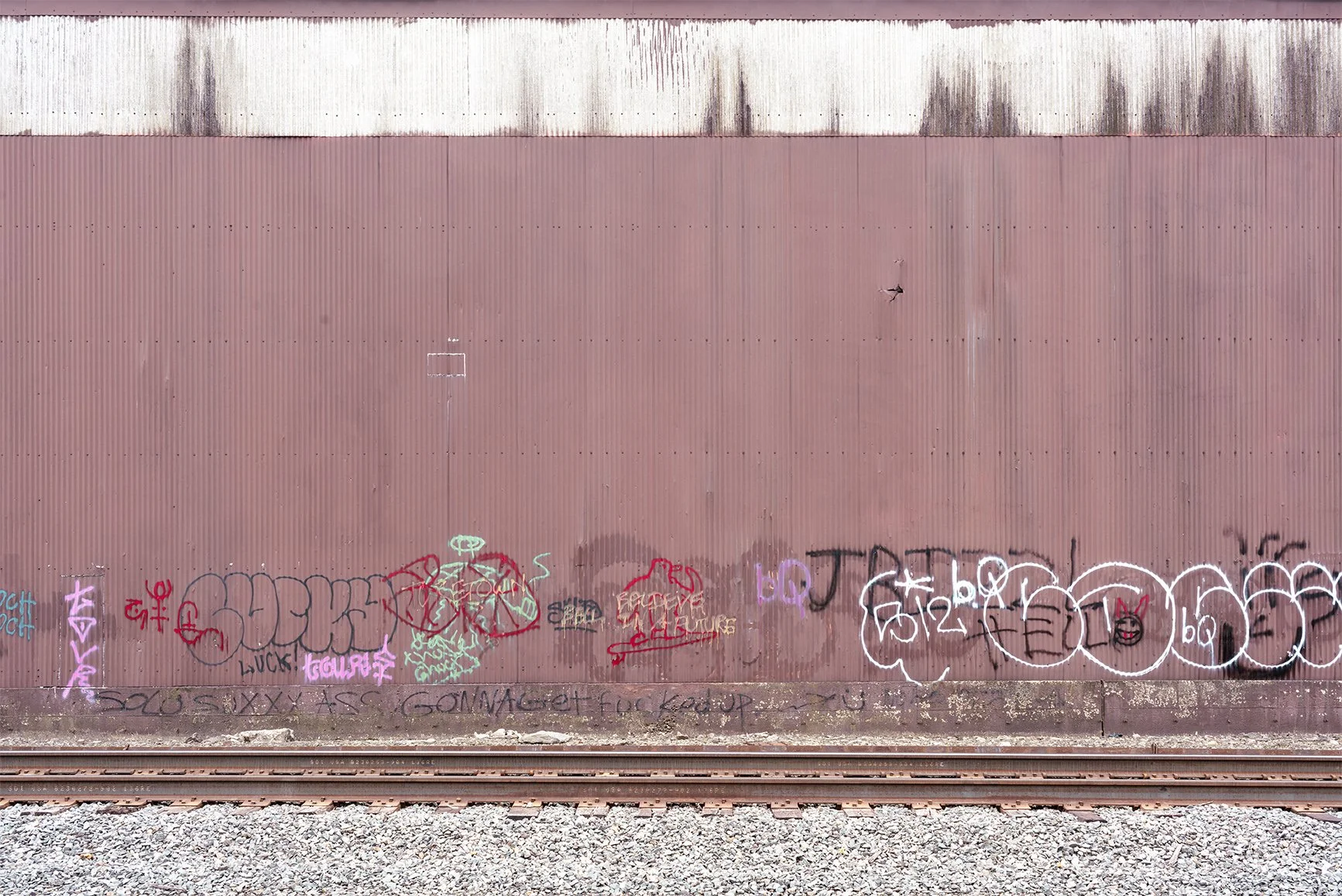
Lewiston Station, c. 1916
Maine Central Railroad
Lewiston, Androscoggin County, Maine
From the Echoes, Still: Maine's Industrial Remnants Collection (2024–2028)
Exteriors Portfolio
Historical Narrative
Kevin LeDuc Pigment print on Hahnemühle Baryta Edition of 5 + 1 Artist's Proof (Portfolio of 40 Images)
Paper Size: 40 × 55 inches Image Size: 31.33 × 37 inches Borders: Approximately 4 inches (All Sides)
Historic Significance
Historical Narrative
-
Ironhorse Court and the Transformation of Lewiston's Railroad Heritage
Introduction
The adaptive reuse of historic industrial and transportation buildings has become an important strategy for preserving local heritage while supporting economic revitalization. In Lewiston, Maine, Ironhorse Court stands as a prominent example of this process. Located on Bates Street in the city's historic industrial district, the building originated as the Lewiston passenger station of the Maine Central Railroad in the early twentieth century. For decades, the station served as a vital transportation hub connecting Lewiston to regional and national rail networks. Following the decline of passenger rail service after World War II, the structure underwent several changes in ownership and use before eventually being restored and redeveloped as Ironhorse Court. The history of the site reflects broader patterns in American transportation, industrial development, urban decline, and historic preservation.
The Rise of Rail Transportation in Lewiston
The development of railroads transformed Maine's economy during the nineteenth century. By connecting inland manufacturing centers to ports and major urban markets, rail transportation facilitated industrial growth throughout the state. Lewiston, already emerging as one of New England's leading textile manufacturing cities, benefited significantly from expanded rail connections. The Maine Central Railroad became the dominant carrier in the region, linking Lewiston with Portland, Bangor, Boston, and other commercial centers.¹
By the early twentieth century, growing passenger and freight traffic created a need for improved station facilities. The Maine Central Railroad responded by constructing a new passenger station at the terminus of Bates Street. Completed in 1916 and opened for service in 1917, the station was designed to accommodate increasing passenger demand while serving as a gateway to the city.² The building's architecture reflected the railroad's desire to project stability and modernity while complementing Lewiston's industrial landscape.
The Station as a Community Gateway
For much of the twentieth century, the Lewiston station functioned as one of the city's most important public spaces. Thousands of travelers entered and departed the city through its waiting rooms and platforms. The station played a particularly significant role in facilitating immigration from French Canada, a process that shaped Lewiston's demographic and cultural development.³ Newly arrived workers and families often encountered Lewiston for the first time through the railroad station.
The station also became closely associated with national events. During both World Wars, local residents used the depot as a departure point for military service and as a gathering place to welcome returning veterans. Rail transportation remained the principal means of long-distance travel for many Americans during the first half of the twentieth century, making the station an important site of collective memory within the community.⁴
Passenger service reached its peak during the 1940s and 1950s. Trains operating through Lewiston connected the city to major destinations throughout New England and beyond. The station's activity reflected the broader importance of rail travel before the widespread adoption of automobiles and commercial aviation.⁵
Decline of Passenger Rail Service
The decades following World War II brought dramatic changes to American transportation. Federal investment in highways, increasing automobile ownership, and the growth of air travel led to a steady decline in passenger rail traffic. Railroads throughout the United States struggled to maintain profitability on passenger routes, and many stations experienced significant reductions in use.⁶
Lewiston's station was no exception. By approximately 1960, passenger rail service had ceased. The end of regular passenger operations marked the conclusion of an era in the city's transportation history. Following the station's closure, the property was sold and adapted for industrial and commercial purposes. Ownership eventually passed to Steel Service Center, Inc., reflecting the continued importance of manufacturing and industrial activity in Lewiston's economy.⁷
The building's survival during this period was not guaranteed. Across the United States, many historic railroad stations were demolished as communities sought to modernize urban landscapes. The former Lewiston station, however, remained standing despite alterations and changing uses.
Preservation and Redevelopment
The late twentieth century witnessed growing interest in historic preservation and adaptive reuse. Scholars, planners, and preservationists increasingly recognized the cultural and economic value of rehabilitating historic structures rather than demolishing them.⁸ In former industrial cities such as Lewiston, preservation initiatives became closely linked to broader efforts at urban revitalization.
A major turning point occurred after the relocation of Steel Service Center operations in 2006. Restoration efforts began shortly thereafter with the objective of preserving the building's historic character while adapting it for contemporary commercial use. Renovation projects emphasized the retention of significant architectural features, including original woodwork, flooring, lighting fixtures, and interior spaces associated with the station's historic function.⁹
The redevelopment culminated in the creation of Ironhorse Court, a mixed-use commercial complex that opened in 2010. The project successfully integrated modern office and event spaces within the historic structure. Particularly notable was the preservation of the former waiting room, which was transformed into the Royal Oak Room, a venue for community events and gatherings.¹⁰
Historical Significance
Ironhorse Court represents more than the preservation of a single building. It illustrates the changing relationship between transportation infrastructure and urban development in the United States. The structure embodies multiple phases of Lewiston's history, including industrial expansion, immigration, wartime mobilization, postwar decline, and contemporary revitalization.
The building also demonstrates the value of adaptive reuse as a preservation strategy. Rather than functioning solely as a museum artifact, Ironhorse Court remains an active part of the city's economic and social life. This approach aligns with contemporary preservation theory, which emphasizes sustainable reuse and community engagement as essential components of historic conservation.¹¹
Today, the former railroad station serves as a tangible reminder of the era when rail transportation shaped the economic and social geography of New England. Its continued presence contributes to the preservation of Lewiston's architectural heritage while fostering new forms of civic and commercial activity.
Conclusion
The history of Ironhorse Court reflects the broader trajectory of American railroad infrastructure. Constructed during the height of rail transportation, the Lewiston station served for decades as a gateway to the city and a vital component of regional commerce. The decline of passenger rail service threatened the building's future, yet subsequent preservation efforts transformed it into a successful example of adaptive reuse. As Ironhorse Court continues to serve the community, it stands as a testament to the enduring value of historic preservation and the importance of maintaining connections to the past within evolving urban environments.
Notes
Charles A. Clark, Maine Railroads (Portland, ME: Stephen Daye Press, 1941), 112–118.
Maine Central Railroad Company, Annual Report of the Maine Central Railroad Company (Portland, ME: Maine Central Railroad, 1917), 23.
Yves Roby, The Franco-Americans of New England: Dreams and Realities (Montreal: McGill-Queen's University Press, 2004), 45–68.
Earle G. Shettleworth Jr., Maine's Visible Black History: The First Chronicle of Its People (Gardiner, ME: Tilbury House, 2020), 189; also see local transportation records cited by the Androscoggin Historical Society.
Robert M. Lindsell, The Rail Lines of Northern New England (Pepperell, MA: Branch Line Press, 2000), 87–91.
John F. Stover, American Railroads, 2nd ed. (Chicago: University of Chicago Press, 1997), 244–263.
Androscoggin County Registry of Deeds, property transfer records relating to the former Maine Central Railroad station property, Lewiston, Maine.
Norman Tyler, Ted J. Ligibel, and Ilene R. Tyler, Historic Preservation: An Introduction to Its History, Principles, and Practice, 2nd ed. (New York: W. W. Norton, 2009), 115–142.
Maine Historic Preservation Commission, preservation documentation relating to the rehabilitation of the former Lewiston railroad station, Augusta, Maine.
Ironhorse Court restoration project records, Lewiston, Maine.
Donovan D. Rypkema, The Economics of Historic Preservation: A Community Leader's Guide (Washington, DC: National Trust for Historic Preservation, 2005), 13–29.
Bibliography
Clark, Charles A. Maine Railroads. Portland, ME: Stephen Daye Press, 1941.
Lindsell, Robert M. The Rail Lines of Northern New England. Pepperell, MA: Branch Line Press, 2000.
Maine Central Railroad Company. Annual Report of the Maine Central Railroad Company. Portland, ME: Maine Central Railroad, 1917.
Maine Historic Preservation Commission. Preservation documentation relating to the rehabilitation of the former Lewiston railroad station. Augusta, ME.
Roby, Yves. The Franco-Americans of New England: Dreams and Realities. Montreal: McGill-Queen's University Press, 2004.
Rypkema, Donovan D. The Economics of Historic Preservation: A Community Leader's Guide. Washington, DC: National Trust for Historic Preservation, 2005.
Stover, John F. American Railroads. 2nd ed. Chicago: University of Chicago Press, 1997.
Tyler, Norman, Ted J. Ligibel, and Ilene R. Tyler. Historic Preservation: An Introduction to Its History, Principles, and Practice. 2nd ed. New York: W. W. Norton, 2009.
Androscoggin County Registry of Deeds. Property transfer records relating to the former Maine Central Railroad station property. Lewiston, Maine.