Albany Industrial Building
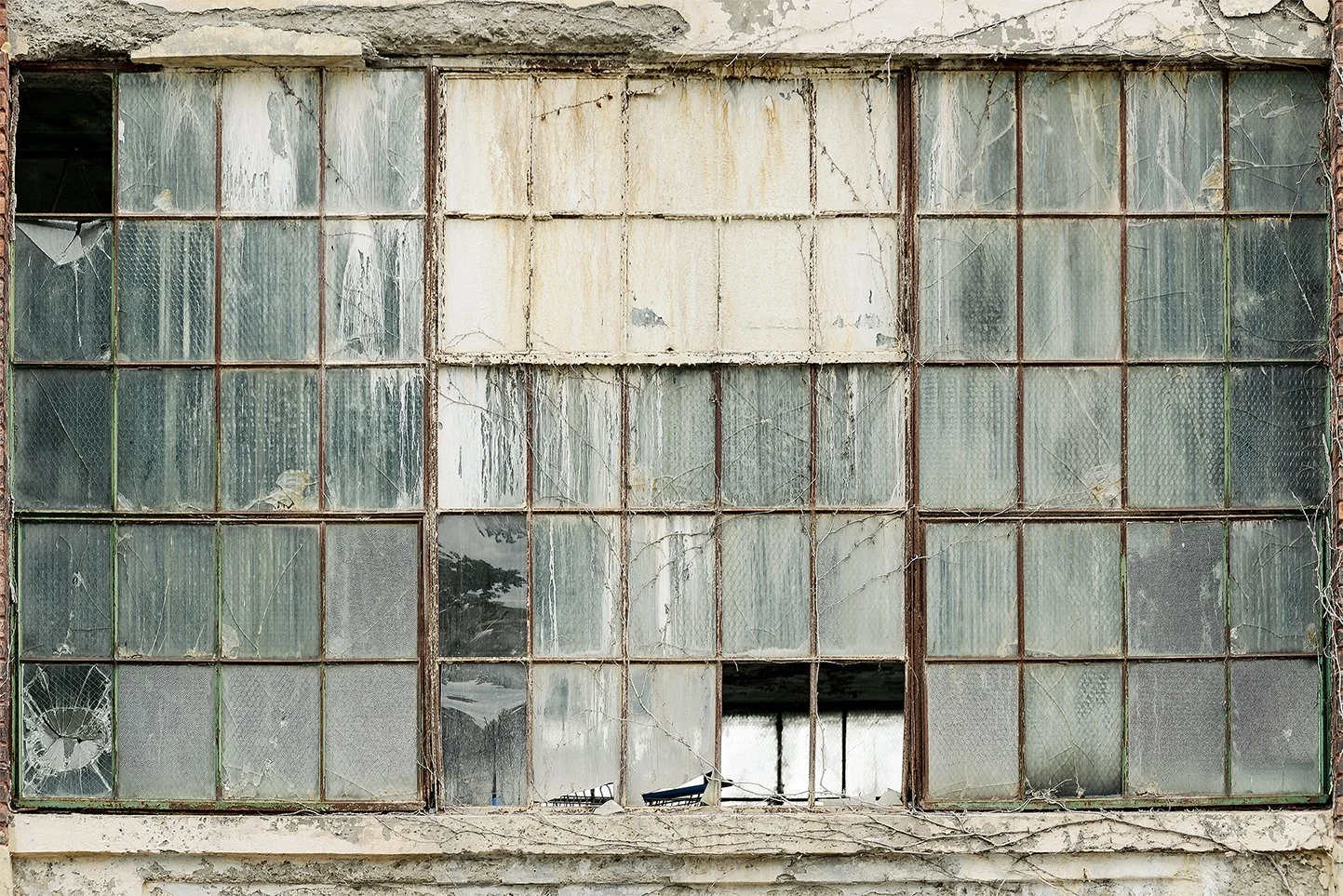
Albany Industrial Building
Kevin LeDuc
Albany Industrial Building, c. 1915
Argus Litho Press Building, c. 1865 Albany, Albany County, New York
from the Ballyshannon’s Rustland (2021–2024) – Monumentality Portfolio
Pigment print on Hahnemühle Baryta
Artist’s proof + edition of 5 (portfolio of 40 images)
30 × 45 inches
-
THE ALBANY INDUSTRIAL BUILDING AND THE ARGUS PRESS BUILDING:
INDUSTRIAL DEVELOPMENT, PRINT CULTURE, AND URBAN TRANSFORMATION ON BROADWAY, ALBANY, NEW YORK, 1865–2010The building at 1031 Broadway in Albany, New York, occupies a significant place in the city's industrial and printing history. Constructed in 1915 as the Albany Industrial Building, the structure represented a deliberate effort by Albany business leaders to stimulate manufacturing growth within the city's waterfront warehouse district. During the twentieth century, the building became associated with the printing operations of The Argus, one of Albany's most influential newspapers. Although the newspaper ceased publication in 1921, the printing business survived for decades thereafter, leaving a lasting association between the structure and the Argus name. By the early twenty-first century the building was widely known as the Argus Press Building or Argus Litho Press Building, even after years of vacancy. The history of 1031 Broadway therefore illustrates broader themes in urban industrial development, newspaper publishing, and economic change in New York's capital city.
The origins of The Argus predated the construction of the Broadway building by half a century. According to the Library of Congress, The Argus began publication in Albany in 1865 as the successor to the Atlas & Argus newspaper.¹ The paper quickly became an important Democratic voice in state politics. During the late nineteenth century Albany remained a center of political printing because state government generated substantial contracts for legislative documents, reports, and official publications. The Argus benefited from this environment and developed a substantial printing operation in addition to its newspaper business.²
By the early twentieth century Albany civic leaders were increasingly concerned about industrial competitiveness. New transportation technologies and changing manufacturing patterns encouraged cities throughout the Northeast to develop modern industrial facilities capable of attracting tenants. In Albany, the Chamber of Commerce promoted a project known as the Albany Industrial Building. Constructed in 1915 and designed by prominent Albany architect Marcus T. Reynolds, the building differed from many earlier factories because it was conceived as a multi-tenant industrial facility rather than a single-company plant.³
Historic-preservation documentation describes the Albany Industrial Building as an early industrial incubator intended to house numerous small and medium-sized manufacturing firms. The project sought to lower barriers to entry for new manufacturers by providing modern industrial space within a purpose-built structure.⁴ Reynolds designed the building with large windows, substantial floor plates, elevator towers, and other features characteristic of daylight industrial architecture. The building's prominent location on Broadway placed it within Albany's expanding industrial and warehouse corridor, which connected rail, river, and commercial transportation networks.⁵
Unfortunately, surviving historic documentation does not identify all of the building's original 1915 tenants. The National Register nomination for the Albany Industrial and Warehouse Historic District characterizes the structure as a facility designed for multiple manufacturers but does not provide a tenant roster.⁶ Consequently, historians can confidently state the building's purpose and design intent but cannot presently identify every firm occupying the structure at its opening without additional archival research in city directories, Chamber of Commerce records, lease documents, or contemporary newspapers.
At some point after its completion, the building became associated with the printing operations of The Argus. The exact date of occupancy remains uncertain. The National Register documentation explicitly notes that the tenure of the Argus printing business in the building is unknown.⁷ Nevertheless, the association became so strong that the structure eventually acquired the enduring name "Argus Press Building." This transformation reflected broader developments in the newspaper industry. While The Argus newspaper ceased publication in 1921, the company's printing and lithographic operations continued well beyond the newspaper's demise.⁸
The persistence of the printing business after 1921 demonstrates an important distinction between newspaper publishing and commercial printing. Many newspaper organizations maintained profitable printing divisions capable of producing commercial materials, government documents, advertising products, and other printed matter. The Argus appears to have followed this pattern. Historic documentation indicates that the Argus Company maintained offices elsewhere on Broadway during the 1940s while continuing printing operations associated with the company.⁹
Throughout much of the twentieth century the building remained a prominent industrial landmark within Albany's warehouse district. Its architecture distinguished it from neighboring industrial structures. Contemporary observers frequently noted its decorative brickwork, large expanses of glazing, and twin service towers.¹⁰ The building's survival reflected the continuing importance of industrial and printing enterprises within the district even as Albany's economic base evolved.
The second half of the twentieth century brought substantial changes to urban manufacturing throughout the Northeast. Deindustrialization, suburbanization, and technological shifts reduced demand for many older industrial facilities. Printing itself underwent dramatic transformation through offset lithography, digital typesetting, and eventually computer-based production. Despite these changes, the building's association with the Argus name persisted. By the early twenty-first century newspaper accounts referred to the structure as the former Argus Litho Press building or Argus Press building.¹¹
By approximately 2010 the building had become a symbol of both Albany's industrial heritage and the challenges of historic preservation. Preservation organizations identified it as one of the city's most endangered historic industrial structures. Although vacant, the building remained architecturally significant and continued to occupy a highly visible position within the revitalizing Warehouse District.¹² The endurance of the Argus name in public memory demonstrated the long-lasting cultural impact of Albany's newspaper and printing industries.
The history of 1031 Broadway therefore connects several important strands of Albany's development. Constructed in 1915 as a Chamber of Commerce initiative to foster industrial growth, the Albany Industrial Building embodied Progressive Era efforts to promote economic development through modern industrial infrastructure. The later occupancy of the building by the Argus printing operation linked it to one of Albany's most significant newspapers, whose roots stretched back to 1865. Although the precise date of the company's move into the building remains uncertain, the structure became so closely identified with Argus printing that the association survived for decades after the newspaper itself disappeared. By 2010 the former industrial building stood as a monument to Albany's manufacturing, publishing, and commercial past, preserving a tangible connection to nearly a century of economic and cultural history.
Footnotes
“The Argus (Albany [N.Y.]) 1865–1907,” Library of Congress, Chronicling America, accessed June 10, 2026.
“The Argus (Albany [N.Y.]) 1865–1907,” Library of Congress.
National Park Service, National Register of Historic Places Registration Form: Albany Industrial and Warehouse Historic District (Washington, DC: U.S. Department of the Interior, 2025), section discussing 1031 Broadway.
Ibid.
Chris Churchill, “Iconic Building Waits as Warehouse District Continues to Change,” Times Union, May 27, 2015.
National Park Service, Albany Industrial and Warehouse Historic District.
Ibid.
Ibid.
Ibid.
Churchill, “Iconic Building Waits as Warehouse District Continues to Change.”
Amanda Fries, “Albany Property Sold Back to Delinquent Owner,” Times Union, February 22, 2018.
Historic Albany Foundation, “Dirty Dozen: Argus Press Building,” 2019; Historic Albany Foundation, “EndangeredAlbany: Argus Press Building,” February 26, 2021.
Bibliography
Churchill, Chris. “Iconic Building Waits as Warehouse District Continues to Change.” Times Union. May 27, 2015.
Fries, Amanda. “Albany Property Sold Back to Delinquent Owner.” Times Union. February 22, 2018.
Historic Albany Foundation. “Dirty Dozen: Argus Press Building.” 2019.
Historic Albany Foundation. “EndangeredAlbany: Argus Press Building.” February 26, 2021.
Library of Congress. “The Argus (Albany [N.Y.]) 1865–1907.” Chronicling America: Historic American Newspapers. Accessed June 10, 2026.
National Park Service. National Register of Historic Places Registration Form: Albany Industrial and Warehouse Historic District. Washington, DC: U.S. Department of the Interior, 2025.