Maine Fly

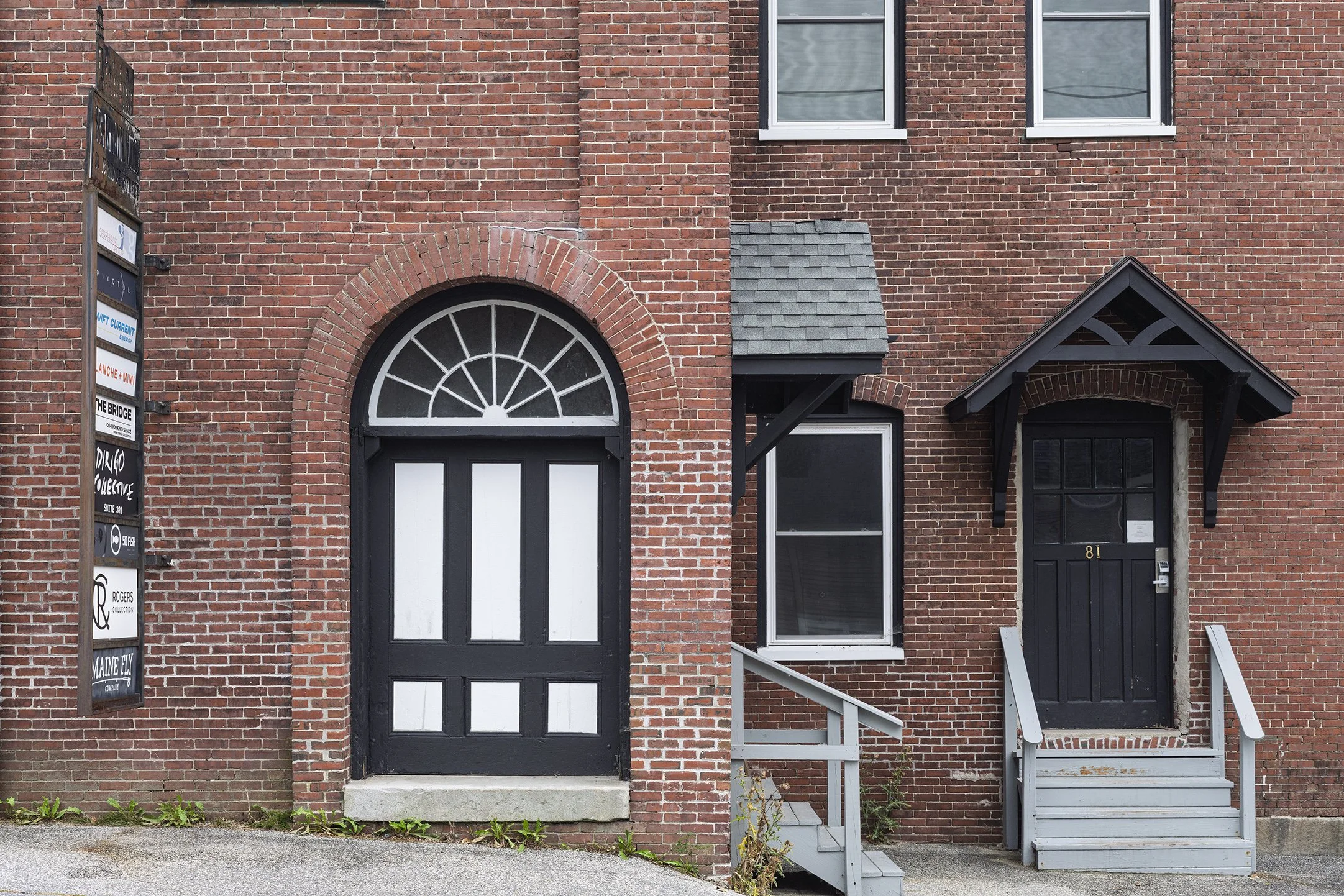

Maine Fly
c. 1840
Royal River Manufacturing Company, Second Falls, Cumberland County, Yarmouth, Maine
From the portfolio Echoes, Still: Maine’s Industrial Remnants – Cotton, Woolens, 2025
Pigment print on Hahnemühle Baryta
AP + Edition of 4
30 × 45 in.
-
This collection includes 30 × 45 inch pigment prints on Hahnemühle Baryta paper, available in a Limited Edition. Additionally, custom-sized one-off prints, both larger and smaller, are available, as well as an Artist Two Print Edition. Please inquire for more details..
Prints are released in an edition of 4, plus one A/P master print held by the artist. (AP + Ed. 1/5 )
-
Discount rates are available for Institutional collections when purchasing two or more additional prints.
Turnaround time for Photographs listed in this gallery can be shipped within ten (10) business days.
I currently fulfil orders from within the Conterminous United States.
Available in sets, each featuring a curated selection of four individual photographs handpicked by the artist
If you're interested in another photograph from Maine Manufactures Series or if you would like to request additional prints from another series, please inquire.
-
The mill site along the Royal River reflects nearly two centuries of industrial adaptation and economic change in southern Maine. Its earliest incarnation dates to 1817, when a wooden mill was erected on the river, harnessing water power at a time when small-scale manufacturing was beginning to take hold across New England.¹ This early structure laid the groundwork for what would become a long-standing industrial presence at the site.
In 1847, the North Yarmouth Manufacturing Company was established by Eleazer Burbank, marking a significant transition from early, localized production to more formalized textile manufacturing.² The company produced cotton yarn and cloth, commodities that were increasingly vital to both regional markets and the broader American economy. To support this expansion, the original wooden mill was replaced by a substantial brick structure, signaling both confidence in the enterprise and a growing emphasis on durability and fire resistance in industrial architecture.³
A major transformation occurred in 1855 when Libby and Harrison rebuilt the mill to accommodate a new venture operating as the Royal River Manufacturing Company.⁴ Rather than competing directly with large urban textile mills, the company specialized in the production of cotton grain bags, an essential commodity for agricultural storage and distribution in the mid-nineteenth century.⁵ This shift illustrates the adaptability of rural mills, which often survived by responding to specific market needs rather than mass production.
Royal River Manufacturing Company operated for nearly a century, though not without interruption. Like many American manufacturers, the company suspended operations during the Great Depression, reflecting the severe economic dislocation of the 1930s.⁶ Despite these challenges, the mill remained a viable industrial asset, and its continued use into the mid-twentieth century speaks to both the quality of its construction and the enduring value of water-powered manufacturing sites.
The postwar era brought frequent changes in ownership as the structure of American manufacturing evolved. In the early 1950s, the Old Sparhawk Mills Company relocated to the site from South Portland, Maine, shifting production toward braided rugs.⁷ This transition mirrored a broader movement away from large-scale textile production and toward smaller, specialized manufacturers that could remain competitive in a changing economy.
In 1957, the mill entered a new phase under the leadership of Sherman O. Yale, who established Yale Cordage within the building.⁸ The company produced braided twine for lobster traps and yachting cord, goods closely tied to Maine’s maritime economy. This chapter in the mill’s history reinforced its connection to regional industries and extended its relevance well into the late twentieth century. Yale Cordage operated at the site until 1991, when it relocated to a larger facility better suited to modern production needs.⁹
Following the departure of Yale Cordage, the mill was redeveloped into rental space for businesses, marking its transition from active manufacturing to adaptive reuse. While its function changed, key elements of its industrial heritage were preserved. Most notably, the mill’s electric turbines—revitalized in 1986—remain operational, providing a rare and tangible link to the site’s water-powered past.¹⁰
Today, the mill stands as a physical record of industrial continuity and change. From early textile manufacturing to agricultural packaging, domestic craft production, and marine cordage, the site embodies the resilience of New England’s river-powered mills and their capacity to evolve alongside shifting economic and technological landscapes. As such, it remains an important landmark, not only for its architectural and mechanical legacy, but also for its role in shaping the social and economic life of the Royal River community.
Footnotes
William D. Williamson, The History of the State of Maine (Hallowell: Glazier, Masters & Co., 1832), 512–514.
Town of North Yarmouth, Annual Town Reports, 1847.
Sanborn Fire Insurance Maps, North Yarmouth, Maine, 1886.
Maine Register and Business Directory, 1855.
George Rogers Taylor, The Transportation Revolution, 1815–1860 (New York: Rinehart, 1951), 143–145.
U.S. Census of Manufactures, 1931; North Yarmouth Historical Society Archives.
Old Sparhawk Mills Company Records, South Portland Historical Society.
Maine Department of Labor, Industrial Directory of Maine, 1958.
Yale Cordage Company Papers, private collection; North Yarmouth Historical Society.
Royal River Power Commission, Turbine Restoration Report, 1986.
Bibliography
Maine Department of Labor. Industrial Directory of Maine. Augusta: State of Maine, 1958.
Maine Register and Business Directory. Portland: Various publishers, mid-19th century editions.
North Yarmouth Historical Society. Manuscript collections, photographs, and business records.
Sanborn Fire Insurance Maps. North Yarmouth, Maine. New York: Sanborn Map Company, 1886–1950.
Taylor, George Rogers. The Transportation Revolution, 1815–1860. New York: Rinehart, 1951.
Town of North Yarmouth. Annual Town Reports. 19th–20th centuries.
Williamson, William D. The History of the State of Maine. Hallowell: Glazier, Masters & Co., 1832.