Berks Engineering Company, No. 2
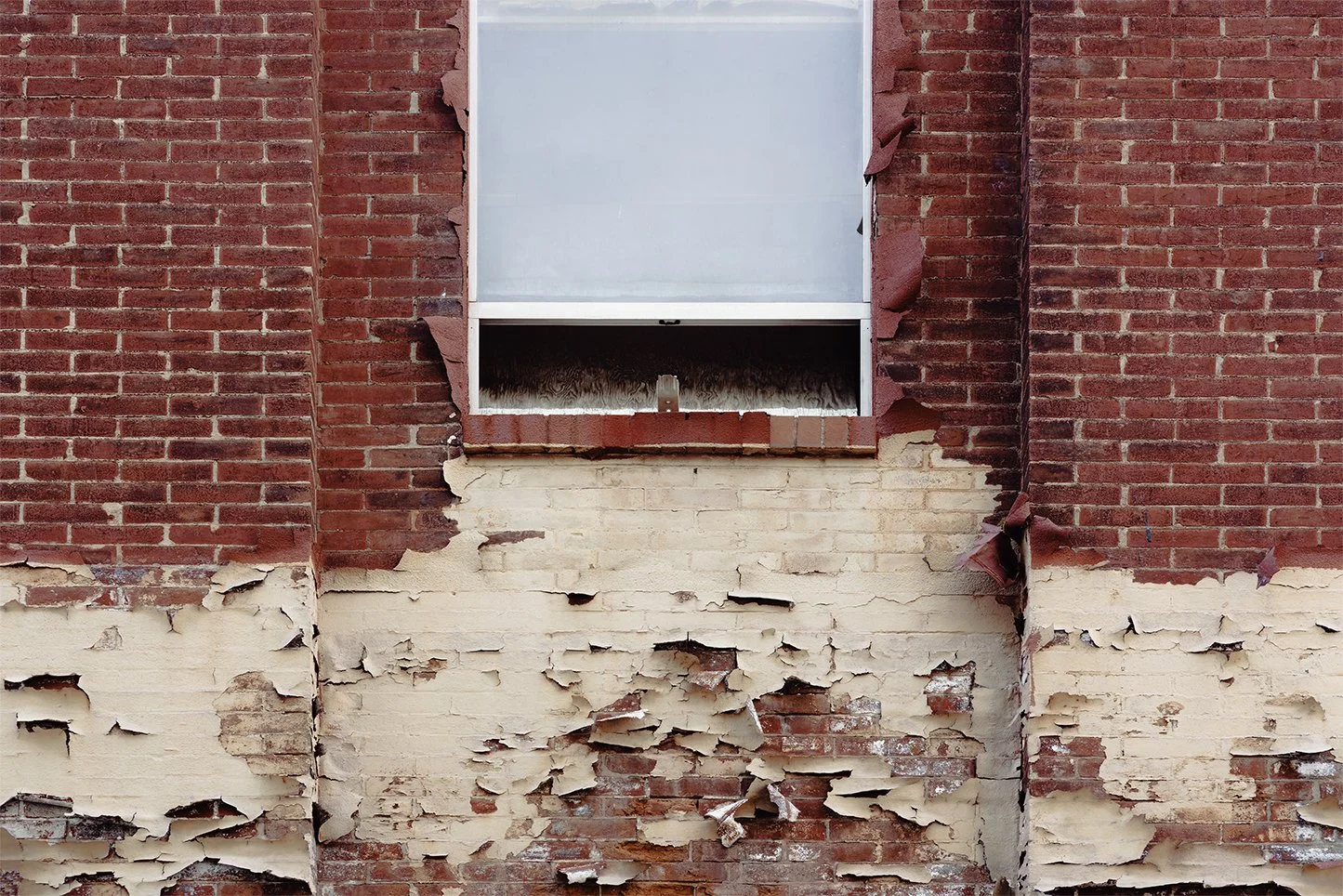
Berks Engineering Company, No. 2
Kevin LeDuc
Berks Engineering Company, No. 2 Berks Engineering Company, c. 1918
600 Chestnut & 200 S 6th Street, South of Penn (SOP) Neighborhood, Reading, Berks County, Pennsylvania from the Ballyshannon’s Rustland (2021–2024) – Monumentality Portfolio
Pigment print on Hahnemühle Baryta
Artist’s proof + edition of 5 (portfolio of 40 images)
30 × 45 inches
-
Berks Engineering Company and the Persistence of Urban Machine Manufacturing in Reading, Pennsylvania, c. 1918–Post-2010
Narrative Essay (Chicago Style)
The industrial history of Reading, Pennsylvania, in the twentieth century is best understood not only through its large employers—such as the Philadelphia & Reading Railroad Shops and Western Electric’s Reading Works—but also through the smaller, persistent machine shops that sustained the city’s manufacturing ecosystem after the decline of heavy industry. Among these, Berks Engineering Company, founded circa 1918, represents a particularly durable example of urban contract manufacturing embedded within Reading’s historic downtown industrial grid.¹
Berks Engineering operated for much of its early and mid-twentieth-century existence at 6 Chestnut Street and 200 South 6th Street, a dense industrial corridor located within walking distance of the former Reading Railroad locomotive and car shops at 7th and Chestnut Streets. This proximity was not incidental; rather, it reflected the spatial continuity of Reading’s industrial development, in which post-railroad machine shops directly occupied the labor, skill, and infrastructural legacy of the nineteenth-century railroad economy.² The Reading Shops, at their peak, employed thousands of machinists and were among the largest industrial complexes in the United States, creating a deeply skilled workforce that would later diffuse into smaller firms such as Berks Engineering.³
The Berks Engineering facility itself occupied a typical multi-story brick industrial structure characteristic of early twentieth-century urban manufacturing. Based on comparable machine shop layouts in Reading’s central industrial district, the building likely followed a vertically integrated functional design: heavy machining and shipping operations on the ground floor, precision machining and toolmaking on upper levels, engineering and administrative offices above, and mechanical systems such as compressors and power distribution in the basement.⁴ This configuration reflected both the constraints of dense urban land use and the technological limitations of pre-suburban industrial design.
The company’s founding circa 1918 situates it within a broader wave of industrial specialization that followed World War I, when demand for precision metalworking, repair services, and small-scale machinery production expanded significantly.⁵ Unlike large vertically integrated manufacturers, Berks Engineering functioned as a contract machine shop, producing custom components rather than standardized goods. Its documented product categories included machined steel parts, fabricated assemblies, welding work, and specialty industrial machinery such as food-processing and packaging equipment.⁶ These outputs were not sold directly to consumers but supplied to regional industries requiring ongoing maintenance, repair, and production support.
By the mid-twentieth century, Berks Engineering had become part of a broader industrial support network serving Reading’s manufacturing base. This included steel and power industries, regional food processing firms, and notably the Western Electric Reading Works, which by the 1960s and 1970s had become one of the largest electronics manufacturing facilities in the United States.⁷ Although Berks Engineering was not a direct subsidiary of Western Electric, it operated within its supply ecosystem, likely providing tooling, fixtures, machine repair components, and fabricated support structures necessary for maintaining high-volume production systems.
The workforce of Berks Engineering, like many machine shops in Reading, was historically male-dominated, reflecting the gender structure of industrial labor in the twentieth century. Estimates based on comparable firms suggest employment levels ranging from approximately 20–60 workers in the early period, expanding to perhaps 40–120 during mid-century industrial peak conditions, before declining toward smaller staff levels in the late twentieth century.⁸ While no firm-specific payroll demographics survive, the workforce likely reflected Reading’s evolving ethnic composition: early employment drawn from German, Irish, and Eastern European immigrant communities, transitioning in the post-1960s period to include increasing numbers of Puerto Rican and Dominican workers alongside established local populations.⁹
This demographic shift mirrored broader changes in Reading itself. The South 6th Street and Chestnut Street corridor lay within a historically working-class district shaped by successive immigration waves and industrial employment. In the nineteenth and early twentieth centuries, the area was dominated by European immigrant labor tied to railroads, foundries, and metalworking. By the late twentieth century, deindustrialization and suburbanization had transformed the neighborhood into a mixed residential-industrial zone with a predominantly Latino population, while retaining pockets of long-standing industrial activity.¹⁰
Berks Engineering persisted into the late twentieth and early twenty-first centuries even as Reading’s industrial base contracted. Industrial directory records confirm that the company ultimately relocated or consolidated operations at 1078 Stinson Drive, a more modern industrial facility located outside the dense downtown grid.¹¹ This transition reflects a broader structural shift in American manufacturing, in which urban machine shops either closed or relocated to suburban industrial parks with improved logistics, parking, and building configurations better suited to modern CNC machining and trucking-based distribution systems.
By the post-2010 period, the original Chestnut Street and South 6th Street facilities were effectively vacated or repurposed for non-industrial uses, marking the end of over ninety years of continuous industrial occupation. The relocation represents not merely a business decision but a spatial and technological transformation: from vertically stacked urban machining environments to horizontally organized suburban fabrication facilities.
Industrial Interpretation and Historical Significance
Berks Engineering’s significance lies in its role as a “continuity institution” within Reading’s industrial history. While large-scale employers such as the Reading Railroad Shops and Western Electric defined the city’s industrial peak, firms like Berks Engineering preserved manufacturing knowledge, employment, and production capacity during periods of structural decline. In this sense, it functioned as a bridge between railroad-era heavy industry and late twentieth-century contract machining economies.
Its operational model—custom machining, repair, and fabrication—represents the long tail of American industrial production, in which localized expertise replaced mass production capacity. The company’s survival into the twenty-first century underscores the persistence of skilled labor economies even as large-scale industrial systems collapsed.
Interesting Historical Facts
The company’s early location sat within one of the oldest continuous industrial corridors in Pennsylvania, directly adjacent to former locomotive fabrication shops dating to the 1830s.
The Chestnut Street industrial district functioned as part of a system that once generated over $60 million in worker wages over its early railroad history, anchoring Reading’s urban growth.³
Berks Engineering’s eventual relocation mirrors a broader regional trend seen across Berks County, where many machine shops moved from downtown cores to suburban industrial parks after 1980.
The company represents a rare example of an industrial firm that persisted through three major phases of American manufacturing: rail-era mechanization, mid-century industrial expansion, and post-industrial contract machining.
Conclusion
From its founding circa 1918 through its post-2010 consolidation at Stinson Drive, Berks Engineering Company exemplifies the adaptive resilience of small-scale industrial manufacturing in Reading, Pennsylvania. Rooted in the spatial and labor legacy of the Philadelphia & Reading Railroad Shops and later integrated into the supply ecosystem of Western Electric’s Reading Works, the company operated as a critical yet often invisible component of regional industrial infrastructure.
Its history reflects the broader transformation of American manufacturing cities: from dense urban industrial ecosystems to dispersed suburban production networks, and from vertically integrated factories to flexible contract machining systems. In this sense, Berks Engineering is not merely a machine shop, but a historical artifact of industrial continuity across a century of economic change.
Footnotes
Macrae’s Blue Book, “Berks Engineering Co., Reading, PA,” industrial directory listing.
GoReadingBerks, “Philadelphia & Reading Railroad Shops, 7th & Chestnut Streets.”
Reading Company historical records; locomotive and car shop employment statistics.
Comparative industrial architecture patterns in Reading machine shops (Reading Hardware Company district documentation).
Macrae’s Blue Book, Berks Engineering Company profile.
Ibid.
Reading Works industrial history, Western Electric / AT&T / Agere Systems transition records.
LinkedIn company profile, Berks Engineering Company Inc., workforce estimates.
U.S. Census Bureau demographic trends for Reading, Pennsylvania.
Berks County historical industrial and immigration summaries.
Dun & Bradstreet company profile; Berks Engineering corporate records indicating Stinson Drive relocation.
Bibliography (Chicago Style)
Berks County Historical Society. Industrial and Immigration History of Reading, Pennsylvania.
Dun & Bradstreet. Berks Engineering Company Corporate Profile. Accessed 2025.
GoReadingBerks. “Philadelphia & Reading Railroad Shops, 7th & Chestnut Streets.”
Macrae’s Blue Book. “Berks Engineering Company Listings.” Industrial Directory.
Reading Company Historical Records. Locomotive and Car Shop Operations at Reading, PA.
U.S. Census Bureau. Reading City Demographic Data, 1900–2010.
LinkedIn. “Berks Engineering Company Inc.” Company Profile.
Western Electric / Agere Systems historical employment and facility transition records (Reading Works).