Reading Railroad Company
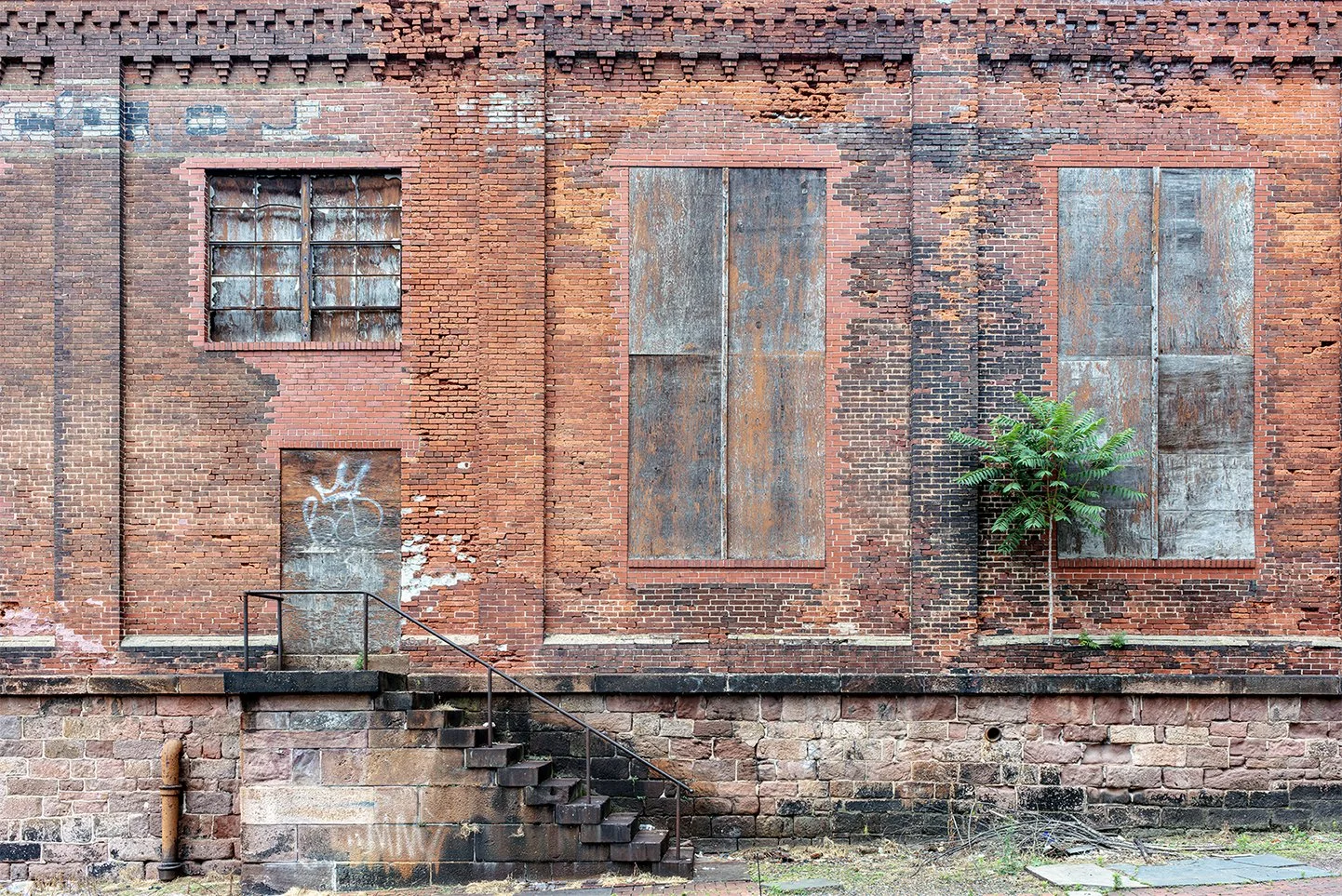
Reading Railroad Company
Kevin LeDuc
Reading Railroad Company, c. 1833
Reading, Berks County, Pennsylvania from the Ballyshannon’s Rustland (2021–2024) – Monumentality Portfolio
Pigment print on Hahnemühle Baryta
Artist’s proof + edition of 5 (portfolio of 40 images)
30 × 45 inches
-
The Reading Railroad Company: Corporate Development, Operations, Workforce, and Legacy, 1833–1976
Introduction
The Reading Railroad, formally incorporated as the Philadelphia and Reading Railroad in 1833 and reorganized as the Reading Company in 1896, was one of the most influential transportation corporations in American history. For nearly a century and a half, the company played a central role in the economic development of Pennsylvania and the northeastern United States. Its rail network connected the anthracite coal fields of eastern Pennsylvania with the industrial and commercial markets of Philadelphia, New York, New Jersey, Delaware, and beyond. More than a transportation company, the Reading became an integrated industrial enterprise whose fortunes were tied to the rise and decline of the American coal industry. At its height, it operated approximately 1,460 miles of railroad and employed tens of thousands of workers across a vast range of occupations.¹
The history of the Reading Railroad illustrates the broader story of American industrialization, immigration, labor relations, technological innovation, and corporate consolidation. From its founding in the age of canals to its absorption into Conrail in 1976, the company helped shape the economic geography of the Mid-Atlantic region while providing employment for generations of railroad workers, craftsmen, clerical employees, and managers.
Origins of the Philadelphia and Reading Railroad
The Philadelphia and Reading Railroad was chartered by the Pennsylvania legislature on April 4, 1833. The railroad's primary purpose was to transport anthracite coal from the Schuylkill coal fields to the city of Philadelphia. At the time, the Schuylkill Canal dominated regional transportation, but railroad promoters believed that rail technology could move coal more rapidly, reliably, and economically than canal boats.²
Construction began almost immediately. By 1838 trains were operating between Reading and Philadelphia, and by 1842 the line had reached Pottsville and the anthracite coal region. The route generally followed the Schuylkill River valley, minimizing grades and reducing construction costs. The railroad's success was immediate. Coal traffic increased dramatically, and the company quickly became one of the most profitable transportation enterprises in the United States.³
Unlike many early railroads, the Reading soon expanded beyond transportation. Company leaders recognized that controlling coal production as well as transportation could increase profits and reduce competition. As a result, the railroad gradually acquired extensive coal lands and mining interests, creating a vertically integrated corporation that controlled extraction, transportation, and distribution.
Expansion During the Nineteenth Century
The decades following the Civil War witnessed remarkable expansion. As industrialization accelerated throughout the Northeast, demand for coal increased dramatically. The Reading responded by acquiring branch lines, leasing connecting railroads, and extending its reach throughout Pennsylvania and neighboring states.⁴
By the 1870s the Reading had become one of the most powerful railroads in the nation. Through direct ownership and subsidiary companies, it controlled approximately thirty percent of Pennsylvania's anthracite coal reserves. The company operated extensive terminal facilities, most notably the Port Richmond coal piers in Philadelphia, which became among the largest coal-shipping facilities in the world.⁵
Rapid expansion, however, came at a cost. The company financed much of its growth through debt, leaving it vulnerable to economic downturns. Financial difficulties culminated in receiverships during the 1880s and again after the Panic of 1893. These crises forced major corporate restructuring and ultimately led to the creation of the Reading Company in 1896.⁶
Reorganization as the Reading Company
The reorganization of 1896 established the Reading Company as a holding corporation overseeing railroad and coal subsidiaries. Although intended to stabilize finances, the new structure also reflected broader trends toward corporate consolidation during the Gilded Age.
Federal antitrust legislation and subsequent court decisions eventually challenged the Reading's control of coal production. During the early twentieth century, government regulators required the separation of mining and transportation operations, reducing the company's direct involvement in coal extraction.⁷
In 1924 the Reading Company simplified its organizational structure and became the direct operating railroad. Despite regulatory changes, coal transportation remained the foundation of its business. During the first half of the twentieth century, the Reading emerged as the nation's leading carrier of anthracite coal and one of the most efficient freight railroads in the eastern United States.⁸
Size and Geographic Reach
At its greatest extent, the Reading operated approximately 1,460 route miles of track. Its network extended throughout eastern Pennsylvania and connected with major railroad systems serving New York, New Jersey, Delaware, Maryland, and the broader Mid-Atlantic region.⁹
The railroad maintained:
Mainline freight corridors;
Coal branches serving mining regions;
Passenger routes;
Classification yards;
Locomotive and car repair shops;
Coal docks and marine terminals;
Passenger stations;
Administrative offices;
Telegraph and communications networks.
The company's principal headquarters and industrial facilities were located in Reading, Pennsylvania, from which the railroad derived its name. The city became one of the nation's most important railroad centers, with large repair shops, administrative offices, and maintenance facilities employing thousands of workers.
Workforce, Occupations, and Labor
The Reading Railroad was one of the largest employers in eastern Pennsylvania and a major source of industrial employment throughout the Mid-Atlantic region. At its peak, the company's extensive network of rail lines, repair shops, terminals, coal docks, and administrative offices required a workforce numbering in the tens of thousands.¹⁰ Although no complete annual employment series has been identified in the published literature, the scale of the company's operations strongly suggests employment levels comparable to other major northeastern railroad systems.
The Reading's workforce was highly specialized and organized into numerous occupational categories. Train-service employees included engineers, firemen, conductors, brakemen, switchmen, flagmen, and yardmasters. Maintenance-of-way departments employed track laborers, bridge crews, signal maintainers, and section foremen responsible for keeping the railroad's infrastructure operational. Mechanical departments employed machinists, boilermakers, blacksmiths, carpenters, electricians, pipefitters, painters, and car repairmen. Administrative departments included telegraph operators, dispatchers, station agents, stenographers, accountants, clerks, and managers.¹¹
The company's major repair shops in Reading functioned as industrial complexes in their own right. Steam locomotives required constant maintenance and rebuilding, creating steady demand for highly skilled craftsmen. These workers often spent entire careers with the railroad and developed specialized expertise in locomotive and rolling-stock repair.
Ethnic Composition of the Workforce
The Reading Railroad operated within one of America's most ethnically diverse industrial regions. During the nineteenth century, many employees were Irish, German, Welsh, and English immigrants or their descendants. By the early twentieth century, the workforce increasingly included immigrants from Italy, Poland, Slovakia, Hungary, Lithuania, and other parts of Eastern and Southern Europe.¹²
The railroad's workforce reflected the same immigration patterns that characterized Pennsylvania's coal and industrial regions. Workers frequently moved between mining, manufacturing, and railroad employment, creating a labor force shaped by successive waves of immigration.
While archival records clearly document the employment of workers from numerous ethnic backgrounds, no comprehensive scholarly study has established precise ethnic percentages for the workforce as a whole. Such calculations would require systematic examination of personnel records, census schedules, payroll files, and immigration records.
Women in the Reading Railroad
Women represented a relatively small but important segment of the Reading's workforce. Railroad transportation remained overwhelmingly male throughout the nineteenth and early twentieth centuries, particularly in operational and mechanical occupations. Nevertheless, women served in clerical and administrative roles, including positions as stenographers, typists, telephone operators, secretaries, and bookkeeping clerks.¹³
During World War I and World War II, labor shortages created additional employment opportunities for women in railroad offices and support departments. Although women never constituted a large proportion of the Reading's workforce, their contributions were essential to the administrative functioning of the company.
Employee Welfare and Labor Relations
The Reading developed extensive employee welfare programs. In 1902 the company introduced a pension system for long-serving workers, reflecting Progressive Era concerns about industrial welfare and employee retention. Relief associations provided assistance in cases of injury, illness, disability, and death.¹⁴
Like most major railroads, the Reading experienced periodic labor disputes. Employees participated in national railroad unions, including the Brotherhood of Locomotive Engineers, Brotherhood of Railroad Trainmen, Order of Railway Conductors, and other craft organizations. Labor-management relations often reflected broader national struggles over wages, working conditions, and industrial authority.
Passenger Service
Although freight transportation generated most of the Reading's revenue, passenger service remained an important component of its operations. Reading Terminal in Philadelphia, completed in 1893, became one of the nation's most significant railroad stations. The terminal served commuters, long-distance travelers, and business passengers traveling throughout Pennsylvania and neighboring states.¹⁵
The Reading operated commuter services connecting Philadelphia with Reading, Norristown, Pottsville, Bethlehem, and numerous smaller communities. For many residents of eastern Pennsylvania, the railroad provided the principal means of regional transportation well into the twentieth century.
Decline After World War II
Following World War II, the Reading confronted profound economic challenges. The demand for anthracite coal declined sharply as consumers increasingly adopted oil, natural gas, and electric heating systems. At the same time, trucking companies operating on modern highways captured growing shares of freight traffic. Passenger revenues also declined as automobile ownership expanded.¹⁶
The company attempted to diversify its operations, but coal remained central to its business model. As anthracite production collapsed, the railroad's traditional revenue base steadily eroded. Financial difficulties intensified during the 1960s, and in 1971 the Reading entered bankruptcy.
Conrail and the End of Independent Operations
The financial crisis affecting the Reading was part of a broader collapse of northeastern railroads during the late twentieth century. In response, the federal government established the Consolidated Rail Corporation (Conrail) to preserve essential rail services.
On April 1, 1976, most of the Reading's railroad assets were transferred to Conrail. This transfer marked the end of nearly 143 years of independent railroad operations.¹⁷
Although the railroad itself disappeared, many portions of the former Reading system remain active today under successor railroads, including Norfolk Southern and CSX Transportation. The corporate successor retained certain non-rail assets and eventually evolved into Reading International, a company focused on real estate and entertainment ventures.
Legacy
The Reading Railroad occupies a prominent place in American railroad history. It helped transform anthracite coal into one of the nation's principal energy sources, contributed significantly to industrial growth, and provided employment for generations of workers throughout Pennsylvania and the Mid-Atlantic region.
Its influence extended beyond transportation. The railroad shaped cities, created jobs, fostered immigrant communities, and contributed to the economic development of an entire region. The company became sufficiently famous to be immortalized as one of the four railroads featured in the Monopoly board game, ensuring its continued recognition long after its disappearance as an operating railroad.
Today, preserved stations, surviving main lines, corporate records, and historical societies continue to document the legacy of one of America's most significant railroad enterprises.
Notes
George H. Drury, The Historical Guide to North American Railroads (Waukesha, WI: Kalmbach Publishing, 1994), 279–282.
Ibid.
Ibid.
Ibid., 280.
Encyclopaedia Britannica, "Reading Company."
Ibid.
Ibid.
Drury, Historical Guide to North American Railroads, 281.
Ibid.
Hagley Museum and Library, Reading Company Records (Wilmington, DE: Hagley Museum and Library).
Hagley Museum and Library, Reading Company Employment and Real Estate Records (Wilmington, DE: Hagley Museum and Library).
Ibid.
Ibid.
Hagley Museum and Library, Reading Company Employee Records, 1872–1910 (Wilmington, DE: Hagley Museum and Library).
Drury, Historical Guide to North American Railroads, 281.
Encyclopaedia Britannica, "Reading Company."
Drury, Historical Guide to North American Railroads, 282.
Bibliography
Drury, George H. The Historical Guide to North American Railroads: Histories, Figures, and Features of More Than 160 Railroads Abandoned or Merged Since 1930. Waukesha, WI: Kalmbach Publishing, 1994.
Encyclopaedia Britannica. "Reading Company."
Hagley Museum and Library. Reading Company Employee Records, 1872–1910. Wilmington, DE.
Hagley Museum and Library. Reading Company Employment and Real Estate Records. Wilmington, DE.
Hagley Museum and Library. Reading Company Records. Wilmington, DE.