HMG Intermark Worldwide Manufacturing
HMG Intermark Worldwide Manufacturing
Rust Alchemy
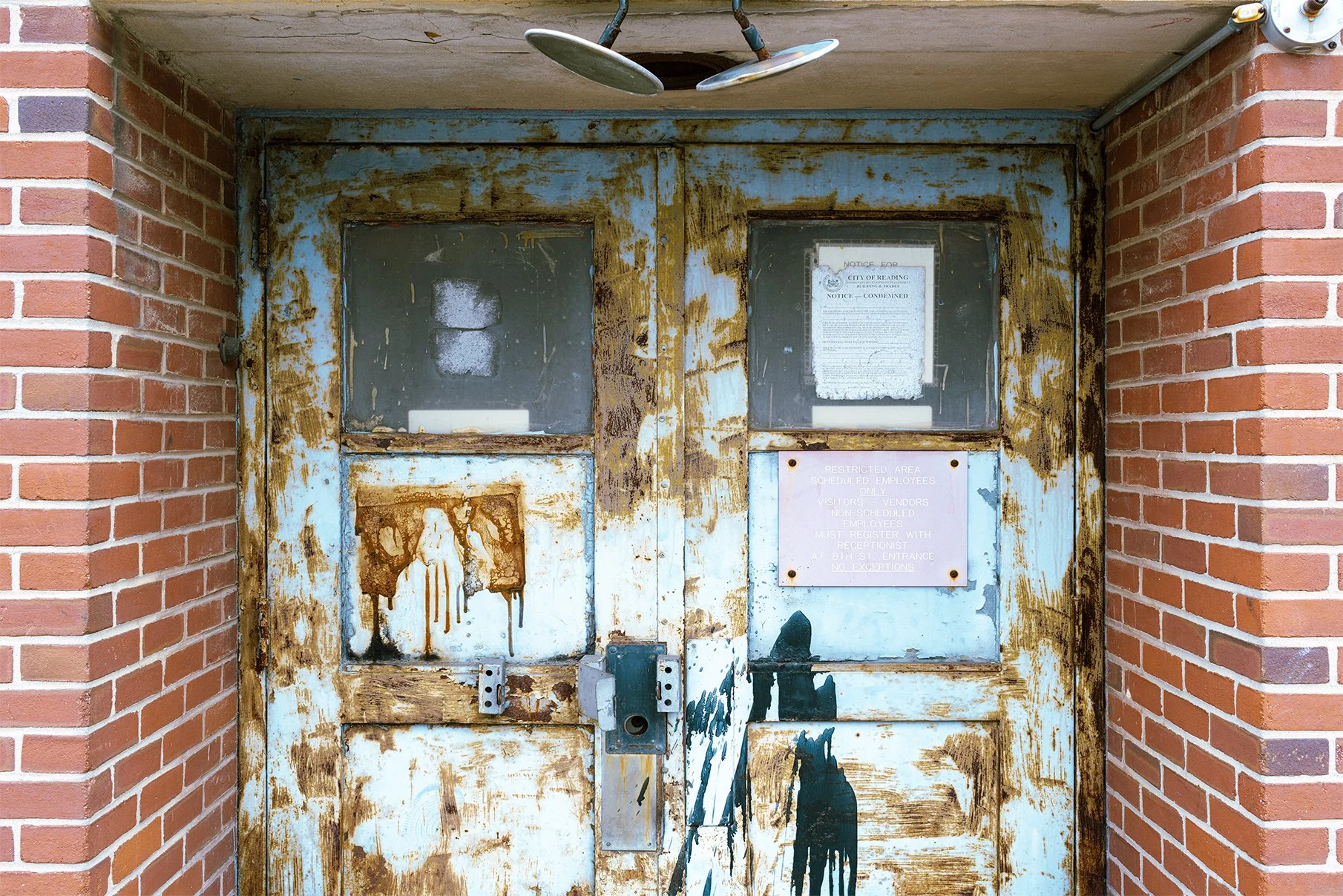
HMG Intermark Worldwide Manufacturing c. 1997 - 2001 South of Penn (SOP) Neighborhood, Reading, Berks County, Pennsylvania
-
HMG Intermark Worldwide Manufacturing and the Late Industrial Transformation of Reading, Pennsylvania (c. 1997–2001)
Narrative Essay (Chicago Style)
By the late 1990s, Reading, Pennsylvania, was emblematic of a broader transformation affecting mid-sized industrial cities in the northeastern United States. Once anchored by iron, rail, and heavy fabrication industries, the city had increasingly become a landscape of light manufacturing, adaptive reuse, and fragmented industrial tenancy. Within this transitional economy, HMG Intermark Worldwide Manufacturing, Inc. emerged as a consolidated industrial operator at 234 South 8th Street, occupying a large multi-building complex that reflected both the persistence and decline of American urban manufacturing.¹
The facility itself was substantial. A 2009 industrial real-estate listing described the property as comprising more than 120,000 square feet across seven interconnected buildings, noting that it was “last occupied by HMG Intermark Worldwide Manufacturing, Inc., which closed its doors 12/15/2001.”² This scale placed the operation among the larger industrial footprints remaining in downtown Reading at the time, particularly in contrast to the smaller machining shops and subcontracting firms that increasingly defined the local economy after deindustrialization.
Regulatory and environmental filings further clarify the nature of the company’s operations. The plant was classified under multiple Standard Industrial Classification (SIC) codes, including 3089, 2541, 2542, and 3827. Most significantly, SIC 3089—Miscellaneous Plastics Products Manufacturing—indicates production of fabricated plastic goods not otherwise classified in major categories, typically involving injection molding, extrusion, and assembly processes used to create commercial and industrial components.³ This classification suggests that HMG Intermark operated within the light industrial plastics and fabrication sector, rather than traditional heavy manufacturing.
The presence of SIC 2541 and 2542 (office and store fixtures) further refines this interpretation, indicating that the firm likely produced retail display systems, shelving units, merchandising fixtures, and point-of-purchase (POP) installations. Combined with SIC 3827 (measuring and controlling devices), the production profile suggests a diversified manufacturing model oriented toward commercial display systems, branded retail environments, and engineered plastic/metal assemblies.⁴
This aligns with the corporate identity of the parent organization, HMG Worldwide Corporation, a New York–based publicly traded conglomerate specializing in in-store marketing and retail merchandising systems.⁵ The company operated through multiple subsidiaries, including HMG Intermark Worldwide Manufacturing, Display Depot, and related fabrication and marketing divisions. This structure reflected a vertically integrated business model in which design, engineering, fabrication, and distribution were consolidated under a single corporate umbrella.
A 1998 SEC filing confirms that HMG Worldwide consolidated manufacturing operations in Reading during a late-1990s restructuring phase, acquiring and expanding industrial capacity in the city.⁶ The Reading facility thus became a primary production hub for the company’s retail display systems at a time when national brands were increasingly investing in sophisticated in-store marketing infrastructure.
The likely output of the Reading plant can be reconstructed from SIC classifications, corporate descriptions, and comparable firms in the same industry. HMG Intermark likely produced:
Plastic retail display components (acrylic and molded thermoplastics)
Metal framing and support structures for displays
Modular shelving and merchandising fixtures
Branded point-of-purchase installations for national retail chains
Hybrid wood-plastic-metal trade show and retail exhibit systems
These products would have been supplied to consumer packaged goods companies and major retail brands, consistent with industry practice in the 1990s POP display sector, where clients included large national advertisers seeking to influence consumer behavior at the point of sale.
The Reading facility operated within a historically industrial corridor along South 8th Street, a zone characterized by layered manufacturing use dating back to the nineteenth century. The surrounding neighborhood—South Reading and adjacent downtown districts—had historically been shaped by successive waves of immigration. In the nineteenth and early twentieth centuries, the area was dominated by German, Irish, and Eastern European immigrant labor communities, employed in ironworks, rail-related industries, and textile production.⁷ By the late twentieth century, however, demographic shifts had transformed the neighborhood into a predominantly Latino community, particularly Puerto Rican and Dominican populations, alongside long-established White and African American residents.⁸
This demographic transformation paralleled the economic restructuring of the city itself. As large-scale industrial employers declined, smaller manufacturing firms like HMG Intermark temporarily occupied existing industrial infrastructure, repurposing older buildings for modernized light industrial production. The South 8th Street corridor thus became a hybrid landscape of residential rowhouses, small businesses, and residual industrial complexes.
Despite its relatively modern industrial function, HMG Intermark’s presence in Reading was brief. Federal labor adjustment records indicate that the company began downsizing operations around 2000, with full cessation of activity occurring in December 2001.⁹ The closure marked the end of the facility’s role as a major manufacturing site. Subsequent industrial listings describe the property as vacant and available for redevelopment, a common fate for large industrial buildings in post-industrial Pennsylvania cities during the early twenty-first century.¹⁰
The aftermath of closure reflects a broader structural pattern: the decline of mid-sized, vertically integrated manufacturing firms that bridged advertising, design, and production. Unlike earlier industrial employers rooted in singular production sectors, HMG represented a hybrid economic form—part manufacturing plant, part marketing engine—whose viability depended on corporate consolidation and national retail expansion trends of the 1990s. When these conditions shifted in the early 2000s, such firms proved vulnerable to restructuring and dissolution.
Footnotes
Pennsylvania Department of Environmental Protection, NPDES Permit PA0013609, Pennsylvania Bulletin, Vol. 29, No. 40 (October 2, 1999).
Industrial real estate listing for 212–234 South 8th Street, Reading, PA (2009 marketing materials), cited in redevelopment documentation.
SIC 3089 classification description, Plastics Products, Not Elsewhere Classified, industry reference materials.
Pennsylvania Department of Environmental Protection, Pennsylvania Bulletin, Vol. 29, No. 40 (1999).
U.S. Securities and Exchange Commission, Form S-3/A Registration Statement, HMG Worldwide Corporation (1998).
Ibid.
Berks County Historical Society, industrial and immigration history summaries for Reading, Pennsylvania.
U.S. Census Bureau demographic trends for Reading, Pennsylvania (late 20th century).
U.S. Department of Labor, Trade Adjustment Assistance filings referencing HMG Intermark Worldwide Manufacturing (2000–2001).
Commercial redevelopment listings for South 8th Street industrial corridor, Reading, PA (early 2000s–2010s).
Bibliography
Berks County Historical Society. Industrial and Immigration History of Reading, Pennsylvania. Reading, PA.
Pennsylvania Department of Environmental Protection. Pennsylvania Bulletin, Vol. 29, No. 40. October 2, 1999.
U.S. Census Bureau. Demographic Profiles: Reading City, Pennsylvania, 1980–2000 datasets.
U.S. Department of Labor. Trade Adjustment Assistance Program filings, HMG Intermark Worldwide Manufacturing (2000–2001).
U.S. Securities and Exchange Commission. Form S-3/A Registration Statement. HMG Worldwide Corporation, 1998.
Industrial Real Estate Listing. 212–234 South 8th Street, Reading, Pennsylvania. Redevelopment documentation, 2009.