St. Mary's Episcopal Church
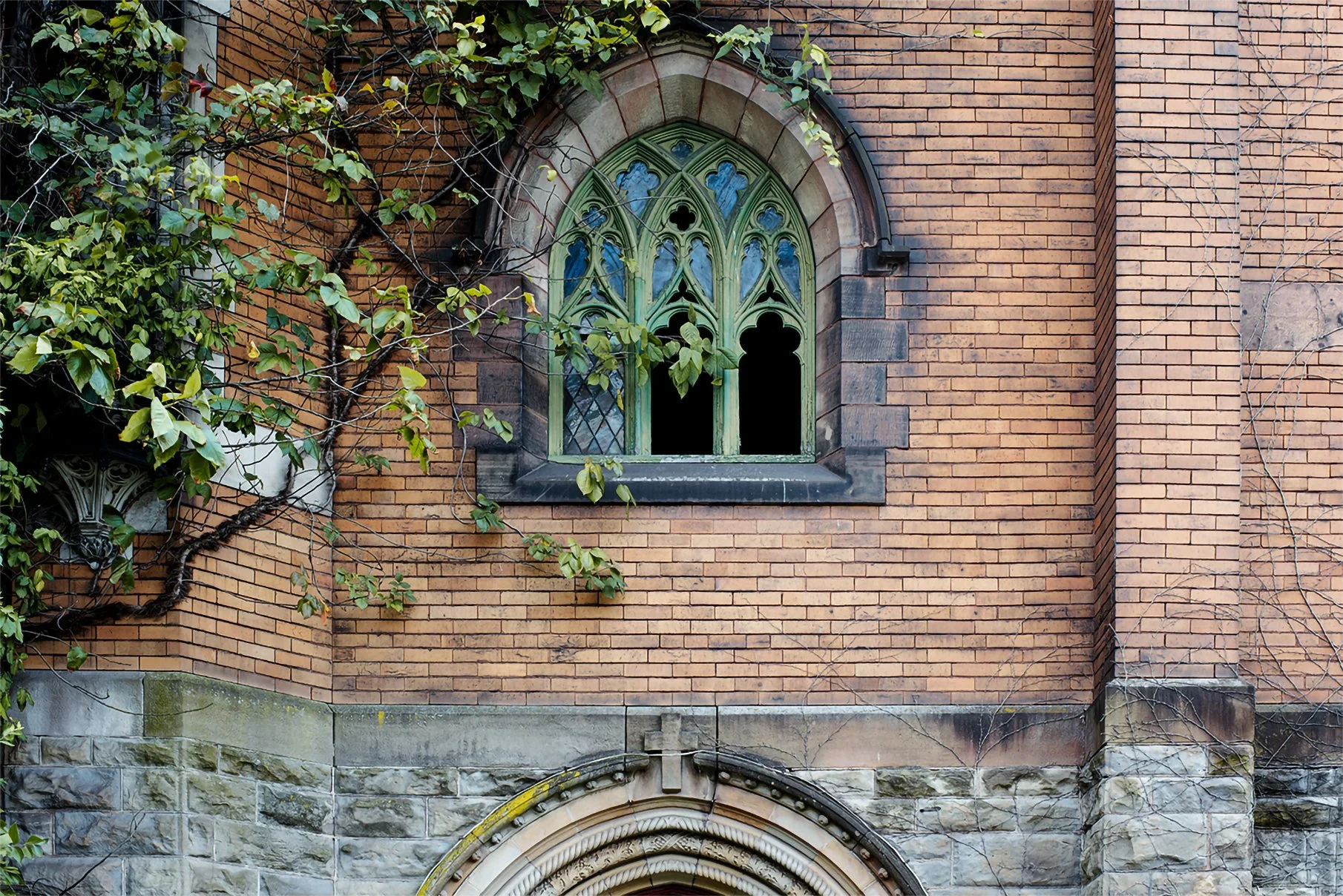
St. Mary's Episcopal Church
Kevin LeDuc
St. Mary's Episcopal Church, c. 1901
Braddock, Allegheny County,Pennsylvania from the Ballyshannon’s Rustland (2021–2024) – Rust Alchemy Portfolio
Pigment print on Hahnemühle Baryta
Artist’s proof + edition of 5 (portfolio of 40 images)
30 × 45 inches
-
St. Mary's Episcopal Church, Braddock, Pennsylvania: A Historical Narrative
Introduction
The former St. Mary's Episcopal Church, located at approximately 618 Lillie Avenue in Braddock, Allegheny County, Pennsylvania, stands as one of the most evocative surviving religious landmarks of the Monongahela Valley's industrial era. Constructed in 1901 and later occupied by Triumph the Church and Kingdom of God in Christ, the church reflects more than a century of changing religious, ethnic, and economic conditions in Braddock. Its history parallels the rise of the steel industry, the growth of immigrant and African American communities, and the severe population decline that transformed many western Pennsylvania mill towns during the late twentieth century. Today the vacant structure remains a visible reminder of the community that once surrounded it.¹
Braddock and the Industrial Monongahela Valley
The story of St. Mary's cannot be separated from the development of Braddock itself. Incorporated in 1867 and named for British General Edward Braddock, the borough emerged as one of the principal industrial centers of the Pittsburgh region after the establishment of the Edgar Thomson Steel Works by Andrew Carnegie in 1875.²
Located along the Monongahela River approximately ten miles southeast of Pittsburgh, Braddock became a classic steel town. By the beginning of the twentieth century, thousands of workers were employed in the steel mills, railroads, coke works, machine shops, and related industries that lined the river valley.³
The neighborhood surrounding Lillie Avenue developed as a densely settled residential district serving mill workers and their families. Residents included immigrants from Ireland, England, Scotland, Wales, Germany, Italy, Lithuania, Poland, Slovakia, Hungary, Croatia, and other parts of eastern and southern Europe. The area's churches reflected this diversity. Roman Catholic, Episcopal, Lutheran, Presbyterian, Methodist, Orthodox, and ethnic national parishes stood within walking distance of one another.⁴
Most parishioners associated with St. Mary's worked directly or indirectly in the steel industry. Men commonly labored as rollers, heaters, machinists, puddlers, laborers, railroad workers, and clerks. Women frequently worked as homemakers, domestic servants, seamstresses, shop employees, or boarding-house operators.⁵
Outside work, residents participated in church societies, fraternal organizations, baseball clubs, musical groups, neighborhood picnics, and civic celebrations. Churches functioned not merely as places of worship but as centers of education, recreation, and mutual aid.⁶
Founding of St. Mary's Episcopal Church
The Episcopal Church expanded throughout the industrial communities of western Pennsylvania during the late nineteenth century as population growth created demand for new congregations. The Diocese of Pittsburgh established numerous missions in rapidly growing mill towns, including Braddock.⁷
St. Mary's Episcopal congregation emerged during this period of expansion. By 1901 the parish had grown sufficiently to construct a substantial permanent church building on Lillie Avenue. Designed by Pittsburgh architect Charles M. Bartberger, the new church was completed in 1901 and reportedly accommodated approximately five hundred worshippers.⁸
Bartberger was among Pittsburgh's most prominent ecclesiastical architects during the late nineteenth and early twentieth centuries. His design for St. Mary's reflected the Gothic Revival tradition favored by many Episcopal congregations. Pointed arches, steep rooflines, and substantial masonry construction conveyed both permanence and religious symbolism.⁹
The construction of the church coincided with the height of Braddock's industrial prosperity. At the turn of the twentieth century the borough's population exceeded 15,000 residents, and the surrounding steel mills operated continuously. The parish drew members from the growing middle and working classes of the community, including managers, skilled workers, clerks, teachers, and professionals associated with the industrial economy.¹⁰
Parish Life in the Early Twentieth Century
During the first half of the twentieth century, St. Mary's functioned as a neighborhood parish serving families connected to Braddock's industrial economy. Like many Episcopal congregations, it sponsored Sunday schools, youth activities, women's organizations, charitable programs, and social events.
Parish life reflected the rhythms of the steel town. Shift schedules at the Edgar Thomson Works shaped attendance patterns, while baptisms, confirmations, marriages, and funerals marked the lives of generations of local residents. Church festivals, holiday celebrations, choir performances, and parish suppers provided opportunities for fellowship within a community often defined by demanding industrial labor.¹¹
The neighborhood around Lillie Avenue remained densely populated through the 1940s and 1950s. Small businesses, schools, social clubs, and churches formed a tightly connected urban environment in which most daily activities occurred within walking distance of home.¹²
Decline of the Neighborhood and Transition to Triumph Church
Following the Second World War, Braddock experienced many of the challenges confronting older industrial communities. Suburbanization, changing housing preferences, and the gradual contraction of heavy industry reduced the borough's population.
The crisis accelerated dramatically during the 1970s and 1980s as employment in the steel industry collapsed throughout the Monongahela Valley. Thousands of jobs disappeared, businesses closed, and many residents relocated elsewhere in search of employment. Braddock's population declined from more than 20,000 residents during its industrial peak to only a fraction of that number by the beginning of the twenty-first century.¹³
Like many historic Protestant congregations in older urban neighborhoods, St. Mary's Episcopal Church struggled to maintain membership amid these demographic changes. At some point during the late twentieth century, the Episcopal congregation ceased occupying the building.
The church subsequently became home to Triumph the Church and Kingdom of God in Christ, an African American Holiness-Pentecostal denomination founded by Bishop Elias Dempsey Smith in the early twentieth century. The transition reflected broader demographic changes occurring in Braddock as African American residents increasingly became a significant portion of the borough's population following the Great Migration and subsequent decades of industrial employment.¹⁴
Under Triumph Church ownership, the building continued to function as a house of worship for many years. The congregation adapted the historic Episcopal structure to Pentecostal worship while preserving much of the original architecture.
Closure and Abandonment
By the early twenty-first century, the congregation occupying the church faced significant financial and maintenance challenges. The aging structure required extensive repairs, particularly to its roof.
In July 2007, the church ceased regular use after severe roof leaks allowed water infiltration and mold growth throughout portions of the building. Contemporary reports noted that thieves had removed valuable brass lighting fixtures and stained-glass windows, further contributing to deterioration. Repair estimates exceeded the resources available to the congregation.¹⁵
Recognizing the building's architectural and historical significance, the Pittsburgh History & Landmarks Foundation designated St. Mary's a historic landmark in 2009. Despite this recognition, no comprehensive restoration project materialized.¹⁶
Today the building remains vacant and deteriorated, though its masonry shell continues to dominate the surrounding streetscape. The structure survives as one of the few remaining physical reminders of Braddock's once-vibrant religious and industrial landscape.
Conclusion
The history of St. Mary's Episcopal Church illustrates the broader evolution of Braddock itself. Founded during the height of the steel industry's expansion, the church served a diverse industrial community whose livelihood depended upon the mills lining the Monongahela River. The congregation reflected the aspirations of a growing borough populated by immigrants and native-born workers seeking opportunity in America's industrial heartland.
Its later transition to Triumph the Church and Kingdom of God in Christ demonstrates the changing demographic character of Braddock during the twentieth century. The eventual closure of the building in 2007 mirrored the economic and population decline that affected many communities throughout the Monongahela Valley.
Although no longer functioning as a church, the structure remains an important historical resource. Standing on Lillie Avenue, it continues to embody the religious, architectural, and social history of one of America's most significant steel towns.
Footnotes
Jeremy Boren, "Historic-Church Projects Task Foundation," Pittsburgh Tribune-Review, December 29, 2007, cited in "St. Mary's Episcopal Church," Abandoned Online, accessed June 23, 2026.
Quentin R. Skrabec Jr., The World's Richest Neighborhood: How Pittsburgh's East Enders Forged American Industry (New York: Algora Publishing, 2010), 121–130.
John N. Ingham, Making Iron and Steel: Independent Mills in Pittsburgh, 1820–1920 (Columbus: Ohio State University Press, 1991), 201–220.
Allen Dieterich-Ward, Beyond Rust: Metropolitan Pittsburgh and the Fate of Industrial America (Philadelphia: University of Pennsylvania Press, 2016), 37–48.
United States Bureau of the Census, Thirteenth Census of the United States: Population, Pennsylvania (Washington, DC: Government Printing Office, 1913).
Roy Lubove, Twentieth-Century Pittsburgh: Government, Business, and Environmental Change (Pittsburgh: University of Pittsburgh Press, 1996), 84–95.
Joan R. Gundersen, "A History of the Episcopal Church in the Diocese of Pittsburgh," Episcopal Diocese of Pittsburgh Archives, accessed June 23, 2026.
"Ecclesiastical," The American Architect and Building News 71 (1901), cited in "St. Mary's Episcopal Church," Abandoned Online.
Walter C. Kidney, Pittsburgh's Landmark Architecture (Pittsburgh: Pittsburgh History & Landmarks Foundation, 1997), 310–315.
Edward K. Muller and Paul Groves, eds., Pittsburgh: A New Portrait (University Park: Pennsylvania State University Press, 1998), 88–95.
Episcopal Diocese of Pittsburgh Archives, parish history resources.
Dieterich-Ward, Beyond Rust, 56–61.
William Serrin, Homestead: The Glory and Tragedy of an American Steel Town (New York: Times Books, 1992), 245–269.
Rudolph M. Byrd Jr., The Triumph Church and Kingdom of God in Christ: The History of a Holiness Movement (Atlanta: scholarly studies of African American religion), 45–67.
Boren, "Historic-Church Projects Task Foundation."
"St. Mary's Episcopal Church," Abandoned Online.
Bibliography
Boren, Jeremy. "Historic-Church Projects Task Foundation." Pittsburgh Tribune-Review, December 29, 2007.
Byrd, Rudolph M., Jr. The Triumph Church and Kingdom of God in Christ: The History of a Holiness Movement. Atlanta: scholarly studies of African American religion.
Dieterich-Ward, Allen. Beyond Rust: Metropolitan Pittsburgh and the Fate of Industrial America. Philadelphia: University of Pennsylvania Press, 2016.
Episcopal Diocese of Pittsburgh Archives. "A History of the Episcopal Church in the Diocese of Pittsburgh." Accessed June 23, 2026.
Gundersen, Joan R. "A History of the Episcopal Church in the Diocese of Pittsburgh." Episcopal Diocese of Pittsburgh Archives. Accessed June 23, 2026.
Ingham, John N. Making Iron and Steel: Independent Mills in Pittsburgh, 1820–1920. Columbus: Ohio State University Press, 1991.
Kidney, Walter C. Pittsburgh's Landmark Architecture. Pittsburgh: Pittsburgh History & Landmarks Foundation, 1997.
Lubove, Roy. Twentieth-Century Pittsburgh: Government, Business, and Environmental Change. Pittsburgh: University of Pittsburgh Press, 1996.
Muller, Edward K., and Paul Groves, eds. Pittsburgh: A New Portrait. University Park: Pennsylvania State University Press, 1998.
Serrin, William. Homestead: The Glory and Tragedy of an American Steel Town. New York: Times Books, 1992.
United States Bureau of the Census. Thirteenth Census of the United States: Population, Pennsylvania. Washington, DC: Government Printing Office, 1913.
"The American Architect and Building News." Vol. 71. Boston, 1901.
"St. Mary's Episcopal Church." Abandoned Online. Updated April 22, 2024. Accessed June 23, 2026.
"St. Mary's P.E. Church, Braddock, PA, 1901, Original Plan. C. M. Bartberger." Reproduction of original 1901 architectural drawing from The American Architect and Building News.
-
Edgar Thomson Steel Works, Braddock, Pennsylvania: A Historical Narrative
Introduction
The Edgar Thomson Steel Works, located along the Monongahela River in the borough of Braddock, Allegheny County, Pennsylvania, is among the most significant industrial sites in American history. Established in 1873 and placed into operation in 1875, the mill became the first major steel-producing facility associated with industrialist Andrew Carnegie and ultimately served as the foundation of the Carnegie Steel empire. Situated within the Pittsburgh steel district, the works transformed Braddock from a small river settlement into one of the nation's foremost industrial communities. For more than a century, the mill shaped the economic, social, and cultural life of the Monongahela Valley and became a symbol of both American industrial achievement and the profound human costs associated with heavy industry.¹
The Monongahela Valley Before Industrialization
Prior to the arrival of large-scale steel production, the area surrounding present-day Braddock consisted of small settlements connected to river commerce, agriculture, coal mining, and transportation. The Monongahela River provided an important transportation corridor linking southwestern Pennsylvania to broader regional markets. During the mid-nineteenth century, coal mining expanded rapidly throughout the valley, supplying fuel to iron furnaces and manufacturing enterprises in Pittsburgh and neighboring communities.²
The opening of railroad lines further increased the strategic importance of the area. By the 1870s, the convergence of rail transportation, river access, nearby coal deposits, and a growing industrial workforce made Braddock an ideal location for modern steel production.³
Founding of the Edgar Thomson Steel Works
In 1872, Andrew Carnegie and his associates began planning a new steel mill that would employ the recently developed Bessemer process, a revolutionary method capable of producing steel more efficiently and at lower cost than traditional techniques. Construction commenced the following year on a site adjacent to the Pennsylvania Railroad in Braddock.
The plant was named after J. Edgar Thomson, president of the Pennsylvania Railroad and one of the most influential transportation executives of the nineteenth century. Thomson's railroad became a major purchaser of steel rails, ensuring a stable market for the new enterprise.⁴
The mill officially began production in August 1875. Its first output consisted primarily of steel railroad rails, a commodity in enormous demand as railroads expanded across the United States. The success of the works quickly established Carnegie as a leading figure in American industry and demonstrated the economic advantages of large-scale steel manufacturing.⁵
Growth of Braddock as a Steel Town
The success of the Edgar Thomson Works transformed Braddock almost immediately. Between 1880 and 1910, the borough experienced extraordinary population growth as workers arrived from throughout the United States and Europe seeking employment.
The workforce included immigrants from Ireland, Germany, Wales, England, Italy, Poland, Slovakia, Hungary, Croatia, Lithuania, and numerous other regions of Europe. African American migrants also began arriving during the late nineteenth and early twentieth centuries, a movement that accelerated during the Great Migration.⁶
Entire neighborhoods developed around the mill. Churches, schools, fraternal lodges, social clubs, theaters, stores, and saloons emerged to serve the growing population. Religious institutions reflected the ethnic diversity of the workforce, with Roman Catholic, Episcopal, Orthodox, Lutheran, Presbyterian, Methodist, and Jewish congregations established throughout Braddock and neighboring communities.⁷
Work Inside the Mill
Employment at Edgar Thomson offered economic opportunities unavailable in many rural regions, but the work was physically demanding and often dangerous. Steelworkers labored in blast furnaces, rolling mills, rail mills, machine shops, and transportation yards under extreme conditions.
Temperatures near furnaces routinely exceeded tolerable limits, and injuries were common. Twelve-hour shifts remained standard for many workers well into the early twentieth century. Industrial accidents involving molten metal, machinery, falling materials, and rail equipment occurred frequently.⁸
Despite these hardships, employment at the mill provided relatively steady wages that enabled workers to purchase homes, support families, and participate in community institutions. Successive generations of families often worked at the plant, creating a strong local identity closely tied to steel production.⁹
Community Life Beyond the Mill
Although industrial labor dominated daily life, residents participated in a wide range of recreational and social activities. Churches organized festivals, athletic leagues, youth groups, and charitable organizations. Ethnic societies sponsored dances, concerts, holiday celebrations, and mutual aid programs.
Baseball became particularly popular among mill workers, while local theaters and social clubs provided entertainment during off-hours. Fraternal organizations such as the Knights of Columbus, Slovak Catholic Sokol societies, Croatian lodges, and various labor organizations offered opportunities for social interaction and community leadership.¹⁰
The mill's shift schedules shaped neighborhood life. Church services, weddings, funerals, and community events often accommodated rotating work assignments. The rhythm of the steel works influenced nearly every aspect of local society.
Carnegie Steel and the Rise of Industrial America
The Edgar Thomson Works became the centerpiece of Carnegie's expanding industrial empire. During the late nineteenth century, Carnegie integrated steel production with coal mines, coke works, railroads, and shipping operations, creating one of the most efficient manufacturing systems in the world.
The plant contributed significantly to the steel used in railroad construction, bridges, skyscrapers, factories, and infrastructure projects throughout the United States. By the 1890s Carnegie Steel had become the largest steel producer in the world.¹¹
In 1901, Carnegie sold his steel interests to financier J. P. Morgan, who incorporated them into the newly formed United States Steel Corporation. The Edgar Thomson Works became one of the flagship facilities of the corporation and continued operating at the forefront of American steel production.¹²
Twentieth-Century Changes
Throughout the twentieth century, technological modernization allowed the plant to remain competitive even as older facilities closed. New furnaces, improved transportation systems, and changing production methods increased efficiency and output.
The plant supplied steel during both World Wars and contributed to the industrial mobilization that supported the Allied war effort. During these decades, employment remained a central component of the regional economy.¹³
However, beginning in the 1970s, the American steel industry entered a prolonged period of crisis. Foreign competition, technological changes, declining domestic demand, and corporate restructuring resulted in widespread mill closures throughout western Pennsylvania. Communities such as Homestead, Duquesne, McKeesport, and Rankin suffered severe economic losses.¹⁴
Unlike many neighboring facilities, however, the Edgar Thomson Works survived. Its modernized operations and strategic importance allowed continued production while numerous competing mills permanently ceased operation.
The Mill in the Twenty-First Century
Today, the Edgar Thomson Works remains one of the last active integrated steel mills in the Monongahela Valley. Operated by U.S. Steel, the facility continues producing steel products using blast furnace technology more than 150 years after its founding.
Although employment levels are far lower than during the industry's peak years, the plant remains a major industrial landmark and one of the most visible reminders of Pittsburgh's historic role as the center of American steelmaking.¹⁵
The survival of the works distinguishes it from many industrial sites that have disappeared entirely. Its continued operation provides a direct connection to the era that shaped the economic development of western Pennsylvania and much of the United States.
Conclusion
The history of the Edgar Thomson Steel Works reflects the broader history of American industrialization. Founded in 1873 and opened in 1875, the plant transformed Braddock into a major steel-producing community and became the cornerstone of Andrew Carnegie's industrial empire. Generations of immigrant and migrant workers labored within its furnaces and rolling mills, creating the steel that built railroads, bridges, skyscrapers, and cities throughout the nation.
The mill's influence extended beyond economics. It shaped neighborhood development, religious institutions, ethnic communities, and daily life across the Monongahela Valley. Although the steel industry that once dominated western Pennsylvania has largely disappeared, the continued operation of the Edgar Thomson Works serves as a living reminder of the industrial forces that helped define modern America.
Footnotes
John N. Ingham, Making Iron and Steel: Independent Mills in Pittsburgh, 1820–1920 (Columbus: Ohio State University Press, 1991), 158–168.
Edward K. Muller and Paul Groves, eds., Pittsburgh: A New Portrait (University Park: Pennsylvania State University Press, 1998), 54–60.
Allen Dieterich-Ward, Beyond Rust: Metropolitan Pittsburgh and the Fate of Industrial America (Philadelphia: University of Pennsylvania Press, 2016), 21–28.
David Nasaw, Andrew Carnegie (New York: Penguin Press, 2006), 235–240.
Joseph Frazier Wall, Andrew Carnegie (New York: Oxford University Press, 1970), 383–390.
Thomas Bell, Out of This Furnace (Pittsburgh: University of Pittsburgh Press, 1941; reprint 1976), 15–42.
Roy Lubove, Twentieth-Century Pittsburgh (Pittsburgh: University of Pittsburgh Press, 1996), 67–84.
Bell, Out of This Furnace, 55–76.
David Brody, Steelworkers in America: The Nonunion Era (Cambridge: Harvard University Press, 1960), 87–109.
Bell, Out of This Furnace, 120–145.
Wall, Andrew Carnegie, 625–650.
Kenneth Warren, Big Steel: The First Century of the United States Steel Corporation, 1901–2001 (Pittsburgh: University of Pittsburgh Press, 2001), 12–24.
Warren, Big Steel, 115–148.
Dieterich-Ward, Beyond Rust, 143–176.
United States Steel Corporation, "Edgar Thomson Plant History and Operations," corporate historical materials.
Bibliography
Bell, Thomas. Out of This Furnace. Pittsburgh: University of Pittsburgh Press, 1941.
Brody, David. Steelworkers in America: The Nonunion Era. Cambridge: Harvard University Press, 1960.
Dieterich-Ward, Allen. Beyond Rust: Metropolitan Pittsburgh and the Fate of Industrial America. Philadelphia: University of Pennsylvania Press, 2016.
Ingham, John N. Making Iron and Steel: Independent Mills in Pittsburgh, 1820–1920. Columbus: Ohio State University Press, 1991.
Lubove, Roy. Twentieth-Century Pittsburgh: Government, Business, and Environmental Change. Pittsburgh: University of Pittsburgh Press, 1996.
Muller, Edward K., and Paul Groves, eds. Pittsburgh: A New Portrait. University Park: Pennsylvania State University Press, 1998.
Nasaw, David. Andrew Carnegie. New York: Penguin Press, 2006.
United States Steel Corporation. Edgar Thomson Plant Historical Materials. Pittsburgh, PA.
Wall, Joseph Frazier. Andrew Carnegie. New York: Oxford University Press, 1970.
Warren, Kenneth. Big Steel: The First Century of the United States Steel Corporation, 1901–2001. Pittsburgh: University of Pittsburgh Press, 2001.