St. John's Roman Catholic Church
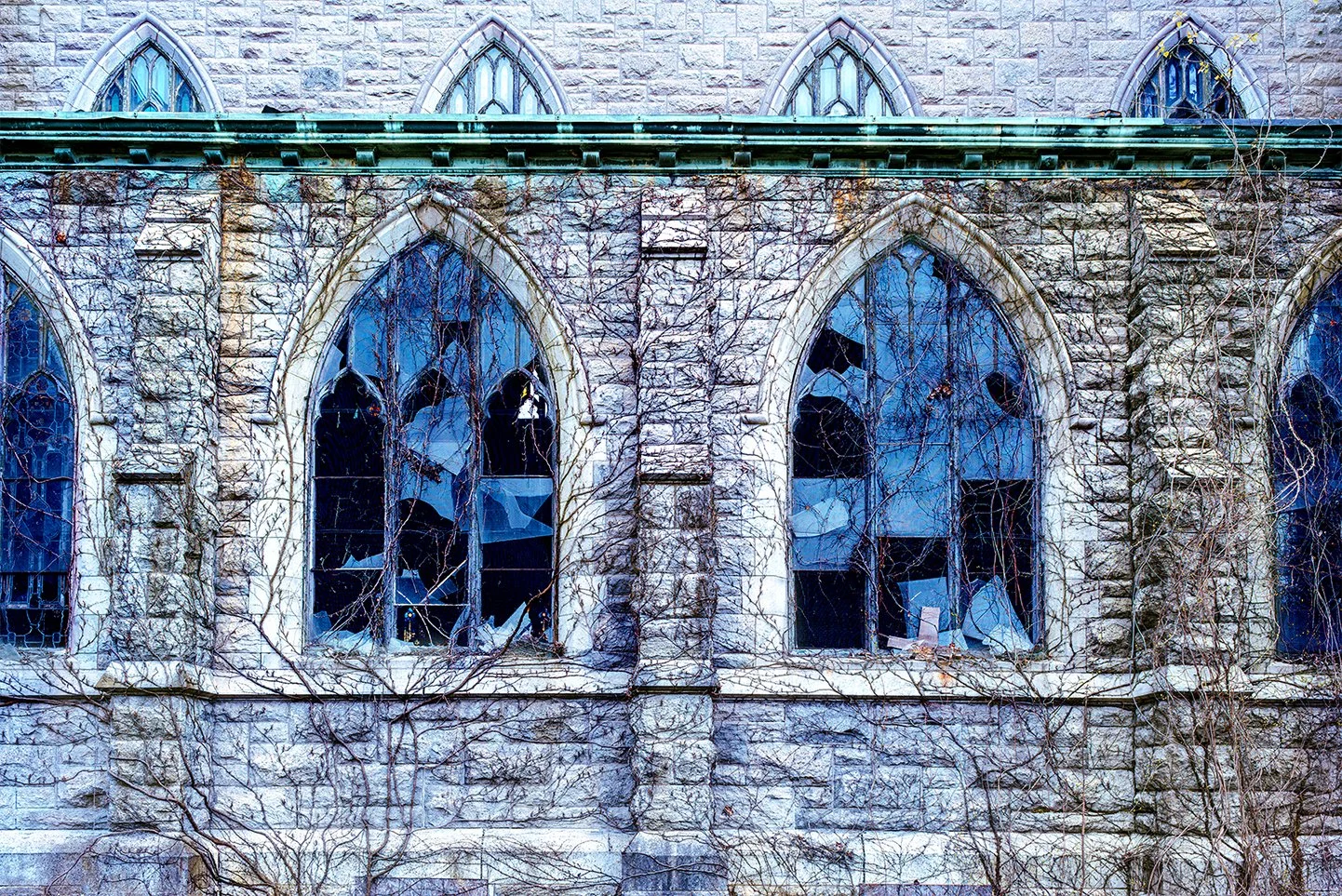
St. John's Roman Catholic Church
Albany, Albany County, New York
-
St. John's Roman Catholic Church, Albany, New York: A Historical Narrative
Introduction
The former St. John's Roman Catholic Church at 133 Green Street in Albany, New York, occupies a significant place in the religious and social history of the city. Located in Albany's historic Pastures neighborhood, the parish served generations of working-class Catholics, primarily of Irish descent, whose lives were closely connected to the commercial and industrial activity of the Hudson River waterfront. Established during the rapid growth of Albany's Catholic population in the nineteenth century, St. John's reflected both the expansion of immigrant communities and the central role of parish institutions in urban life.
Founding of the Parish
St. John's Parish was established in 1837 as one of the earliest Roman Catholic congregations in Albany outside of St. Mary's Church, the city's first Catholic parish. The creation of the parish was prompted by the substantial increase in Irish immigration to Albany during the first half of the nineteenth century. As canal construction, railroad development, and river commerce expanded, immigrant laborers settled in neighborhoods near the city's waterfront, creating a demand for additional Catholic churches and schools.¹
The parish quickly became a focal point for Catholic residents living in the southern portion of Albany. Like many urban parishes of the period, St. John's functioned as more than a place of worship. It provided education, charitable assistance, social activities, and a strong sense of communal identity for immigrant families adapting to life in the United States.
The Pastures Neighborhood
The history of St. John's cannot be separated from the development of Albany's Pastures district. Originally common grazing land during the colonial era, the neighborhood gradually transformed into a densely settled residential district during the nineteenth century. By the 1840s and 1850s, the area had become home to large numbers of Irish immigrants employed on the Erie Canal, the Hudson River docks, railroads, warehouses, and related industries.²
The neighborhood developed a reputation as a working-class enclave characterized by row houses, tenements, small businesses, and religious institutions. Catholic churches such as St. John's served as stabilizing institutions within a community often facing economic hardship and social discrimination. Parish records, census schedules, and city directories indicate that many residents worked in occupations connected to transportation, manufacturing, and laboring trades.
Construction of the Present Church
The present church building was constructed between 1903 and 1908. Designed by Albany architect Charles Ogden, the structure replaced an earlier parish church and reflected the aspirations of a congregation that had become well established within the city.³
Architecturally, the building represented a significant investment by the parish. Unlike many nineteenth-century churches built entirely of masonry, St. John's utilized a steel-frame structural system covered by stone and masonry exterior walls. This modern engineering approach provided greater structural stability and allowed for a larger interior space. Historical accounts suggest that the completed structure was smaller than originally proposed, likely reflecting financial limitations encountered during construction.⁴
The church's design demonstrated the confidence of Albany's Catholic community during the early twentieth century, a period when Catholic institutions throughout the city were expanding schools, convents, and parish facilities.
Parish Life in the Twentieth Century
During the first half of the twentieth century, St. John's remained an important religious center for residents of the Pastures and nearby South End neighborhoods. The parish sponsored religious societies, educational programs, charitable organizations, and social events that strengthened community ties.
Although precise membership figures require examination of diocesan records, the parish served hundreds of families during its peak decades. Baptisms, marriages, funerals, and religious festivals marked the rhythms of neighborhood life. The church also reflected broader changes in Albany's Catholic population as newer immigrant groups joined communities originally dominated by Irish Americans.
The parish school and associated organizations provided educational and social opportunities for generations of local residents. Such institutions reinforced the role of the parish as the center of neighborhood identity.
Decline and Closure
Following World War II, demographic changes significantly altered the neighborhood. Population movement to suburban communities reduced the number of residents living within the parish boundaries. At the same time, urban renewal projects transformed large portions of Albany's South End and downtown districts.
The construction of the Empire State Plaza during the 1960s displaced thousands of residents and accelerated changes already underway in the surrounding neighborhoods. As population declined, many urban parishes experienced financial difficulties and shrinking congregations. St. John's was among the churches affected by these trends.⁵
By the 1970s the parish had ceased functioning as an active congregation, and the church building was closed. The structure subsequently stood vacant for decades.
Preservation and Contemporary Significance
Despite prolonged abandonment, the church survives as one of Albany's most recognizable historic religious structures. Preservation advocates have frequently cited the building as an important example of early twentieth-century ecclesiastical architecture and as a symbol of the city's immigrant past.
The steel-frame construction that distinguished the building at the time of its construction has contributed significantly to its survival. Although numerous redevelopment proposals have been advanced, including residential and mixed-use conversions, the costs associated with rehabilitation have complicated preservation efforts.
Today the former St. John's Church remains a landmark within Albany's historic urban landscape. Its presence recalls the experiences of generations of immigrant families whose labor contributed to the growth of the city and whose religious institutions helped shape neighborhood identity.
Conclusion
The history of St. John's Roman Catholic Church reflects larger patterns in the development of Albany and American urban Catholicism. Founded in 1837 to serve a growing immigrant population, the parish became a central institution within the Pastures neighborhood and remained active for more than a century. The construction of the present church between 1903 and 1908 symbolized the maturity and confidence of the congregation, while its later decline mirrored demographic shifts that transformed many northeastern cities during the twentieth century. Although no longer functioning as a parish church, the building remains an important historical resource and a visible reminder of Albany's Catholic heritage.
Footnotes
Stefan Bielinski, St. Mary's Catholic Church, Colonial Albany Social History Project (Albany: New York State Museum, 2001).
George Rogers Howell and Jonathan Tenney, Bi-Centennial History of Albany: History of the County of Albany, New York, from 1609 to 1886 (New York: W. W. Munsell & Co., 1886), 742–749.
Historic Albany Foundation, The Dirty Dozen: St. John's Roman Catholic Church (Albany, NY: Historic Albany Foundation, 2019).
Ibid.
William Kennedy, O Albany! (New York: Viking Press, 1983), 195–220.
Bibliography
Bielinski, Stefan. St. Mary's Catholic Church. Colonial Albany Social History Project. Albany: New York State Museum, 2001.
Historic Albany Foundation. The Dirty Dozen: St. John's Roman Catholic Church. Albany, NY: Historic Albany Foundation, 2019.
Howell, George Rogers, and Jonathan Tenney. Bi-Centennial History of Albany: History of the County of Albany, New York, from 1609 to 1886. New York: W. W. Munsell & Co., 1886.
Kennedy, William. O Albany!. New York: Viking Press, 1983.
New York State Museum. Colonial Albany Social History Project. Albany, NY: New York State Education Department.
Roman Catholic Diocese of Albany. Parish Records and Historical Materials Relating to St. John's Church. Albany, NY.