Bethlehem Steel
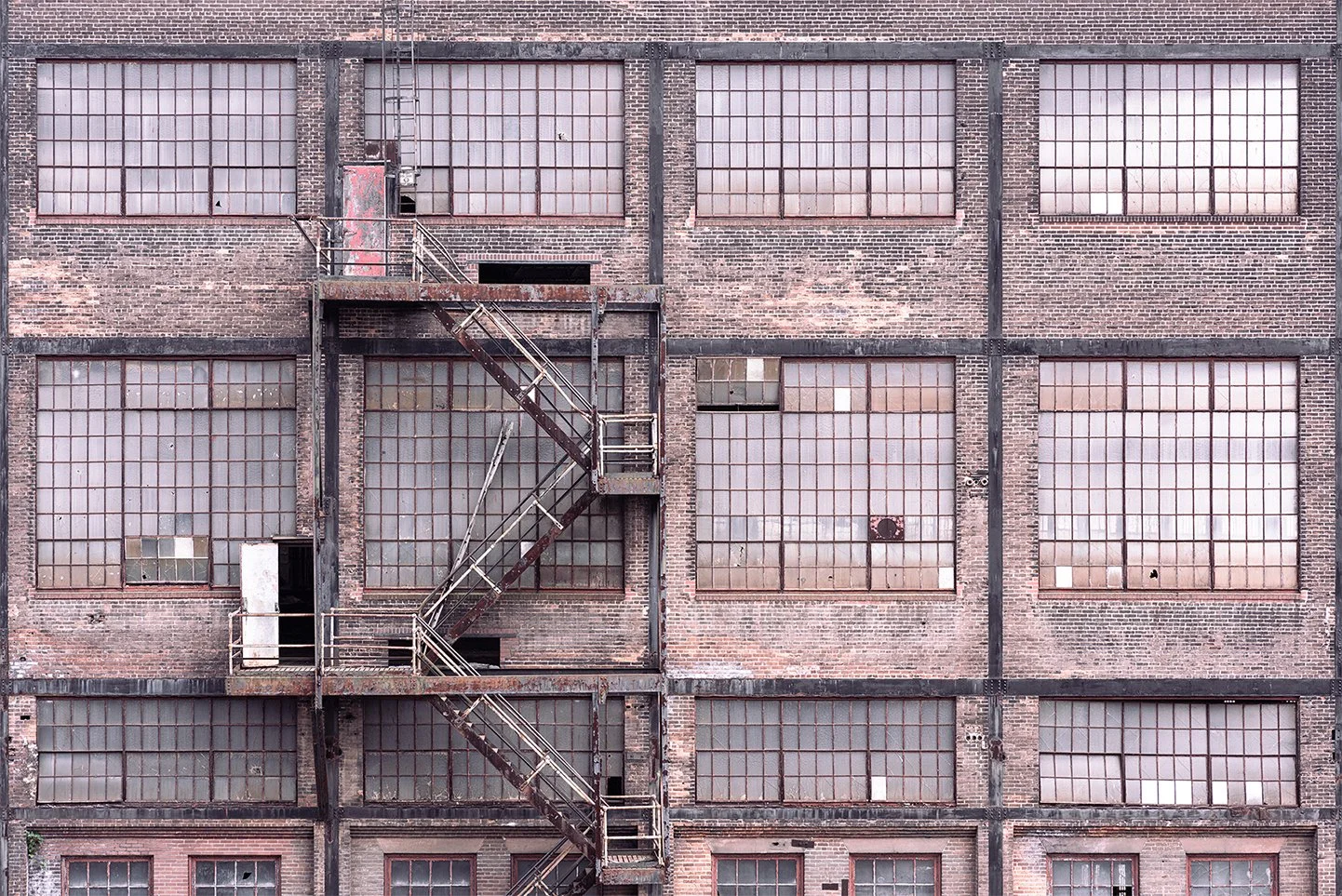
Bethlehem Steel
Kevin LeDuc
Bethlehem Steel, c. 1857
Bethlehem, Northampton and Lehigh Counties, Pennsylvania from the Ballyshannon’s Rustland (2021–2024) – Monumentality Portfolio
Pigment print on Hahnemühle Baryta
Artist’s proof + edition of 5 (portfolio of 40 images)
30 × 45 inches
-
Bethlehem Steel Corporation: Industrial Expansion, Labor, and the Transformation of American Heavy Industry
Introduction
The Bethlehem Steel Corporation was one of the most important industrial enterprises in the history of the United States. Headquartered in Bethlehem, Pennsylvania, the company became a defining force in American heavy industry from the late nineteenth century through the twentieth century. It produced structural steel, armor plate, rail components, and industrial materials that shaped railroads, bridges, skyscrapers, and military infrastructure across the nation and abroad.¹
Originally rooted in Pennsylvania’s iron and coal economy, Bethlehem Steel expanded into a vertically integrated industrial corporation that rivaled Carnegie Steel and later U.S. Steel. Its history reflects major themes in American industrialization, including corporate consolidation, immigrant labor, technological innovation, wartime production, unionization, and eventual deindustrialization.
Origins and Early Industrial Development (1857–1904)
The origins of Bethlehem Steel trace to the establishment of the Bethlehem Iron Company in 1857 in Bethlehem, Pennsylvania. The company initially focused on railroad rails, a rapidly expanding market during the nineteenth-century railroad boom.² Early operations were small by later standards, employing an estimated 200 to 2,500 workers, reflecting a Class A early industrial firm scale dominated by skilled ironworkers, furnace operators, and rail mill laborers.
During this period, the company transitioned from iron production into early steelmaking technologies, including the Bessemer and open-hearth processes. These innovations allowed Bethlehem to expand production capacity and compete in the emerging national steel industry.
Corporate Transformation and Expansion (1904–1916)
In 1904, under Charles M. Schwab, Bethlehem Steel was reorganized into the Bethlehem Steel Corporation. Schwab’s leadership marked a turning point in the company’s transformation into a vertically integrated industrial giant.
Employment expanded significantly during this phase to approximately 8,000–20,000 workers, placing the company in a Class B regional steel corporation phase. Operations expanded to include structural steel, rail production, and early armor plate manufacturing.
The company’s modernization reflected broader national trends in industrial consolidation and the rise of large-scale corporations capable of controlling production networks from raw materials to finished steel products.
Industrial Expansion and National Growth (1917–1938)
During World War I and the interwar period, Bethlehem Steel expanded rapidly as demand for steel surged. The company became a critical supplier of structural steel for infrastructure, bridges, and early skyscrapers.
Employment during this period reached approximately 40,000–90,000 workers, reflecting its transition into a Class C national industrial giant. Workers included blast furnace crews, rolling mill operators, machinists, engineers, and structural steel fabricators.
Immigrant labor played a central role in this workforce, with Slovak, Polish, Italian, Irish, and German workers forming the backbone of production labor in Bethlehem and other company sites.³
World War II and Peak Industrial Power (1939–1945)
Bethlehem Steel reached its highest level of national importance during World War II. The company became one of the United States’ leading defense contractors, producing:
battleship and naval steel
armor plate
aircraft carrier components
military construction materials
During this period, total employment across all facilities exceeded 100,000–150,000 workers, representing the peak of its Class D wartime industrial mobilization phase.
Women entered the workforce in greater numbers during this period, particularly in inspection, clerical work, and auxiliary industrial roles, reflecting broader wartime labor mobilization trends.⁴
Postwar Industrial Stability and Emerging Decline (1946–1969)
After World War II, Bethlehem Steel remained one of the largest industrial employers in the United States, with employment levels estimated between 80,000 and 120,000 workers.
This period represents a Class D postwar industrial stability phase, characterized by continued high demand for steel in automobiles, housing, and infrastructure. However, underlying structural weaknesses began to emerge, including aging infrastructure, rising labor costs, and increasing international competition.
Early Decline and Global Competition (1970–1984)
Beginning in the 1970s, Bethlehem Steel entered a prolonged period of industrial decline. Employment dropped to approximately 60,000–80,000 workers, marking the transition into a Class E competitive erosion phase.
Key pressures included:
foreign steel imports from Japan and Europe
outdated production facilities
environmental regulations
declining profitability in domestic steel markets
Plant closures and layoffs began to reshape the company’s structure and reduce its industrial footprint across Pennsylvania and other states.
Industrial Collapse and Bankruptcy (1985–2001)
By the late twentieth century, Bethlehem Steel had become increasingly uncompetitive in the global steel market. Automation reduced labor demand while globalized production shifted steel manufacturing overseas.
Employment fell dramatically from earlier highs to fewer than 20,000 workers by the time of its bankruptcy in 2001.
The company’s collapse marked the end of a major era in American industrial history and reflected broader deindustrialization trends across the northeastern and midwestern United States.
Workforce Structure and Probable Employment Scale
Across its full lifespan, Bethlehem Steel’s workforce evolved dramatically:
1857–1904: 200–2,500 workers (iron production phase)
1904–1916: 8,000–20,000 workers (corporate expansion)
1917–1938: 40,000–90,000 workers (national steel expansion)
1939–1945: 100,000–150,000+ workers (wartime peak)
1946–1969: 80,000–120,000 workers (postwar stability)
1970–1984: 60,000–80,000 workers (decline phase)
1985–2001: <20,000 workers (deindustrialization collapse)
Occupations included blast furnace operators, steel rollers, machinists, engineers, crane operators, maintenance workers, and clerical staff. The workforce was heavily composed of immigrant labor throughout the early and middle twentieth century.
Labor Relations and Unionization
Bethlehem Steel was historically resistant to unionization but eventually became a major center of industrial labor organizing. Workers joined the Steel Workers Organizing Committee and later the United Steelworkers (USW), particularly during the New Deal era.
Major labor issues included wages, safety conditions, working hours, and collective bargaining rights.⁵ By the mid-twentieth century, unionization had become central to labor relations within the company.
Industrial Function and Economic Importance
Bethlehem Steel played a central role in American infrastructure development. Its steel supported:
skyscraper construction
bridge engineering
railroad expansion
naval and military production
automobile manufacturing
The company was deeply embedded in both civilian and military industrial systems, making it a cornerstone of twentieth-century American economic power.
Decline and Legacy
Bethlehem Steel’s decline reflected broader structural transformations in global manufacturing. Foreign competition, technological stagnation, and deindustrialization led to its collapse in 2001.
Despite its closure, the company’s legacy remains visible in infrastructure across the United States and in preserved industrial sites such as Bethlehem SteelStacks in Pennsylvania.
Conclusion
Bethlehem Steel Corporation represents one of the defining trajectories of American industrial history. From its origins as a small ironworks in 1857 to its rise as a global steel producer and eventual collapse in 2001, the company embodied the expansion and decline of American heavy industry.
Its history reflects the evolution of industrial capitalism, the centrality of immigrant labor, the rise of unionization, and the transformation of the United States from an industrial to a postindustrial economy.
Notes
Kenneth Warren, Bethlehem Steel: Builder and Arsenal of America (Pittsburgh: University of Pittsburgh Press, 2008), 1–10.
Douglas A. Fisher, Steel City: Urban and Industrial Transformation in Bethlehem, Pennsylvania (Philadelphia: Temple University Press, 2012), 22–28.
John Hinshaw, Steel and Steelworkers: Race and Class Struggle in Twentieth-Century Pittsburgh (Albany: SUNY Press, 2002), 88–96.
Alice Kessler-Harris, Out to Work: A History of Wage-Earning Women in the United States (Oxford: Oxford University Press, 1982), 210–215.
David Brody, Steelworkers in America: The Nonunion Era (Cambridge, MA: Harvard University Press, 1960), 120–135.
Bibliography
Brody, David. Steelworkers in America: The Nonunion Era. Cambridge, MA: Harvard University Press, 1960.
Fisher, Douglas A. Steel City: Urban and Industrial Transformation in Bethlehem, Pennsylvania. Philadelphia: Temple University Press, 2012.
Hinshaw, John. Steel and Steelworkers: Race and Class Struggle in Twentieth-Century Pittsburgh. Albany: State University of New York Press, 2002.
Kessler-Harris, Alice. Out to Work: A History of Wage-Earning Women in the United States. Oxford: Oxford University Press, 1982.
Warren, Kenneth. Bethlehem Steel: Builder and Arsenal of America. Pittsburgh: University of Pittsburgh Press, 2008.